Public-private development partnerships for inclusive decent employment and productive livelihoods
Phase 2 of the "Inclusive Growth through Decent Work in the Great Rift Valley" project aims to deepen its impact on socio-economic development across Kenya’s Nakuru, Narok, and Kajiado counties. Building on Public Private Development Partnership Model (PPDP) Phase 1 achievements—including creating 1,900 jobs and 778 businesses—this new phase will focus on sustainable employment and community empowerment.
Duration
1 July 2024 - 30 June 2028
Budget
Catalytic Contribution: USD 7,222,527 Expected contribution from local partners: USD 3,200,000
Development partner(s)
Swedish International Development Cooperation Agency (Sida)
Reference
KEN/24/02/SWE
Location
Kenya (Kajiado, Nakuru and Narok Counties)
Contact
Dr. Muema, Isaac Kiema. Email: [email protected]
Our Story
Phase I (2018–2024) was born when Swedish development agency-Sida invited ILO and ForumCiv to address poverty, unemployment and gender exclusion in communities near a planned geothermal plant in the Rift Valley. The PPDP model brought together public institutions, private enterprises and communities to co-create employment and
skills pathways.
Phase II (2024 - 2028)
Building on the achievements of phase 1, phase 2 aims to accelerate economic impact
and extend successful interventions across Narok, Nakuru, and Kajiado counties.
Phase 2 applies a Market Systems Development (MSD) approach to identify high-growth opportunities, address market barriers, and promote inclusive economic growth through strengthened partnerships, skills development, enterprise support, and equitable access to opportunities.
The second phase will integrate Diversity, Equity, and Inclusion (DEI) by addressing gaps related to gender, ethnicity, disability, and age. Through partnerships with various partners from public and private sectors, the project will develop inclusive strategies to ensure equitable access to resources, services, and benefits.
Enhanced collaboration with public and private sectors will further anchor the project’s interventions in local systems, supporting skills development, lifelong learning, and community participation. This strategic, inclusive framework aims to create sustainable livelihoods and foster resilient communities across the target counties.
Why Phase II?
- The Challenge Remains
- Youth still struggle to secure decent employment despite training gains in PPDP Phase I
- Gender inequality persists; women remain locked out of high-value roles in tourism and fodder sectors.
- Climate vulnerability is rising — drought, food insecurity, livestock losses SMEs lack market linkages, skills base & access to finance.
Partners driving change
Through the Public-Private Development Partnerships for Inclusive Decent Employment and Productive Livelihoods (PPDP) Phase II, the ILO is working to create better jobs and stronger livelihoods in Kenya's fodder and tourism sectors. The project follows a market systems approach: rather than supporting businesses one by one, it works alongside county governments, private companies, financial institutions, training providers and community groups to fix what holds entire sectors back. This work is organised into a set of intervention models, each led by local partners.
In the fodder sector, these models focus on incubating fodder enterprises, raising quality standards, improving aggregation and storage, widening access to finance and building skills.
In tourism, they support community-based tourism products and market linkages, finance for small tourism businesses, circular economy and green livelihoods, tourism skills and county-led destination promotion.
Across Narok, Kajiado and Nakuru counties, the models aim to make markets work better for everyone and to open new opportunities for women, young people and persons living with disabilities who face barriers to decent work.
News and stories
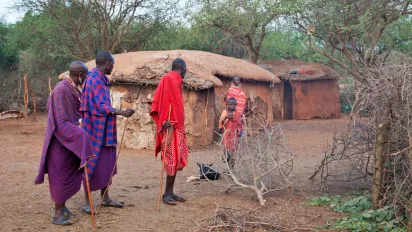
Community based tourism
Making community tourism work better for the communities that host it

A market systems development model
Making hay last in Kajiado

A market systems development model
From feed outfit to business incubator
Market systems development in action
From feed outfit to business incubator

Making hay last in Kajiado
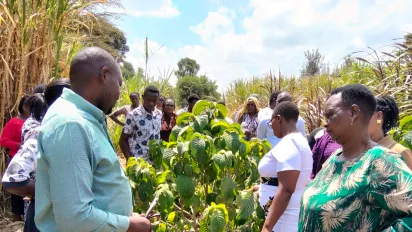
The silage business helping other businesses grow
Skills development

Why we helped build Kenya’s first fodder curriculum

Kenya turns skills evidence into new curricula

Kenyan Youth Harness AI to Tackle Unemployment
Gender and inclusion

Who is missing? Making Kenya’s fodder and tourism sectors more inclusive

More than grass: the women helping build Kenya's fodder economy

From data to dignity: Gender-responsive design is strengthening livelihoods in Kenya

Bridging Kenya’s intergenerational care gap

Market daycares empower mothers and boost livelihoods

How Narok County in Kenya is ending female genital mutilation and opening doors to opportunity
Green jobs and circular economy

Climate justice in Kenya begins with local livelihoods

Green Jobs in the Maasai Mara empower women and youth

Skills assessments in Kenya reveal training gaps and opportunities
Publications and documents

Kenya's tourism sector skills assessment
Skills gap assessment in tourism sector that are key to promoting inclusive decent employment and productive livelihood in Nakuru, Narok...
Kenya's fodder sector skills assessment
Skills gap assessment in the fodder sector that promotes inclusive decent employment and productive livelihood in Nakuru, Narok and Kajiado...
Development parter