

Care economy
Market daycares empower mothers and boost livelihoods
Discover how innovative market-daycare initiatives like WowMom in Kenya are empowering women in the informal economy through vital childcare support and improved livelihoods.
27 June 2025
NAIROBI, Kenya (ILO News) – In Kenya’s informal economy, the lack of care infrastructure presents daily challenges for working parents, especially women. For Peninah Ndegwa, founder of the WowMom initiative, a personal experience sparked a mission to transform urban spaces into child-friendly environments. What began as a search for a baby changing facility evolved into a community-driven childcare solution with transformative impact.
Her visit to Nairobi’s Gikombaa market, a bustling hub of informal trade, exposed her to unsafe and inadequate conditions where parents left young children while they worked. "I went there to solve one problem, and I came out with an even bigger one," Peninah said. Many mothers were returning to work with infants as young as two months old, facing an environment that compromised children’s health and development.
As I travelled to see my parents with my two-year-old baby, a soiled nappy became an immediate crisis. I desperately needed a safe, clean place to change my child. Ultimately, I had to walk into a high-end restaurant, pretending to buy coffee, just to find a clean, dignified space for my baby.
Penninah Ndegwa, Founder, WowMom
The daily struggle: An unmet need for care infrastructure
This deeply personal struggle laid bare a profound, systemic challenge for millions of working mothers. Peninah, an urban planner by profession, recognised that her frustration was a symptom of a much larger societal oversight. Something sparked within her – a resolve to transform urban spaces into child-friendly environments. Her journey led her to the Nairobi County Offices. This was the genesis of WowMom’s groundbreaking initiative: bringing childcare directly to the heart of Nairobi's markets.
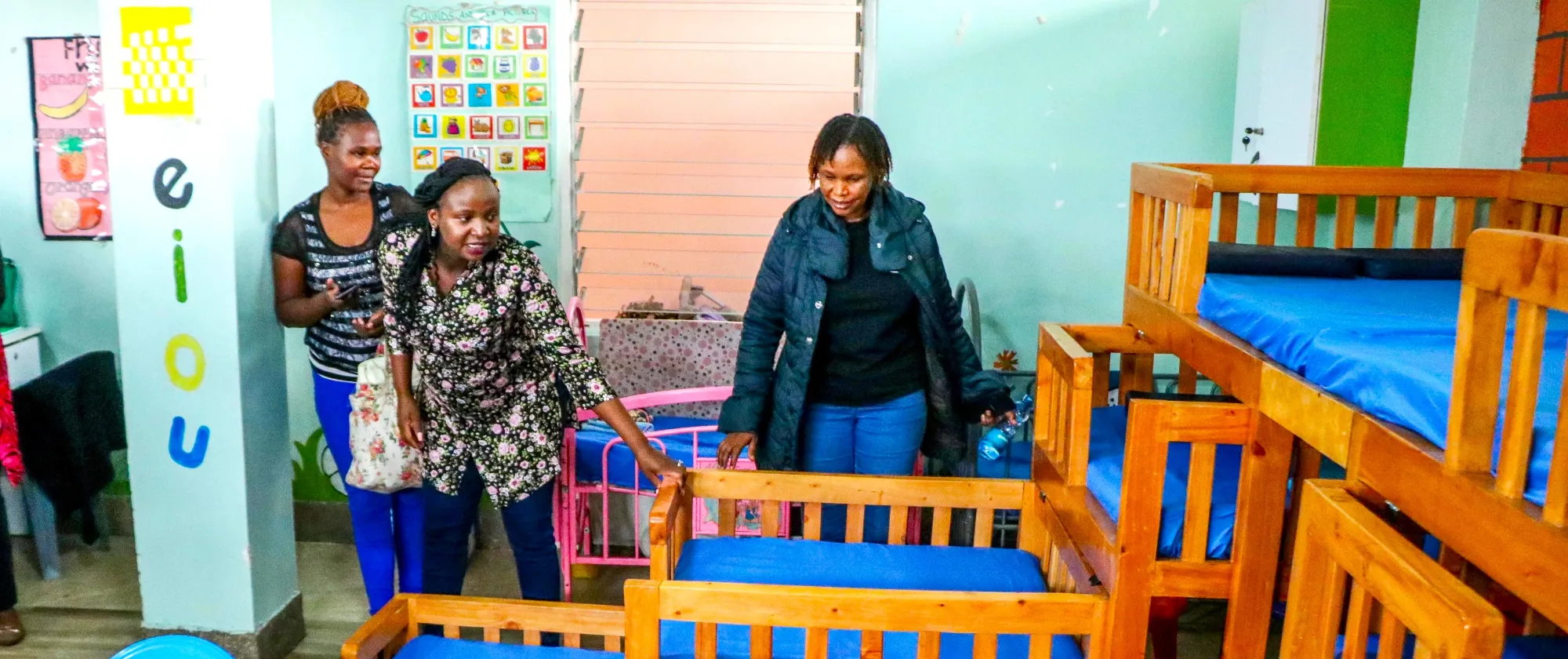
Mwariro Market became the first site to benefit, offering trained caregivers and child-friendly facilities. The daycare has quickly become a model of quality care, supporting children’s growth while enabling mothers to focus on their businesses.
Florence, a hotel owner at Mwariro, shared a story of a young employee who left her baby in Florence’s care and never returned. “If the daycare had been there, maybe she wouldn’t have abandoned her child,” she reflected. Now, with WowMom’s daycare in place, traders no longer face such impossible choices.
Progress, but challenges remain
Narok County, home to around 1.2 million people, has long faced some of Kenya’s highest rates of FGM. In 2014, nearly 78% of women in the county had undergone the practice. By 2022, that number had dropped to 51%, and in some remote areas, to as low as 22%.
But in places like Suswa Ward, the challenge remains acute. Here, FGM rates among women aged 15-49 are still at a staggering 87.8%. Alarmingly, new trends show a rise in adult women undergoing FGM and increasing involvement of medical professionals in performing the practice.
Ending FGM is not just a health or human rights issue, it is also central to creating inclusive economies. FGM often leads to early marriage, school dropouts, teenage pregnancy, and exclusion from formal work, denying young women the chance to thrive and contribute to their communities.

WowMom's pioneering solution: Market daycares
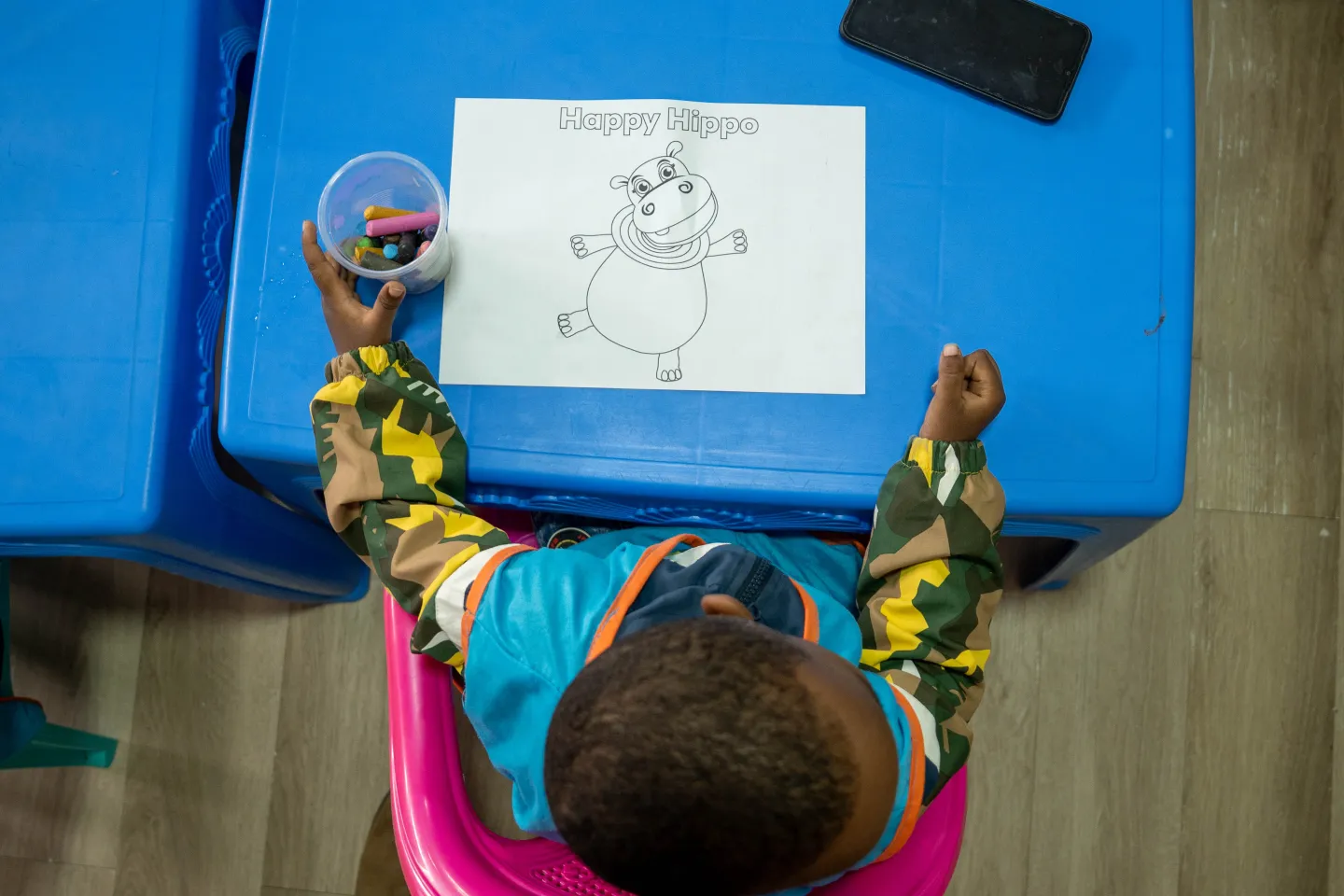
Children at the Mwariro centre not only receive safe supervision but also thrive developmentally. One parent noted, “My son wasn’t speaking at two years. After three months in the daycare, he’s now talking and knows his colours.”
The initiative’s success has inspired policy change. Nairobi County now requires all newly constructed markets to include daycare facilities, a move that embeds care infrastructure in urban planning and signals growing recognition of unpaid care work in economic development.
This is especially relevant for women working in the informal economy, who often face “time poverty” from balancing income generation and caregiving. Market-based daycares directly address this by redistributing care responsibilities and creating inclusive, dignified support systems.
The ILO's Public Private Development Partnerships (PPDP) project has extended support for care-inclusive solutions in other counties, including Nakuru, Kajiado and Narok. While not directly building facilities, the project convened the Unpaid Care Work Forum; bringing together county governments, civil society organisations like WowMom and Forum Civ, and private sector stakeholders to share best practices and chart a way forward.
“Care infrastructure must be part of how we design our economic systems,” Peninah emphasised. “There are 52 markets in Nairobi alone. WowMom cannot meet the need on its own.” She added.
PPDP Project: Scaling impact through policy and partnerships
The PPDP project aims to scale locally driven innovations like WowMom’s model by embedding them into policy dialogues and development agendas. By facilitating partnerships and knowledge exchange, it supports broader inclusion and care-aware planning in urban and semi-urban settings.
Investing in care services is not only a matter of equity, it also drives productivity and decent work. Market-based daycares, community crèches, and after-school programmes reduce caregiving burdens and enable more equitable workforce participation.
The Kenyan government, through the State Department for Gender and Affirmative Action, is actively working to advance gender equality by developing the Kenya National Care Policy. This crucial initiative aims to address the challenges of unpaid care work, predominantly carried out by women and girls, by ensuring these responsibilities are more equitably shared among families, the state, and the private sector.
The time to act is now
The Mwariro Market daycare story illustrates how targeted investment in care infrastructure can change lives and livelihoods. To replicate this success, systemic support from governments, development partners and the private sector is essential.
Transforming care from a private burden into a public good is key to unlocking inclusive growth. The time to act is now; by recognising care as a collective responsibility, ensuring quality services for all, and enabling every worker, regardless of background, to thrive with dignity.
Related content
Public-private development partnerships for inclusive decent employment and productive livelihoods
Relevant projects
Public-private development partnerships for inclusive decent employment and productive livelihoods