

Gender equality
How Narok County in Kenya is ending female genital mutilation and opening doors to opportunity
Narok County’s adoption of the Anti-Female Genital Mutilation (FGM) Policy implementation matrix marks a powerful step forward in the fight to protect girls' rights, advance gender equality, and create pathways to decent work for women.
15 April 2025
NAROK, KENYA (ILO News) - In Narok County, Kenya, a girl’s future is no longer defined by fear.
For generations, many young girls here faced the threat of female genital mutilation (FGM), a harmful practice that often marked the end of their childhood, their education, and their dreams of a life beyond early marriage and unpaid care work.
Today, that story is changing.
Across villages and towns in Narok, more girls are staying in school, avoiding child marriage, and building ambitions for their future, thanks to bold action by the county government, community leaders, and projects supported by the International Labour Organization (ILO) and its partners.
Thanks to community action, new policies and stronger laws, more girls are staying in school and avoiding early marriage. By building dreams of a life beyond harmful traditional practices, the community is opening the door to decent work and economic independence for its women and girls.
When a girl is protected from FGM, she becomes brave, capable of learning, dreaming, and building a better life for herself and her family.
Esther Malaso, Gender Director, County Government of Narok.
A turning point for women and girls
Narok County’s adoption of the Anti-FGM Policy implementation matrix marks a powerful step forward in the fight to protect girls' rights, advance gender equality, and create pathways to decent work for women.
The new policy not only strengthens law enforcement against FGM, but it also tackles the root causes that keep the practice alive: poverty, limited access to education, and a lack of economic opportunities for women and girls.
Supported by the ILO through its Public-Private Development Partnerships for Inclusive Growth Through Decent Work in the Great Rift Valley Project, this approach integrates community engagement, legal protections, and new livelihood opportunities that aim to break cycles of harm.
"In Narok, we have witnessed what is possible when communities come together to protect their girls and invest in their future. Every girl who escapes FGM, stays in school, and discovers her voice is a step closer to the future we all want, one rooted in dignity, opportunity, and decent work," explains Isaac Muema, ILO PPDP Project Manager.
Every girl who escapes FGM, stays in school, and discovers her voice is a step closer to the future we all want, one rooted in dignity, opportunity, and decent work.
Isaac Muema, ILO PPDP Project Manager.
Progress, but challenges remain
Narok County, home to around 1.2 million people, has long faced some of Kenya’s highest rates of FGM. In 2014, nearly 78% of women in the county had undergone the practice. By 2022, that number had dropped to 51%, and in some remote areas, to as low as 22%.
But in places like Suswa Ward, the challenge remains acute. Here, FGM rates among women aged 15-49 are still at a staggering 87.8%. Alarmingly, new trends show a rise in adult women undergoing FGM and increasing involvement of medical professionals in performing the practice.
Ending FGM is not just a health or human rights issue, it is also central to creating inclusive economies. FGM often leads to early marriage, school dropouts, teenage pregnancy, and exclusion from formal work, denying young women the chance to thrive and contribute to their communities.
Linking human rights with livelihoods
Narok’s Anti-FGM policy is part of a wider effort by the ILO and its partners to tackle the economic drivers of harmful traditional practices.
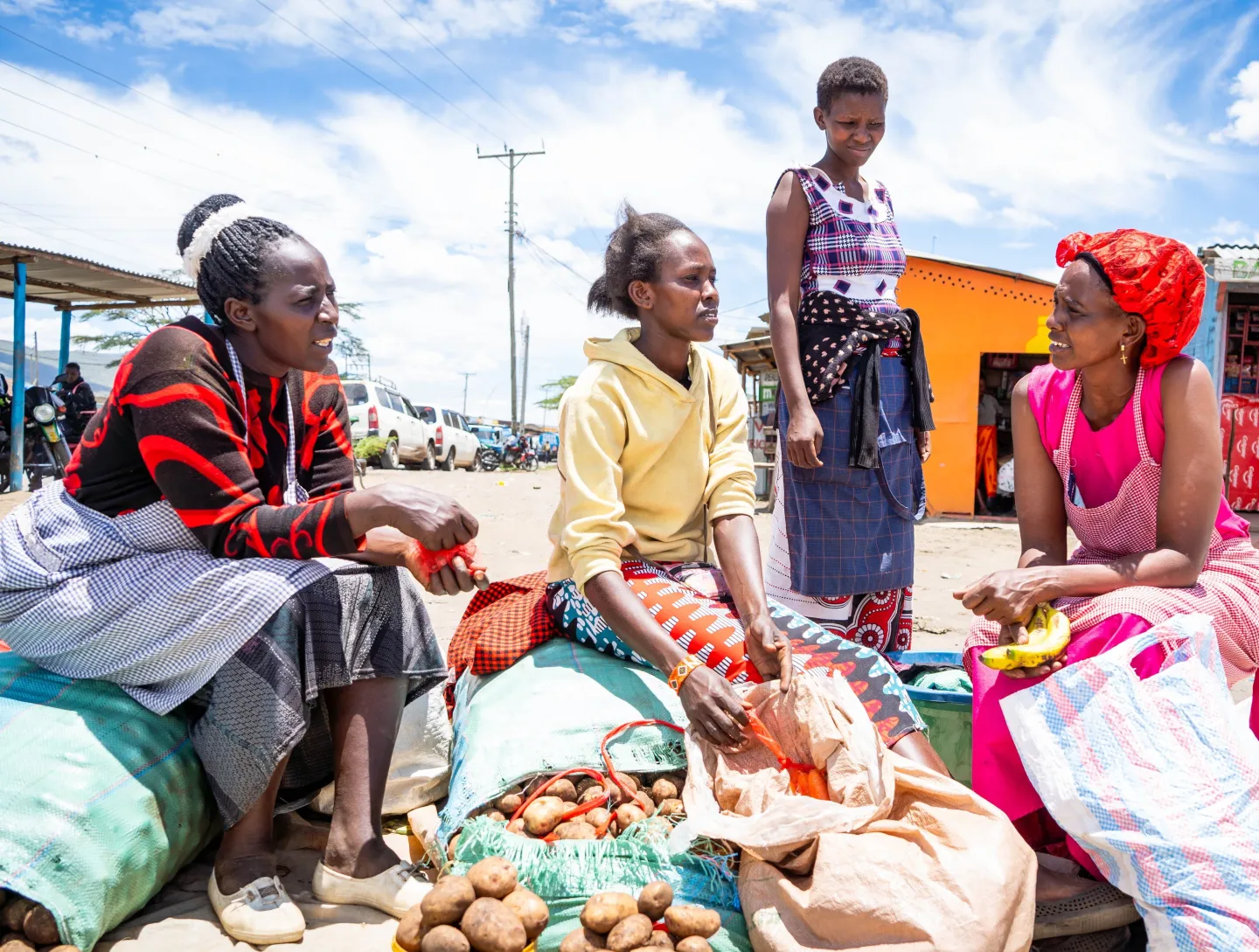
Through the PPDP project, women and youth receive life skills training, entrepreneurship support, and adult education, creating alternative sources of income and reducing families' dependence on harmful practices tied to economic pressures.
As the project moves into its second phase, this approach is expanding to other counties in Kenya’s Great Rift Valley region, including Kajiado and Nakuru, helping to create safer, fairer, and more prosperous communities.
A shared responsibility for change
Narok County’s progress shows that real change happens when communities, governments, and development partners come together, not only to enforce laws, but to offer hope and alternatives.
Sustaining this momentum will require continued commitment from all parts of society: traditional leaders, educators, parents, young people, and government institutions.
By putting the rights, safety, and futures of girls at the heart of its development plans, Narok County is building more than a policy, it is building a future where every girl has the freedom to learn, to work, and to live without fear.
Protecting girls from FGM is not just about ending a harmful practice, it’s about affirming their humanity and upholding their rights. Our work in Narok, alongside the ILO and local communities, is rooted in this belief, that dignity, equality, and freedom are not negotiable. A human rights approach means we don’t just intervene, we empower.
Mercy Koini, Gender Equality and social Inclusion Lead, ForumCiv
Key elements of Narok’s Anti-FGM Policy
Enforcing the law
Strengthening prosecutions against perpetrators and ensuring protection for survivors.
Empowering communities
Working with local leaders, educators, and families to challenge harmful norms.
Expanding opportunities
Providing education, skills, and economic alternatives for women and girls.
Relevant projects
Public-private development partnerships for inclusive decent employment and productive livelihoods