


Sector portal
Basic metals
Modern infrastructure and industries are built with iron and steel.
Throughout history, the highly cyclical sector has been characterized by high volatility. However, the revolution in materials science, the need to decarbonize, and the adoption of more advanced technologies means that the future organization of production and work becomes even more uncertain and unpredictable.
Occupational safety and health remains a challenge. The ILO promotes the right to a safe and healthy working environment in the sector, including through the implementation of the Codes of Practice on safety and health in the iron and steel industry and the non-ferrous metals industries.
Key resources
- C155 - Occupational Safety and Health Convention, 1981 (No. 155)
- R164 - Occupational Safety and Health Recommendation, 1981 (No. 164)
- C187 - Promotional Framework for Occupational Safety and Health Convention, 2006 (No. 187)
- R197 - Promotional Framework for Occupational Safety and Health Recommendation, 2006 (No. 197)
- C161 - Occupational Health Services Convention, 1985 (No. 161)
- R171 - Occupational Health Services Recommendation, 1985 (No. 171)
Technical meeting on challenges and opportunities arising from AI in the manufacturing industry
The meeting will discuss AI’s impact on manufacturing, focusing on opportunities and challenges for decent work, productivity, and a just transition, aiming to adopt conclusions and recommendations.
Data and statistics
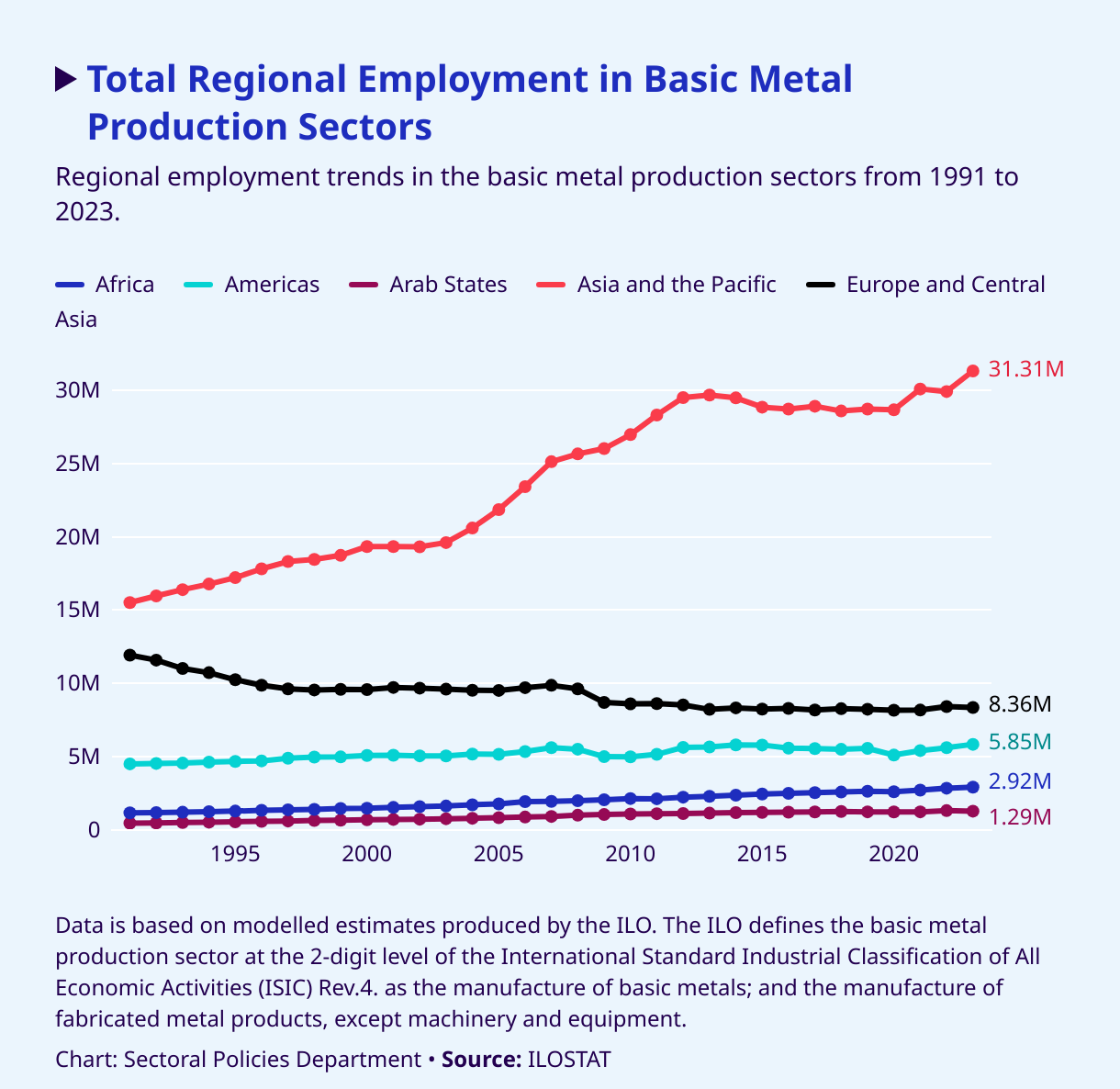
The line graphs show a time series of modelled global and regional employment estimates at the sectoral level. The ILO modelled estimates generally cover 189 countries, offering a comprehensive set of internationally comparable labour statistics. These include both reported data and imputed figures for countries with missing information. The imputations are generated using econometric models developed by the ILO.
For more detailed labour market indicators and country-level data, visit the Sectoral Employment Statistics page of the ILOSTAT database.
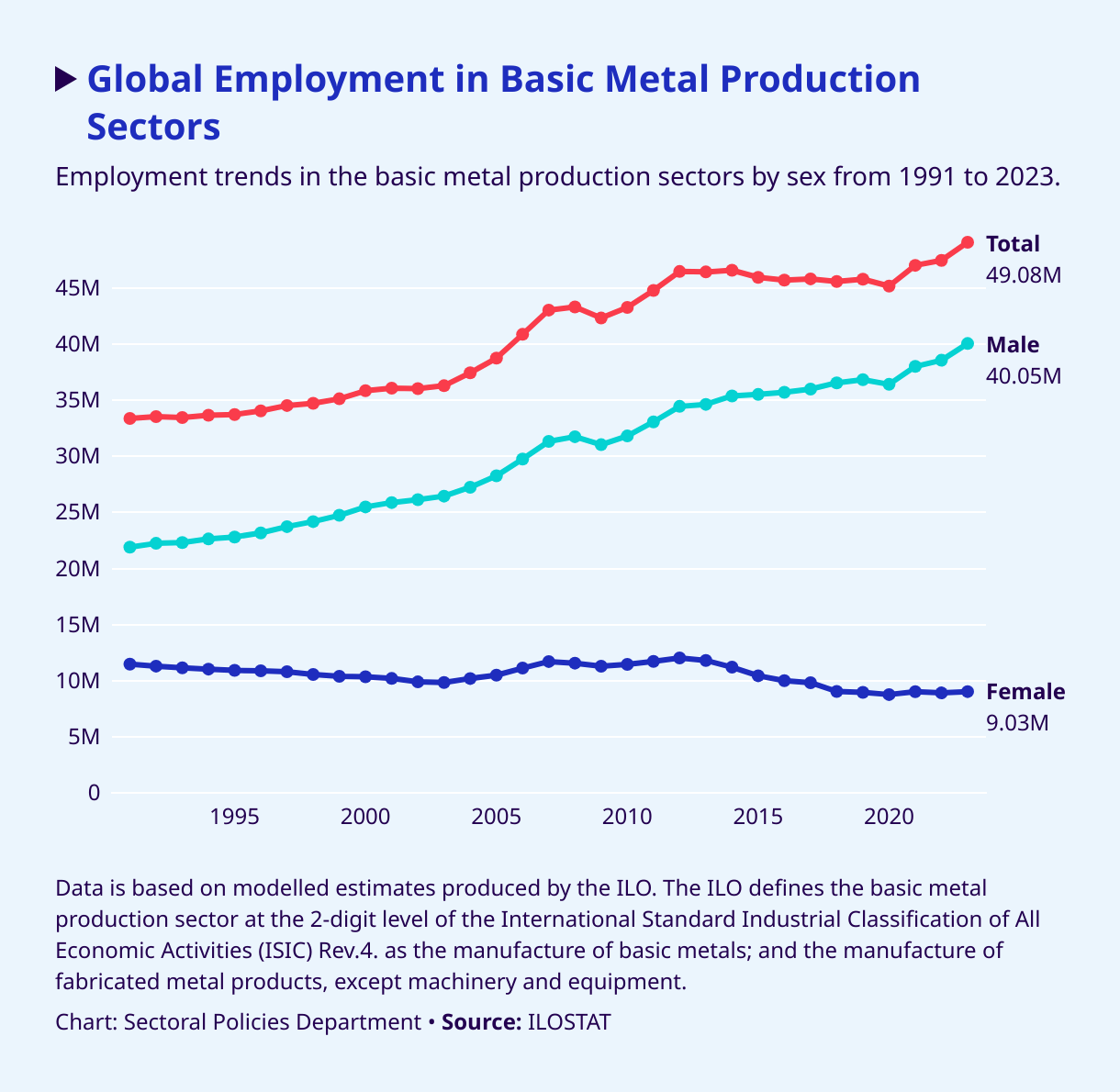
The line graphs show a time series of modelled global and regional employment estimates at the sectoral level. The ILO modelled estimates generally cover 189 countries, offering a comprehensive set of internationally comparable labour statistics. These include both reported data and imputed figures for countries with missing information. The imputations are generated using econometric models developed by the ILO.
For more detailed labour market indicators and country-level data, visit the Sectoral Employment Statistics page of the ILOSTAT database.
News
Press release
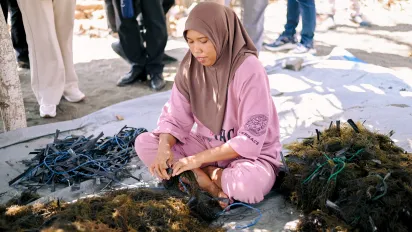
Indonesia, ILO and Switzerland launch e-Seaweed initiative to advance financial inclusion for seaweed farmers

Better Work Egypt
Beyond the training room: Building factory ownership through people

Responsible electronics
ILO and Viet Nam's commerce chamber launch initiative to advance responsible business practices in electronics sector
Publications and documents
Manzuma Sector Selection Study
Jordan annual report 2025
Narrative recap of the development cooperation implementation of the ILO programme in the Hashemite Kingdom of Jordan
Southern African Development Community
SADC Toolkit on mainstreaming decent work and labour productivity in key economic sectors
Projects
Industry skills for inclusive growth
Industry Skills for Inclusive Growth (InSIGHT) Phase 2 - Philippines
Project
Support for labour law and industrial relations reform in Malaysia
Rights at Work: promoting harmonious labour relations through collective bargaining in China
Contact information
Sectoral Codes of Practice and Guidelines
Sectoral meetings
Conclusions and recommendations of sectoral meetings
Sign up to our newsletter!
Receive ILO news about sectoral work