

Sector portal
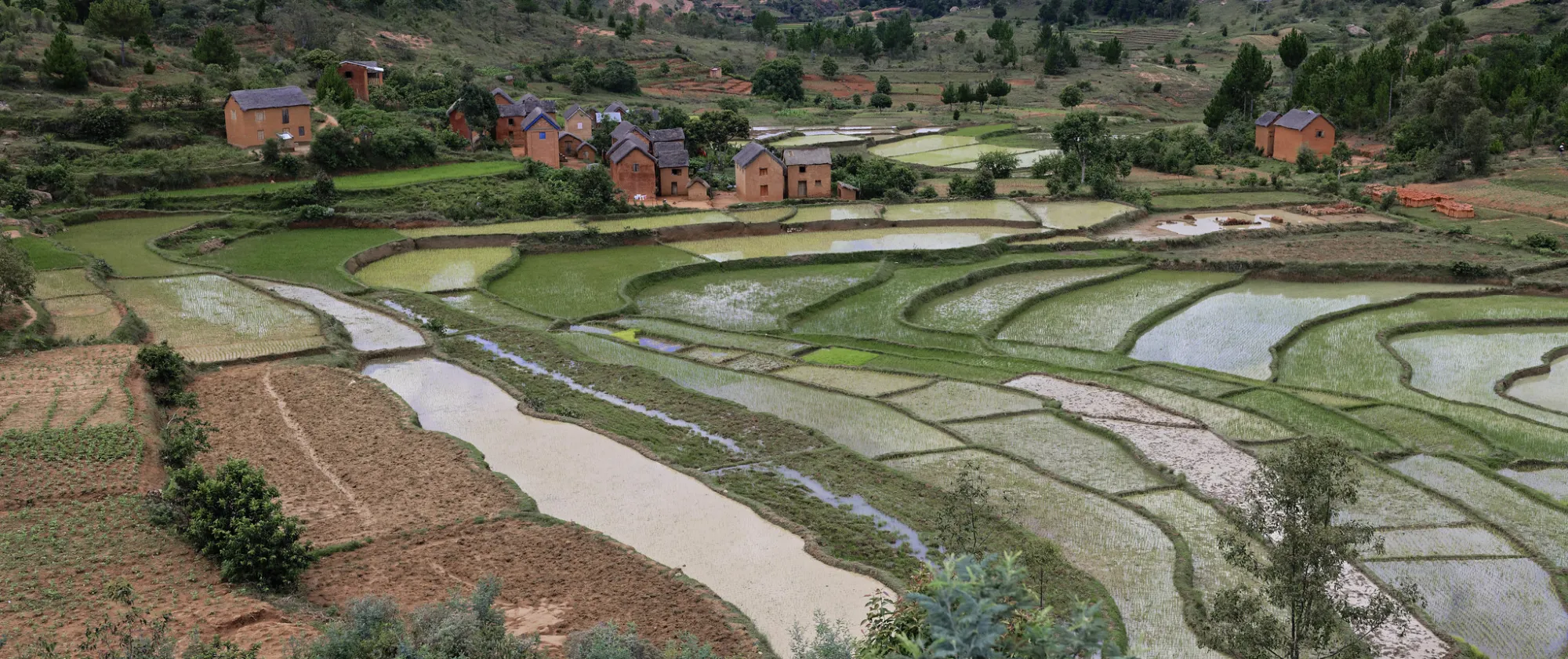
Agriculture, aquaculture, plantations, other rural sectors
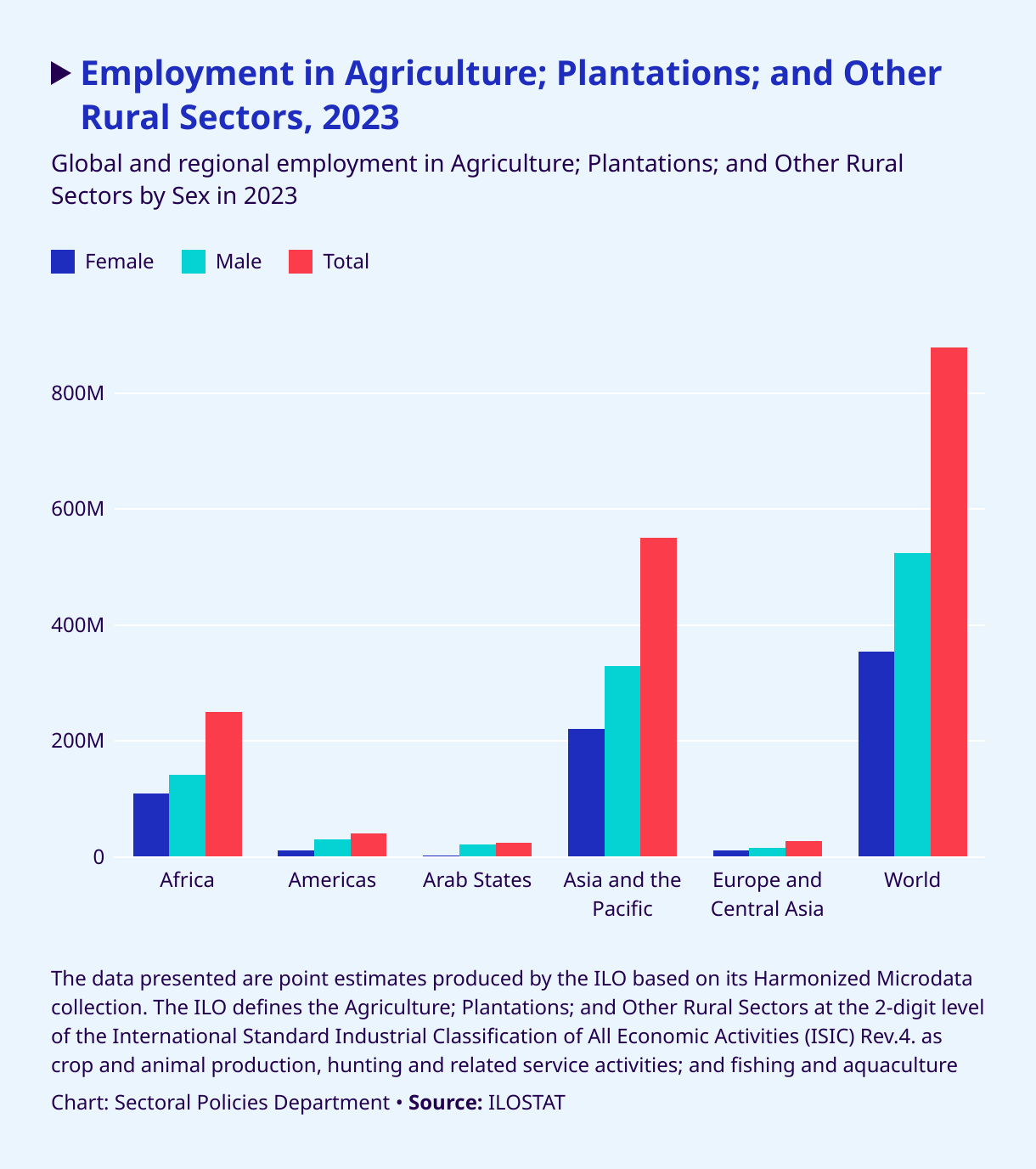
Globally, about one billion people work in the agricultural sector, constituting approximately 28 per cent of the employed population. About 450 million are waged workers, many of whom depend on incomes from jobs in the plantation sector. While the share of employment in agriculture has declined in many countries due to technological advancements and economic shifts, it remains a critical sector for livelihoods, food security, and rural development.
However, agriculture workers regularly face high levels of working poverty, food insecurity, poor health and safety conditions, an lack of labour and social protection. A socially, environmentally and economically sustainable agricultural sector with full, productive and freely chosen employment and decent work at its core is essential for eradicating poverty, tackling inequalities and ending global hunger. Realizing decent work for all workers in the agri-food sector is, therefore, also key to achieving sustainable development and ensuring that no one is left behind, thereby contributing to social justice.
Key resources
- Technical meeting on the future of employment and perspectives for decent work in the tobacco growing and manufacturing sector (February 2027) - coming soon
- Meeting of experts on a code of practice on occupational safety and health in aquaculture (May 2026)
- Meeting of experts on decent work in the agri-food: An essential part of sustainable food systems (May 2023)
- Technical meeting on the future of work in aquaculture in the context of the rural economy (December 2021)

Rural economy
The rural economy holds significant potential for creating decent and productive jobs, eradicating poverty, ensuring food security, and achieving social justice.
Data and statistics
The bar charts show global and regional point estimates at the sectoral level, based on data from the ILO Harmonized Microdata collection. These estimates cannot be directly compared across different periods and may be updated as new information becomes available. The estimates provided and published by the ILO may differ from those produced and released at the national level.
For more detailed labour market indicators and country-level data, visit the Sectoral Employment Statistics page of the ILOSTAT database.
Events
Zoom session on Monday 12 October 2026
Africa Skills Week 2026: Recognition, industry, inclusion and youth earning session
News
Skills and Lifelong Learning in Africa
From training to transformation: Skills driving growth in Malawi's horticulture and dairy sectors

ILO assesses impact of climate change and water scarcity on cotton production and rural employment in Turkmenistan

Occupational Safety and Health
Learning, applying, passing it on: A man’s commitment to safer coffee farming
Publications and documents
Supply chains
Mapping the rubber supply chain in Malaysia
Development of the Timor-Leste vanilla value chain roadmap including associated skills needs and stocktaking of working conditions
Report
Situation analysis study on the worst forms of child labour and education status in agriculture and rural areas of Myanmar
Projects
Project
Economic empowerment and resilience for at-risk families in Jericho and the Jordan Valley
Safety + Health for All
Ensuring integration of occupational safety and health within the GFC Implementation Programmes
Trade for jobs Uganda
Recycling
Recycling is key to the circular economy, employing at least 6.9 million workers worldwide, many in the informal sector. Expanding recycling could create 7 million more jobs by 2030, but current roles often lack decent work standards.
Contact information
Sectoral Codes of Practice and Guidelines
Sectoral meetings
Conclusions and recommendations of sectoral meetings
Sign up to our newsletter!
Receive ILO news about sectoral work