

ILO assesses impact of climate change and water scarcity on cotton production and rural employment in Turkmenistan
A new ILO assessment will analyse how climate change and water scarcity are affecting cotton production, employment and rural livelihoods in Turkmenistan, with a focus on decent work and a just transition.
1 October 2026
ASHGABAT (ILO News) – The International Labour Organization (ILO) is undertaking an assessment of how climate change and water scarcity are affecting cotton production, rural livelihoods and employment in Turkmenistan.
Cotton is an important part of Turkmenistan’s rural economy and a source of employment and livelihoods for rural communities. Its production is highly dependent on irrigation, making the sector particularly vulnerable to changes in water availability and climatic conditions.
Across Central Asia, rising temperatures, changing precipitation patterns and extreme weather events are increasing pressure on water resources, agriculture and rural livelihoods.
The ILO assessment led by Cristina Martinez, Senior Specialist on Enterprise Development and Green Jobs from the ILO Decent Work Technical Support Team and Country Office for Eastern Europe and Central Asia, will analyse what these changes mean for workers, farmers, households and authorities, with particular attention to women, youth and groups that may face greater risks. The assessment will look at how these challenges may affect employment, incomes and working conditions in cotton-producing areas.

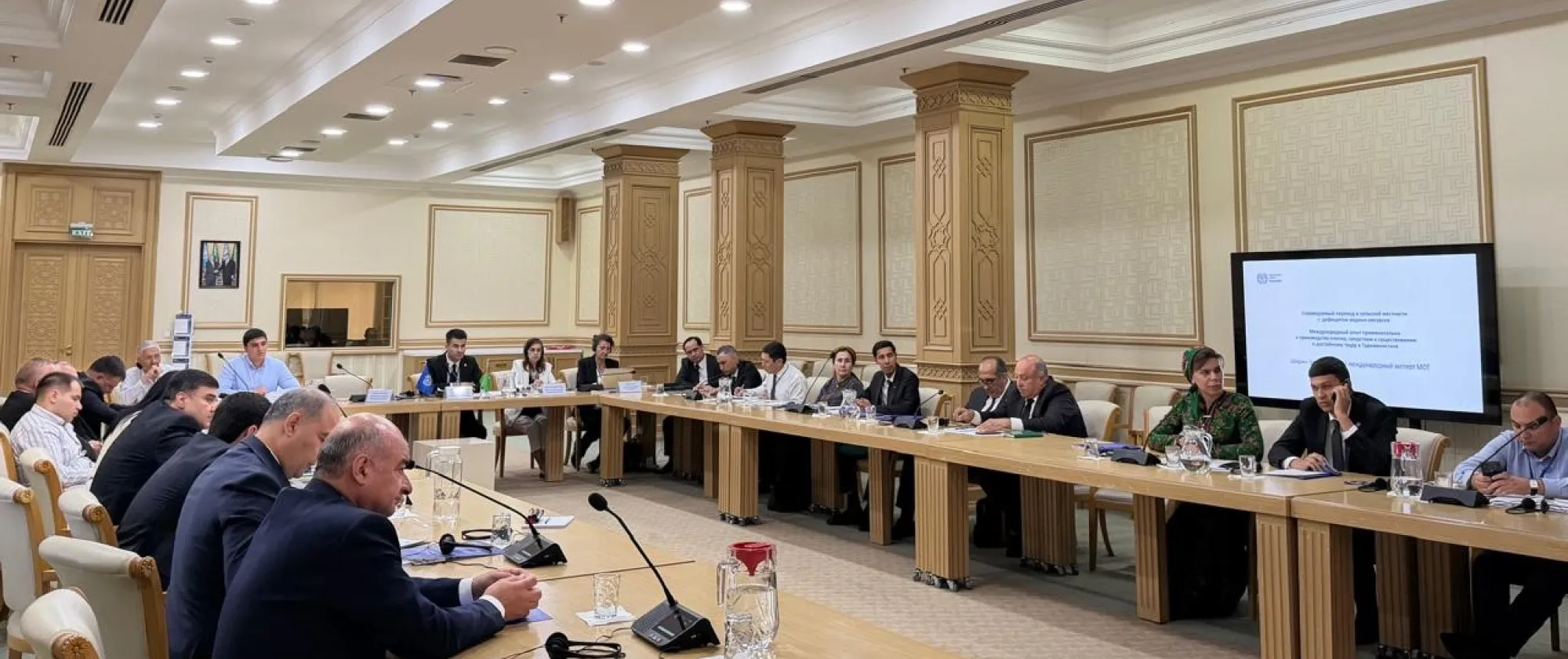
The scope and methodology of the assessment were discussed at a workshop held in Ashgabat on 30 September, which brought together representatives of relevant national institutions, employers’ and workers’ organizations and other stakeholders. Participants discussed the links between climate change, water availability, cotton production and decent work and shared their perspectives on the key issues to be examined through the assessment.
Combining quantitative and qualitative research, the assessment will analyse the cotton-sector ecosystem and value chain, labour market dynamics and the different impacts of climate change and water scarcity on women and men. The analysis will focus particularly on Dashoguz, Lebap and Balkan velayats.
The research will also assess how workers, farmers, households and authorities are adapting to changing conditions, whether some groups face greater risks and what policies and measures could strengthen the resilience of rural livelihoods and employment while promoting decent work.
The assessment will be informed by the ILO Guidelines for a just transition towards environmentally sustainable economies and societies for all, which place decent work, social dialogue and labour standards at the centre of efforts to address the employment and social consequences of the transition towards environmentally sustainable economies.
The findings are expected to contribute to evidence-based policy dialogue on how Turkmenistan can strengthen the resilience of rural employment and livelihoods, promote decent work and respond to climate- and water-related pressures.
The assessment is being undertaken as part of the European Union-supported ILO project “Promoting decent work and preventing child labour and forced labour in Turkmenistan”. The project combines national-level policy support with practical action at local level, aiming to promote decent work and prevent child and forced labour, particularly in the cotton sector in Turkmenistan.
For more information, please contact: Oxana Lipcanu, Project Manager [email protected]
Additional details
References
- DOI: n/a