

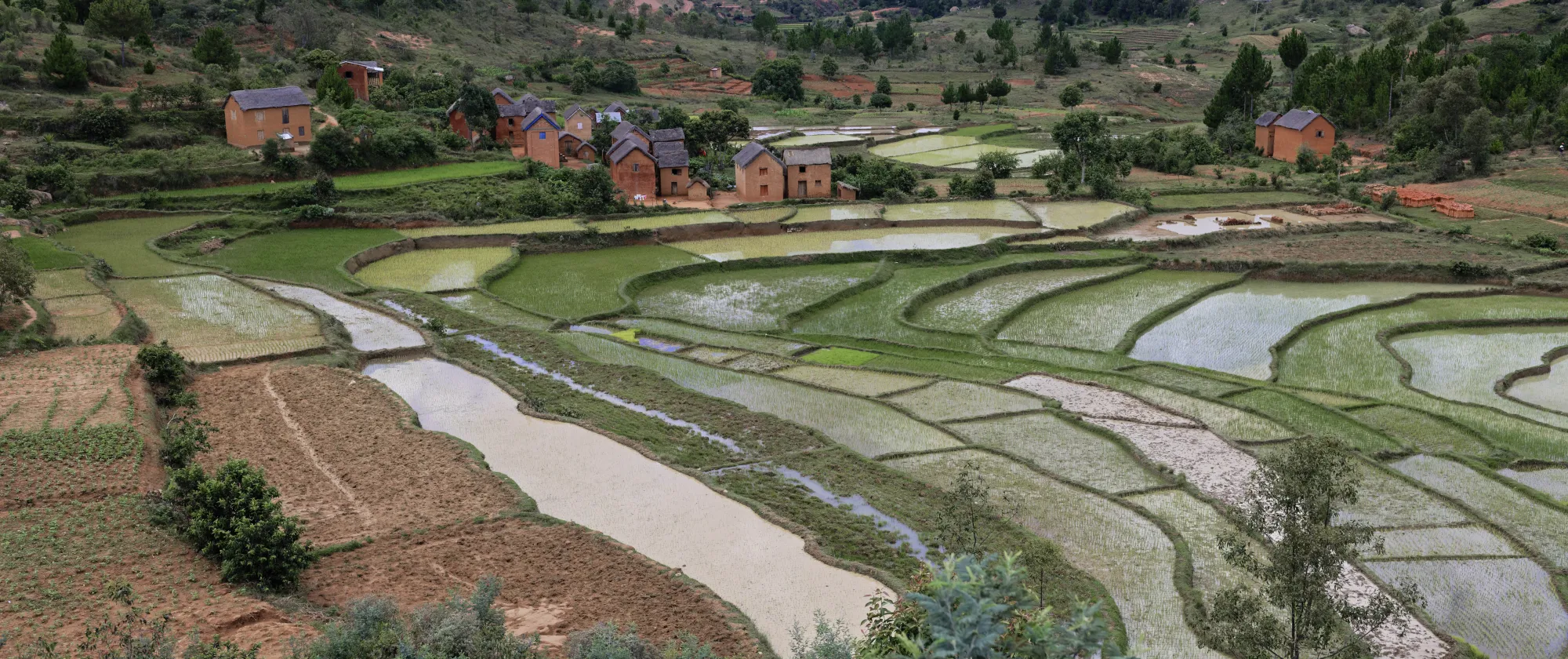
Rural economy
The rural economy has the potential to drive job creation, reduce poverty, ensure food security, and advance social justice. Yet, millions of rural workers still face decent work deficits including informality, low wages, limited voice and lack of social protection. Decent work in rural areas is essential to ensure no one is left behind.
Strengthening the capacity of constituents to formulate and implement policies and strategies for creating decent work in the rural areas is a key priority for the ILO.
Key resources
Fundamental instruments
- Forced Labour Convention, 1930 (No. 29) and its Protocol of 2014
- Freedom of Association and Protection of the Right to Organise Convention, 1948 (No. 87)
- Right to Organise and Collective Bargaining Convention, 1949 (No. 98)
- Equal Remuneration Convention, 1951 (No. 100)
- Abolition of Forced Labour Convention, 1957 (No. 105)
- Discrimination (Employment and Occupation) Convention, 1958 (No. 111)
- Minimum Age Convention, 1973 (No. 138)
- Occupational Safety and Health Convention (No. 155) and Recommendation (No. 164), 1981
- Worst Forms of Child Labour Convention, 1999 (No. 182)
- Promotional Framework for Occupational Safety and Health Convention (No. 187) and Recommendation (No. 197), 2006
Governance conventions and related recommendations
- Labour Inspection Convention (No. 81) and Recommendation (No. 81), 1947
- Employment Policy Convention (No. 122) and Recommendation (No. 122), 1964
- Labour Inspection (Agriculture) Convention, 1969 (No. 129)
- Tripartite Consultation (International Labour Standards) Convention, 1976 (No. 144)
- Employment Policy (Supplementary Provisions) Recommendation, 1984 (No. 169)
Technical Conventions and Recommendations
- Right of Association (Agriculture) Convention, 1921 (No. 11)
- Workmen’s Compensation (Agriculture) Convention, 1921 (No. 12)
- Social Insurance (Agriculture) Recommendation, 1921 (No. 17)
- Protection of Wages Convention (No. 95) and Recommendation (No. 85), 1949
- Migration for Employment Convention (Revised), 1949 (No. 97)
- Minimum Wage Fixing Machinery (Agriculture) Convention (No. 99) and Recommendation (No. 89), 1951
- Plantations Convention (No. 110) and Recommendation (No. 110), 1958
- Tenants and Share-croppers Recommendation, 1968 (No. 132)
- Minimum Wage Fixing Convention (No. 131) and Recommendation (No. 135), 1970
- Rural Workers’ Organisations Convention (No. 141) and Recommendation (No. 149), 1975
- Migrant Workers (Supplementary Provisions) Convention, 1975 (No. 143)
- Workers with Family Responsibilities Convention, 1981 (No. 156)
- Occupational Health Services Convention (No. 161) and Recommendation (No. 171), 1985
- Indigenous and Tribal Peoples Convention, 1989 (No. 169)
- Chemicals Convention, 1990 (No. 170)
- Protocol of 1995 to the Labour Inspection Convention, 1947
- Private Employment Agencies Convention, 1997 (No. 181)
- Maternity Protection Convention, 2000 (No. 183)
- Safety and Health in Agriculture Convention (No. 184) and Recommendation (No. 192), 2001
- List of Occupational Diseases Recommendation, 2002 (No. 194)
- Human Resources Development Recommendation, 2004 (No. 195)
- Employment Relationship Recommendation, 2006 (No. 198)
- Social Protection Floors Recommendation, 2012 (No. 202)
- Transition from the Informal to the Formal Economy Recommendation, 2015 (No. 204)
- Violence and Harassment Convention (No. 190) and Recommendation (No. 206), 2019
- ILO International Training Center courses on Rural Development (Ensuring sustainable and inclusive economic transformation)
- ILO Academy on Rural Development : the 2025 Rural Development Academy comes at a crucial time as rural economies worldwide strive to create opportunities for decent work and promote social inclusion in an era of environmental change.
Decent Work For Equitable Food Systems Coalition
Building on their collective mandate, IFAD, ILO and CARE International launched this coalition to accelerate increase of impactful actions by stakeholders across food systems, aligned for collective impact on the livelihoods of food systems workers.
Statistics
How the latest statistical standards improve knowledge about rural women’s work
Trainings
Ensuring sustainable and inclusive economic transformation
International Training Center courses on Rural development
E-learning course
The Future of Work in the Rural Economy
References
International Labour Conference (2015) - Report
Giving a voice to rural workers
International Labour Conference (2008) - Conclusions
Promoting Rural Employment for Poverty Reduction
Infographic
Social justice for rural populations means prosperity for the planet
Policy guidelines
Policy guidelines for the promotion of decent work in the agri-food sector
Policy brief
Advancing social justice and decent work in rural economies
Policy brief
Elevating the potential of rural youth: Paths to Decent Jobs and Sustainable Futures
Thematic Labour Overview
Working in Rural Areas in the 21st Century: Reality and Prospects of Rural Employment in Latin America and the Caribbean
InfoStory
Social justice for rural populations means prosperity for the planet
Policy Guidance Notes
Promotion of Decent Work in the Rural Economy
Resource Guide
Resource guide on rural economy
News and stories

Occupational Safety and Health
Learning, applying, passing it on: A man’s commitment to safer coffee farming
Press release
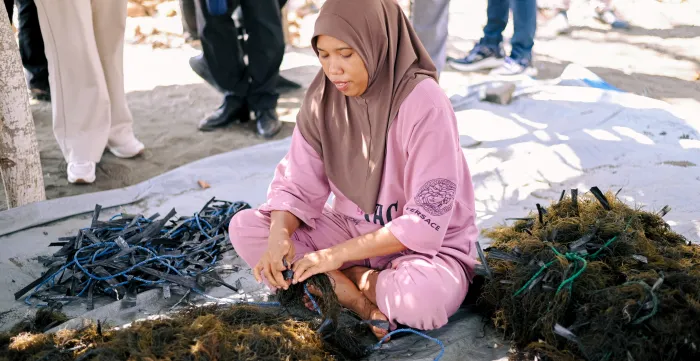
Indonesia, ILO and Switzerland launch e-Seaweed initiative to advance financial inclusion for seaweed farmers
Latest publications and documents
Development of the Timor-Leste vanilla value chain roadmap including associated skills needs and stocktaking of working conditions
STRENGTHEN2
Employment impact assessment of the Bwanje Valley Irrigation Scheme, Malawi
Working Paper 160
Foreign direct investment, global value chains and labour markets
Projects

An ILO-EU Project
Participation, Ownership and Sustainable Progress for Economic Resilience (PROSPER)
Development Cooperation Project
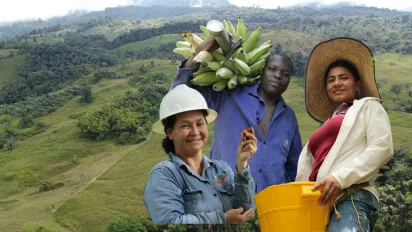
Setting Adequate Wages a focus on Agriculture (SAW-A)

EU - ILO Development Cooperation Project
Skills Development for Increased Employability Programme