


Development Cooperation Project
Setting Adequate Wages a focus on Agriculture (SAW-A)
Duration
1 August 2024 - 30 December 2028
Development partner(s)
The Federal Ministry for Economic Cooperation and Development (BMZ), Ministry of Labour of Colombia, CUT, CTC, CGT, ANDI y FNC
Reference
GLO/23/30/DEU
Contact
Paola Campuzano ([email protected])
Globally, millions of workers earn very low wages or insufficient labour income, placing them at the lowest rung of rural poverty. In 2024, the ILO and Germany’s Federal Ministry for Economic Cooperation and Development are advancing this strategy to promote the setting of adequate wages in agriculture through statutory minimum wages and/or collective bargaining.
This initiative, implemented in Côte d’Ivoire, Ethiopia and Colombia, aims to ensure decent living standards for workers and their families, while also supporting the sustainability of the businesses that generate employment for them. This action is further supported by research, cooperation, knowledge-sharing and advocacy at global, regional and sectoral levels.
In Colombia, the agricultural sector represents a significant share of the country’s total exports (39% in 2022), but it faces major challenges related to low wages, poor working conditions, low productivity, weak labour inspection, limited compliance with Fundamental Principles and Rights at Work, and high levels of informality.
13%
According to the ILO, 13% of all employed persons globally are moderately poor.
8%
8% of all employed persons globally live in extreme poverty.
Objectives and expected results
Objective 1: Support wage/labour income-setting mechanisms
- Result 1: Minimum wage setting is based on relevant indicators reflecting the needs of workers and their families, as well as economic factors.
- Result 2: Social partners use information on the needs of workers and their families to inform wage negotiations (evidence-based).
- Result 3: Compliance with both statutory and collectively bargained minimum wages is improved.
Objective 2: Identify economic, sectoral and institutional factors that can contribute to higher wages and incomes for wage earners and self-employed workers
- Result 1: Economic factors, including productivity, are improved in selected enterprises within supply chains.
- Result 2: There is improved understanding of macroeconomic factors and institutions that support and enable wage and income increases.
Objective 3: Support the participation of ILO constituents from the Office for the Andean Countries in Colombia in ongoing living wage and income initiatives.
- Result 1: National and international living wage initiatives are informed by data on the needs of workers and their families, and by economic factors.
- Result 2: Governments, social partners and other stakeholders have access to evidence-based tools and global knowledge products on how to promote wages and incomes that enable agricultural workers to attain a decent standard of living.
Next steps
Improving wages and incomes for workers is a complex issue that requires:
- Developing a comprehensive knowledge base on wage and income setting in both formal and informal segments of Colombia’s agricultural economy.
- Building capacities and harmonising criteria through training for key stakeholders involved in the project, highlighting the importance of agreed/negotiated wage-setting processes.
- Promoting social dialogue (both bipartite and tripartite) around living wages and incomes, considering the needs of workers and their families alongside relevant economic factors.

Explore related resources
Meeting of experts on wage policies, including living wages
Latest news
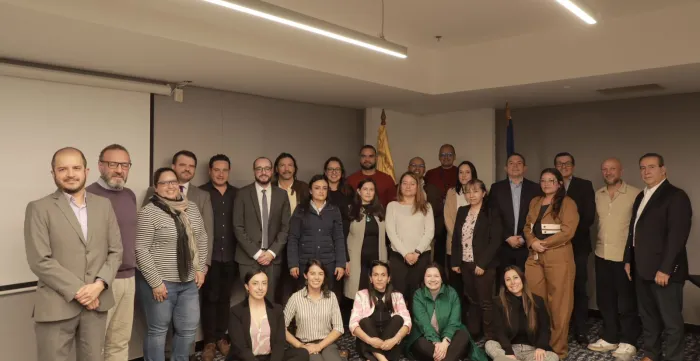
ILO and the German Ministry for Economic Cooperation launch a four-year project to promote wage/living income setting in Colombia’s...
More resources
Related content

SAW Project
Setting adequate wages

ILO Flagship report
Global Wage Report 2024-25: Is wage inequality decreasing globally?

A methodology to estimate the needs of workers and their families