

Productivity ecosystems for decent work
Viet Nam strengthens capacity of SME support organizations to drive productivity and decent work through digital and green transformation
A series of five training courses strengthened the capacity of SME support organizations in northern Viet Nam to help enterprises improve productivity through digital and green transformation while promoting decent work.
10 April 2026
HA NOI (ILO News) - Viet Nam's over one million enterprises and 5.2 million household businesses, 98% of which are small and medium enterprises (SMEs), are the backbone of the national economy and a frontline force in innovation, digital transformation, and green growth. Yet the quality and reach of business support services remain uneven.
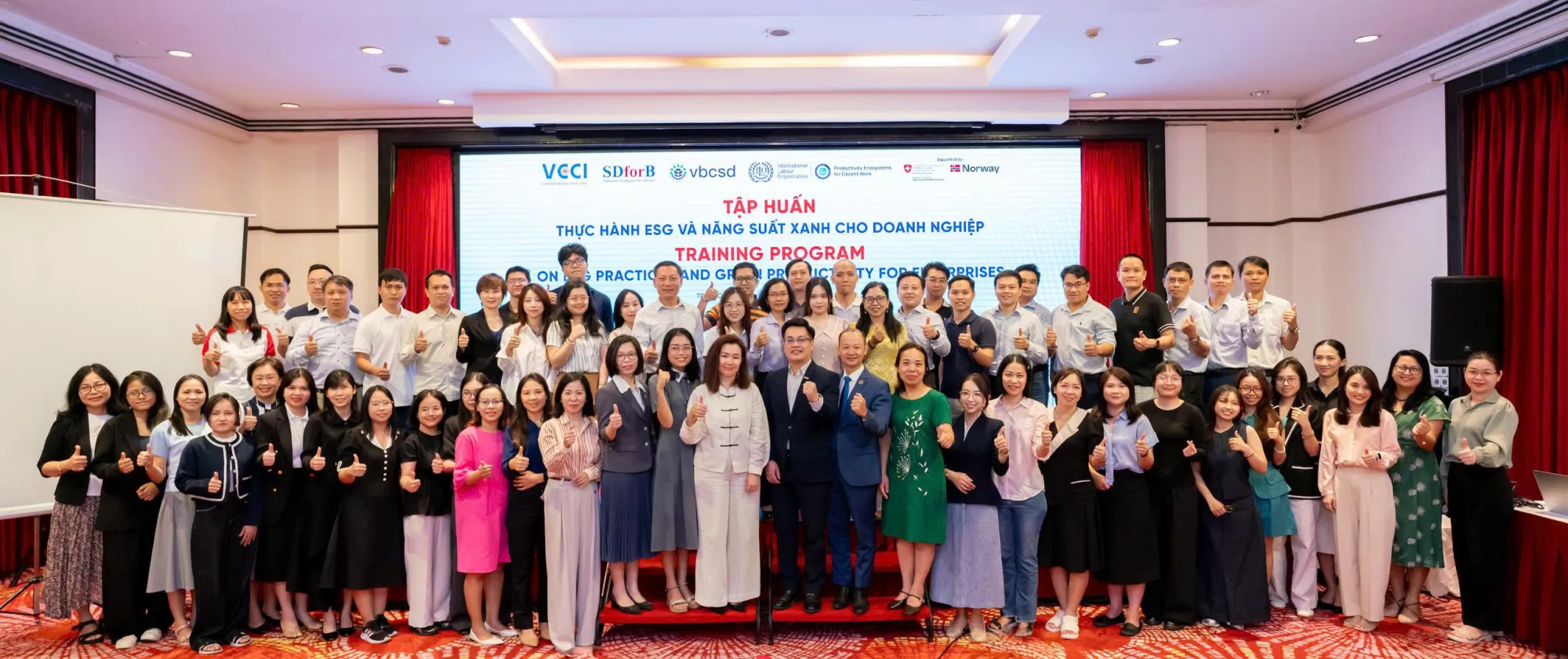
To address this gap, the Agency for Private Enterprise and Cooperative Economic Development (APED) under the Ministry of Finance, in collaboration with the International Labour Organization (ILO) in Viet Nam, conducted a series of five training courses for SME support organizations across northern provinces. The courses equipped participants with the tools and knowledge needed to help SMEs improve productivity and promote decent work through digital and green transformation.
The training courses bring together hundreds of officials from SME support organizations, provincial departments, institutions, experts and consultants in the fields of productivity, digital transformation, and green transformation, and representatives of SMEs in the manufacturing sector across northern provinces.
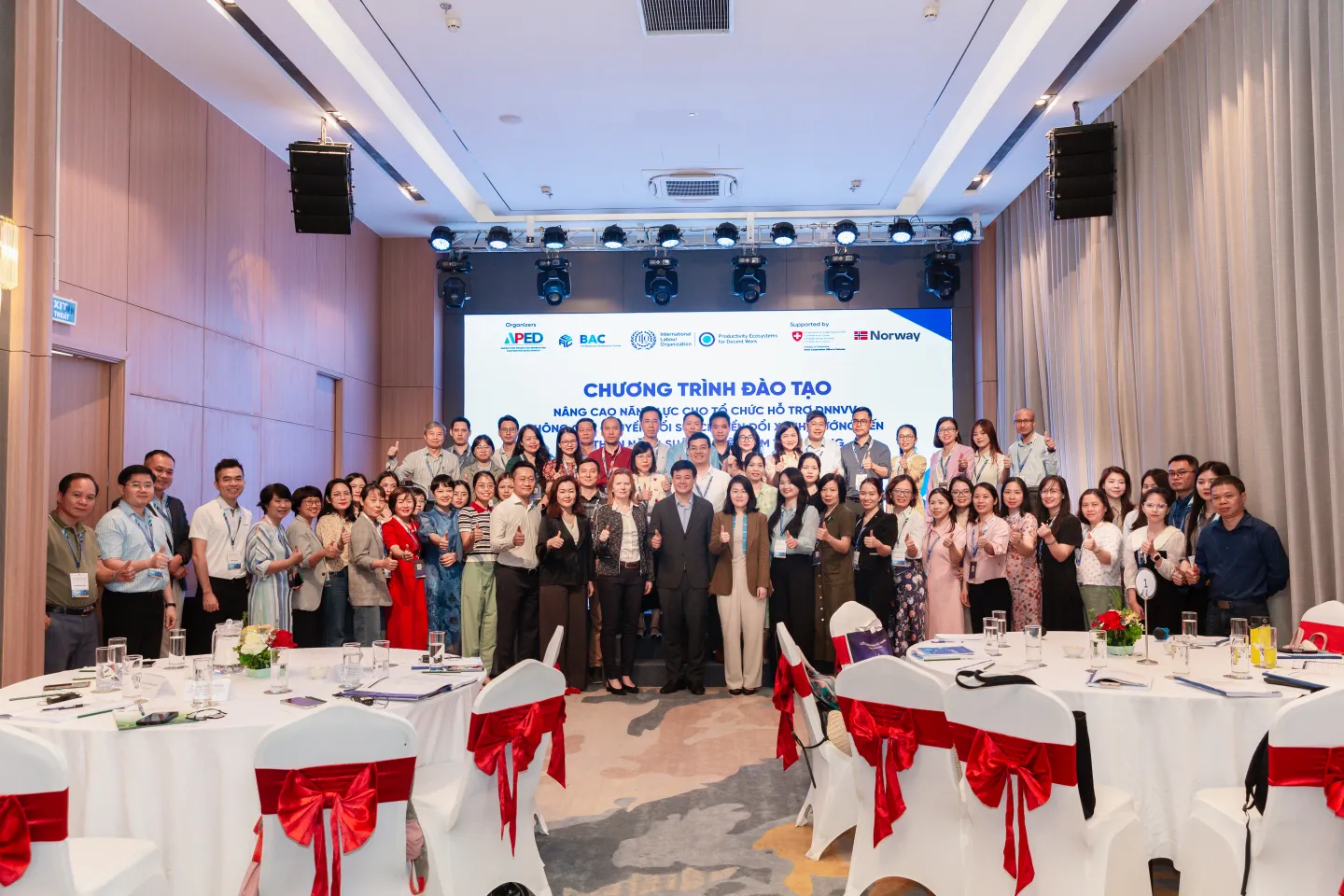
The training content was designed to reflect the interconnected nature of productivity, decent work, and sustainability to help practitioners support businesses more holistically. Participants worked through how to integrate productivity, digital transformation, green transformation, and improved working conditions as mutually reinforcing priorities rather than competing demands.
The training gave particular attention to needs assessment methods for designing locally tailored SME support programmes, and to the market trends and regulatory requirements shaping green growth, sustainable supply chains, and international trade integration. On the practical side, participants explored concrete green solutions for manufacturing SMEs, including reducing material waste, improving energy efficiency, and transitioning to cleaner production practices, alongside the ILO's SCORE methodology, an internationally tested approach to improving workplace cooperation, productivity, and conditions in SMEs.
Participants also discussed strategies for mobilising finance, technology, and human capital to support enterprise upgrading, and with approaches to building and sustaining local business support networks that foster coordination and peer learning among support providers.
Beyond knowledge-building, the training served as a structured platform for networking and exchange among business advisors, enterprise representatives, and expert practitioners, helping to strengthen the collaborative local ecosystems on which sustainable SME development depends.
Speaking at the opening ceremony, Mr. Nguyen Xuan Tho, the Deputy Director of the Agency for Private Enterprise and Cooperative Economic Development (APED) stated: "The Party and the State have issued important policies, including Politburo Resolution No. 57-NQ/TW dated 22 December 2024 on breakthroughs in science and technology development, innovation, and national digital transformation; Politburo Resolution No. 68-NQ/TW dated 4 May 2025; and National Assembly Resolution No. 198/2025/QH15 dated 17 May 2025. In this context, staff members of enterprise support organizations, together with experts and consultants in productivity, digital transformation, and green transformation, play a key and irreplaceable role. They serve as a vital bridge between government policies and business realities, designing, implementing, and managing support programmes tailored to practical needs and local priorities, thereby helping enterprises overcome challenges and integrate more deeply into global value chains."
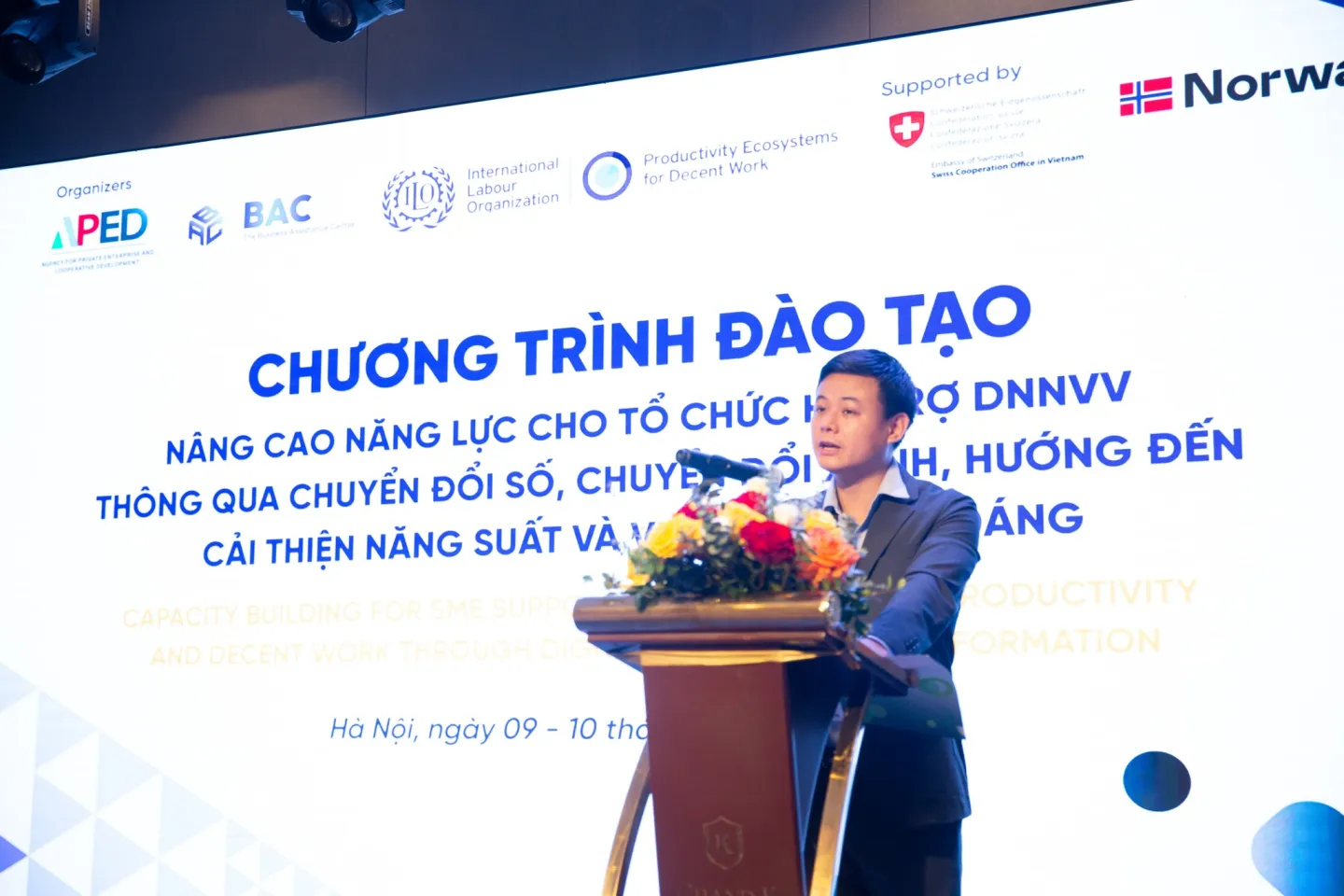
At the training event, ILO Country Director for Viet Nam, Ms. Sinwon Park, added: "What is important is that transformation must be people-centred. Technology and greener production methods should not be seen as ends in themselves. They should help enterprises become more competitive while also improving working conditions, occupational safety and health, workplace cooperation, and opportunities for workers and managers alike. This is also the logic behind the ILO’s Productivity Ecosystems for Decent Work approach, which links productivity improvement with better working conditions and responsible enterprise development."
The training programme was implemented within the framework of the Productivity Ecosystems for Decent Work Project - an ILO initiative co-funded by the Swiss State Secretariat for Economic Affairs (SECO) and the Norwegian Agency for Development Cooperation (Norad). The project supports Viet Nam in advancing sustainable productivity growth while creating better jobs and working conditions.
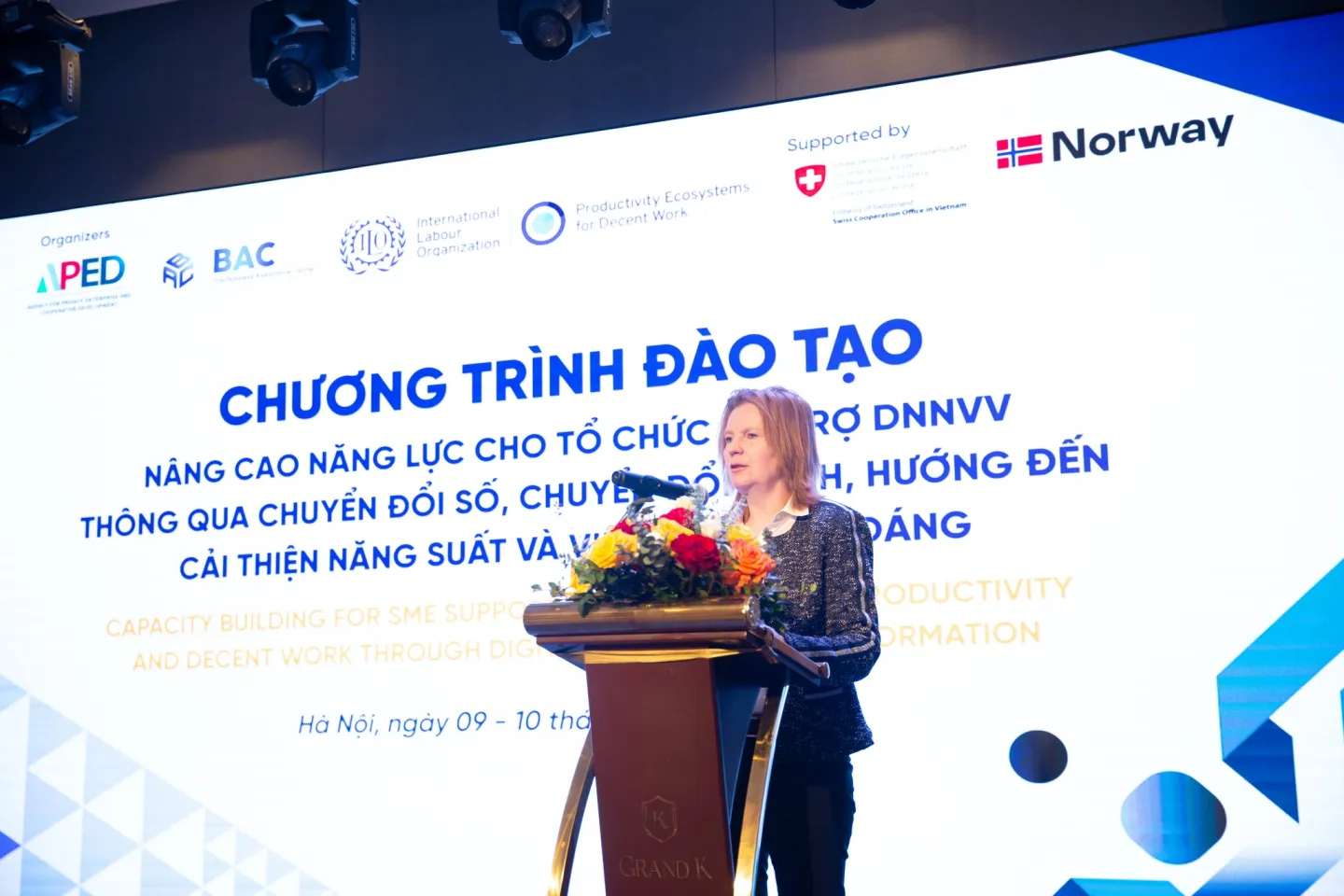
Ms. Mette Møglestue, Deputy Ambassador of Norway to Viet Nam, shared: “From Norway’s experience, I also want to underline the value of dialogue across institutions and sectors. This training brings together exactly the kind of ecosystem needed for real progress – public institutions, experts, business associations, and enterprises learning from each other. Such cooperation is essential if digital and green transition is to be scaled in ways that are both effective and locally relevant.”
Related content

Viet Nam
Viet Nam’s wood and furniture industry - A systemic sector assessment

Decarbonisation is a new priority for Viet Nam's wood processing industry

Productivity ecosystems for decent work
Productivity with purpose: Collaboration for a new era in Viet Nam

Productivity ecosystems for decent work
How strategic approaches to productivity can drive environmental sustainability and long-term economic growth

Productivity ecosystems for decent work
Training for tomorrow: The ILO equips business consultants in Viet Nam to guide human-centered AI adoption
Relevant projects

Productivity ecosystems for decent work