

Productivity ecosystems for decent work
Training for tomorrow: The ILO equips business consultants in Viet Nam to guide human-centered AI adoption
Local consultants are empowered to help SMEs in Viet Nam adopt AI responsibly—boosting productivity, protecting workers, and bridging the digital divide with a human-centered approach through the Productivity Ecosystems for Decent Work programme.
10 June 2025
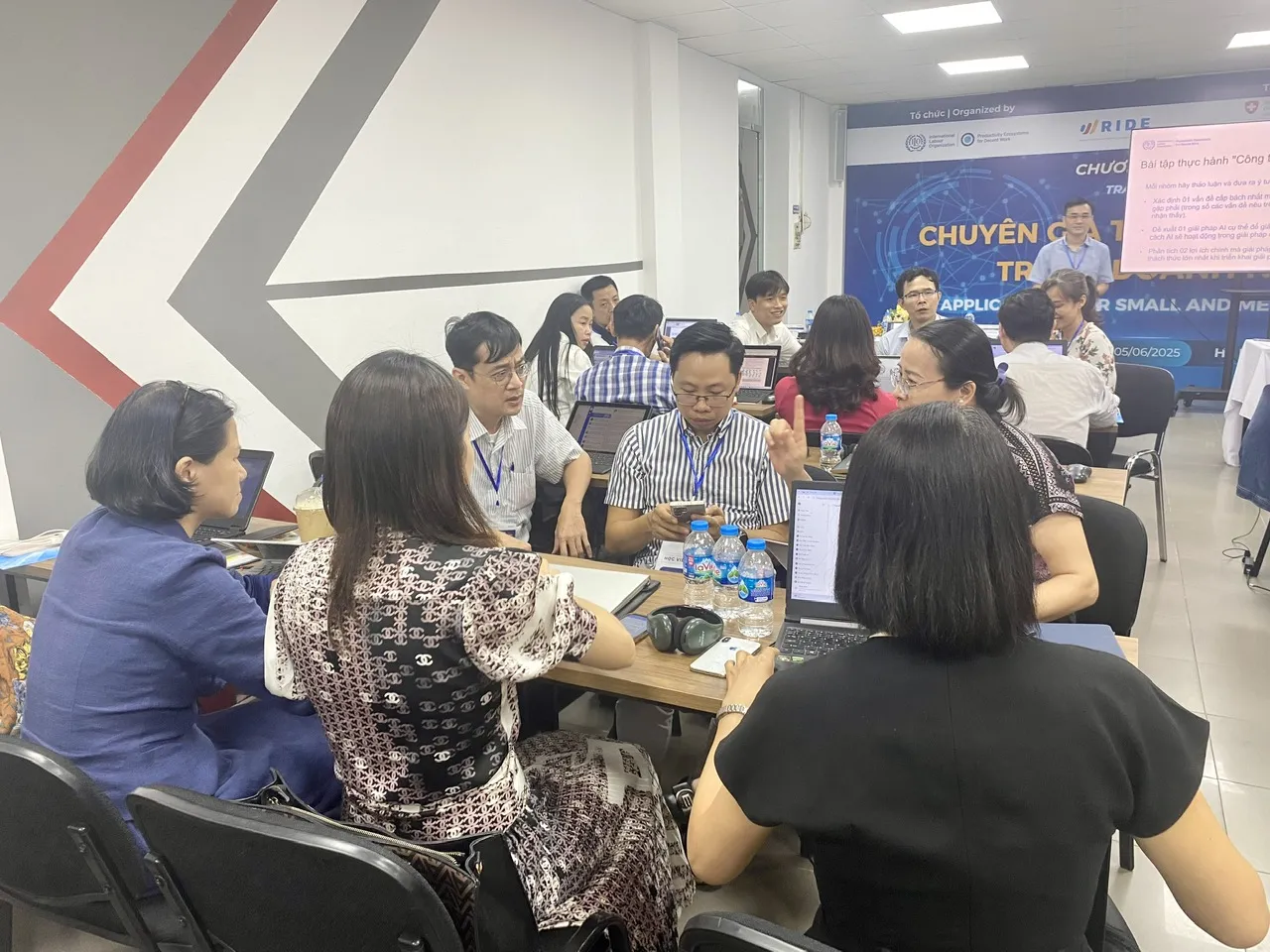
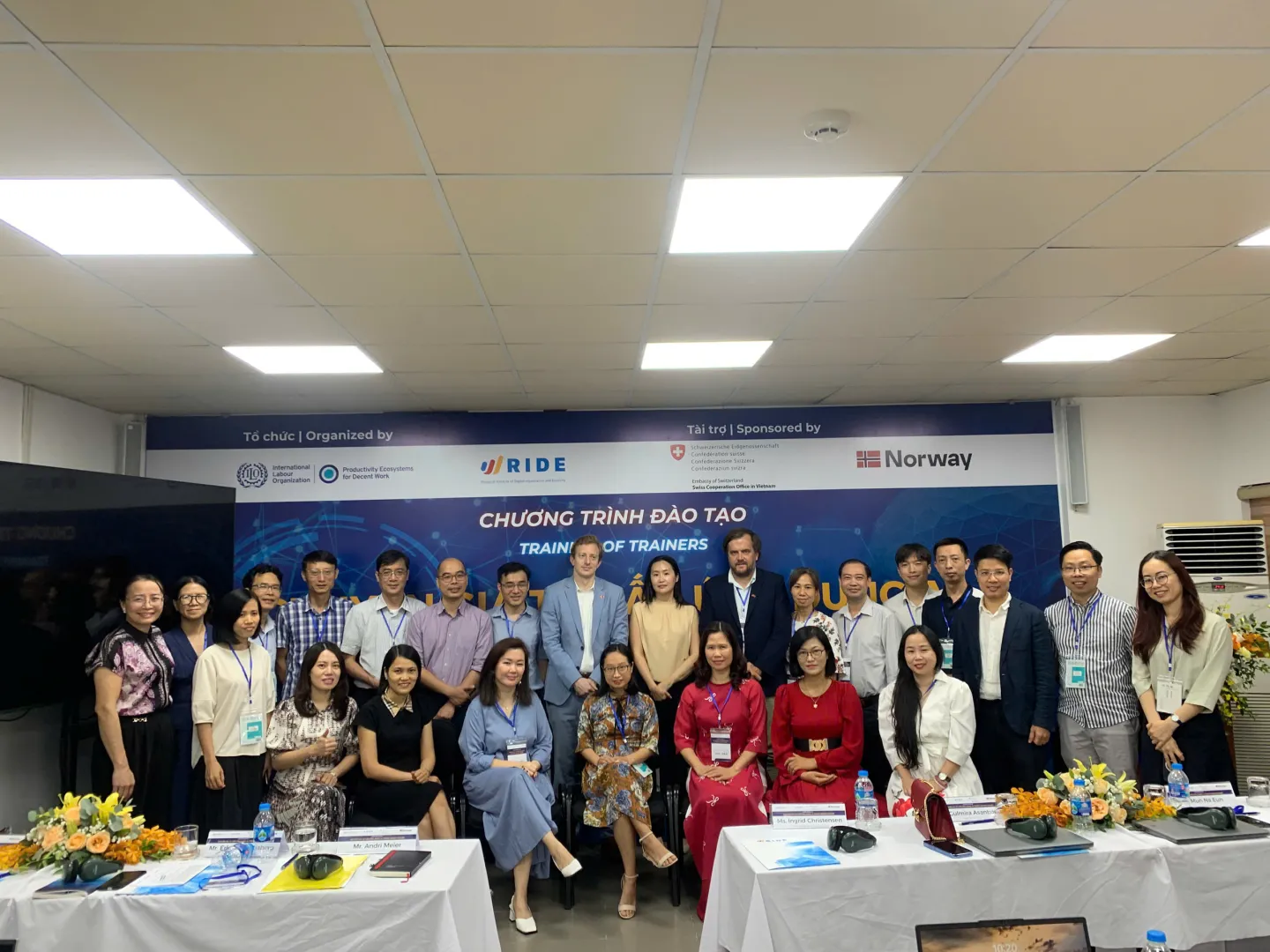
HA NOI, ILO News - The Training of Trainers (TOT) workshop on artificial intelligence (AI) applications in Viet Nam brought together business consultants to explore how AI can be applied in practical ways to support small and medium-sized enterprises (SMEs) in their digital development.
The TOT workshop was designed to be both hands-on and forward-looking, focusing on real-world applications of AI that are immediately relevant to future ready SMEs. Key topics included:
- AI for business process optimization: Participants learned how AI can streamline operations, reduce inefficiencies, and support data-driven decision-making.
- Customer experience enhancement: The training explored tools like chatbots, recommendation systems, and sentiment analysis to help SMEs better understand and serve their customers.
- AI and workforce well-being: Sessions addressed how AI can be used to improve employee satisfaction and productivity, how AI can support employee engagement while reducing repetitive tasks, and contribute to improved working conditions.
- Responsible and inclusive AI use: Emphasis was placed on transparency, accountability, and the social implications of AI adoption—ensuring that participants are equipped to guide SMEs in using AI responsibly and sustainably.
Why It Matters
SMEs are the backbone of Viet Nam’s economy, contributing significantly to employment and innovation. SMEs account for approximately 98% of all enterprises in Viet Nam and contribute around 45% to the country’s GDP (Artificial Intelligence (AI) in Vietnam - statistics and facts). Despite their economic importance, many SMEs face challenges in keeping up with rapid technological change and adopting advanced technologies like AI due to limited resources, technical capacity, and access to expertise.
While large companies in Viet Nam are increasingly investing in AI, adoption among SMEs remains relatively low. A recent report suggests that widespread AI adoption could add up to 12% to Viet Nam’s GDP by 2030—equivalent to around 79.3 billion USD (AI Catalysing Vietnam’s Digital Transformation and Growth). However, realizing this potential depends on building the capacity of smaller businesses to understand and implement AI effectively. Building capacity of local business consultants in Viet Nam is essential for ensuring the market of business extension services if available for SMEs to support their growing further in terms of knowledge and readiness for future where AI is critical for:
- Staying competitive in increasingly digital markets.
- Improving productivity and operational efficiency.
- Enhancing resilience in the face of economic and technological disruptions.
- Creating better jobs by automating routine tasks and enabling more meaningful work.
This TOT program is a proactive step toward bridging the digital divide and ensuring that SMEs are not left behind in the AI revolution.
As AI becomes increasingly embedded in the global economy, SMEs risk being left behind without the right support. This TOT program is a proactive step to ensure that local consultants in Viet Nam are equipped with the knowledge and tools to help businesses not only adopt AI, but do so in a way that is strategic, ethical, and human-centered. As AI technologies become more powerful and pervasive, it is essential to ensure they are developed and deployed in ways that prioritize human needs, rights, and values. A human-centric approach to AI means designing systems that enhance—not replace—human capabilities, and that promote dignity, fairness, and inclusion.
This is particularly important in the context of SMEs, which often operate with limited resources and may lack the in-house expertise to navigate the complexities of AI. Without guidance, there is a risk that AI adoption could lead to unintended consequences, such as reinforcing biases, displacing workers, or creating new inequalities. By training consultants to understand both the technical and ethical dimensions of AI, this TOT program helps ensure that AI is used not just efficiently, but responsibly and equitably.
What’s Next
The Training of Trainers (TOT) workshop on artificial intelligence (AI) applications in Viet Nam has completed its first phase in Hanoi Viet Nam. The programme brought together 36 business experts from a wide range of institutions, including governmental agencies, universities of technology, economic academic institutions, business associations, and consulting firms.
We’re also collecting feedback from participants, and early responses suggest there are some powerful insights and quotes that will enrich our upcoming communications. Stay tuned as we continue this exciting journey toward a more inclusive, AI-enabled future!
The program will now move into its enterprise practice phase, where participants will work directly with SMEs to apply what they’ve learned. This hands-on engagement will help translate theory into impact, fostering innovation and resilience in Viet Nam’s SME sector.
We extend our sincere thanks to our implementation partner, Research Institute on Digital organisation and Economy (RIDE), and to our supportive donors—SECO Economic Cooperation and Development (SECO) and the Norwegian Agency for Development Cooperation (NORAD)—for making this initiative possible.

Related content

Country portal
Viet Nam
Relevant projects

Productivity ecosystems for decent work