

Interview
When businesses operate efficiently with high levels of productivity, workers can earn more by working fewer hours
As per World Bank data, Viet Nam's labour productivity stands at US$ 2,400, significantly lower than competing markets in Asia, and only one-third and one-tenth of labour productivity levels in Malaysia and Singapore, respectively.
19 September 2024

Ho Chi Minh City, VIET NAM (ILO News) - Phuong Quyen, Editor of the “Wood and furniture” magazine published by the Handicraft and wood industry association, Ho Chi Minh City (HAWA) sat down for an interview with Phung Duc Hoang, National Project Coordinator of the ILO Productivity Ecosystems for Decent Work Programme to discuss the issue of low labour productivity in Viet Nam, particularly within the wood processing industry.
--
Phuong Quyen - Handicraft and wood industry association, Ho Chi Minh City (HAWA): Many workers in the manufacturing sector work overtime just to earn a basic living. Would you say labour is extremely cheap in Viet Nam?
Phung Duc Hoang - ILO Productivity Ecosystems for Decent Work Programme : Overtime should not be the only way for workers to increase their income. Since 2010, the ILO has studied production conditions of businesses with low productivity, and we have seen that long working hours in such companies is common. In fact, when businesses operate efficiently with high productivity, workers earn more while working fewer hours. This requires businesses to invest in training, improve processes, and apply technologies that enhance productivity.
Viet Nam is seen as a manufacturing hub in industries such as seafood, textiles, and footwear. These sectors typically rely on a large number of workers. Do you foresee labour supply becoming a challenge for Vietnamese businesses?
As foreign direct investment (FDI) grows, the demand for skilled labour increases. To address this, businesses can focus on maximizing the potential of their current workforce by investing in training and development, and implementing management practices that boost productivity.
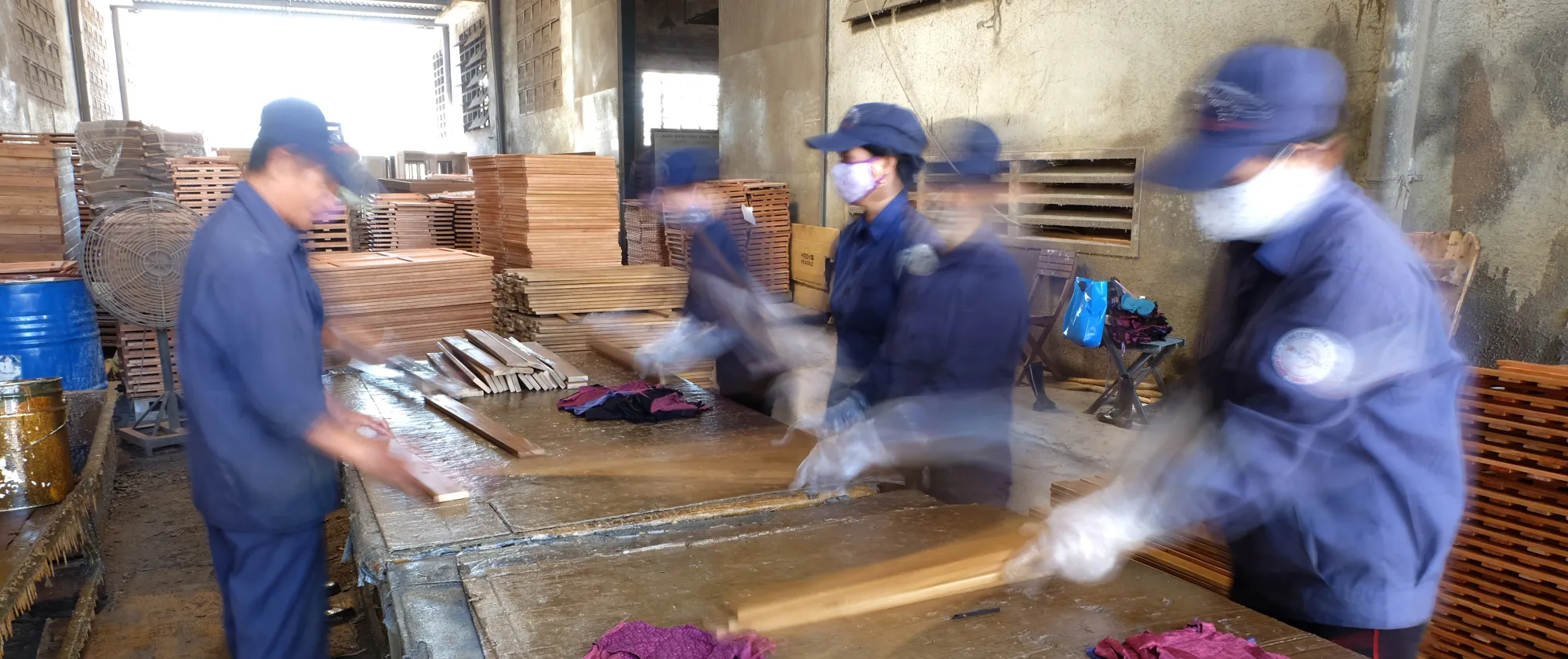
Let’s take the example of the wood processing industry. Due to working conditions and skill requirements, the industry may face unique recruitment challenges. By improving worker training and optimizing processes, companies can improve productivity, become more competitive, and improve working conditions – ultimately creating conditions for worker retention and sustainable growth.
The wood processing sector in Viet Nam are increasingly adopting modern machinery. Will this approach improve labour productivity?
Enhancing labour productivity requires a comprehensive approach. In addition to modern machinery, it’s important to improve workers’ skills, optimize processes, and fostering innovation. This requires both micro-level efforts from businesses and macro-level efforts through national policies. The wood processing industry has great potential in this respect.
Following the COVID-19 pandemic and global economic instability, manufacturing businesses are struggling. What should wood processing companies prioritize to improve efficiency and resilience?
Digital and green transformations are crucial for companies, especially those focused on export markets. By strategically incorporating these into business practices, businesses can see immediate improvements, while laying the foundation for long-term and sustainable productivity growth.
ILO and HAWA have collaborated on several initiatives for productivity growth in Viet Nam's wood processing industry. Can you share some of these efforts and their benefits for businesses?
Through the ILO Productivity Ecosystems for Decent Work Programme funded by State Secretariat for Economic Affairs (SECO) and Norwegian Agency for Development Cooperation (NORAD), we help businesses prioritize productivity improvements through applying lean manufacturing principles, and adopting digital technology, and building worker capacities. Our partnerships with HAWA and three other associations within the wood sector provide training and consulting services with a focus on optimizing operational processes, adopting best practices, and leveraging technology for digital and green transformation.
Additionally, our collaboration with the Swiss Import Promotion Programme (SIPPO) supports trade promotion among Vietnamese businesses – another key driver of productivity. Our goal is simple – we help businesses integrate productivity improvements into their core strategies, and enable them to achieve higher efficiency, lower costs, and increased competitiveness, ensuring long-term success and better market positioning.
Thank you for sharing your insights, Hoàng!
----
This interview was originally published in Vietnamese on 27 August 2024 in “Wood and furniture Magazine, Issue 99”.
Related content

Productivity ecosystems for decent work approach

Country portal
Viet Nam

Viet Nam
Viet Nam’s wood and furniture industry - A systemic sector assessment

Decarbonisation is a new priority for Viet Nam's wood processing industry
Formalization
Workers in informal employment in the wood industry of Viet Nam
Relevant projects

Productivity ecosystems for decent work