


Productivity
Productivity Ecosystems for Decent Work Project
Duration
1 January 2022 - 31 July 2026
Development partner(s)
Swiss State Secretariat for Economic Affairs (SECO) & Norwegian Agency for Development Cooperation (Norad)
Reference
GLO/21/16/MUL
Location
South Africa
Contact
Teklu Kidane Project Manager
The ILO has launched a programme to help address constraints to productivity growth and decent job creation. The Programme is built on the recognition that productivity is determined by the myriad of interfacing dynamics described above. It applies, as implied in the name, an ecosystems approach to improve productivity and working conditions.
Productivity needs to be understood beyond the level of the individual worker: productivity and decent work progress as part of a broad ecosystem where multiple powerful factors interact, including financial capital, materials and energy, skills and knowledge, or competition and collaboration. Policy can and should influence all of these factors.
The project focuses on two key industries, leather and footwear, and the automotive industry. These were chosen in line with the South African government’s sectoral development priorities and with the participation of an advisory committee, including employers’ and workers’ organisations. The SMEs in the sector, their respective value chains, and the policy environment that shapes them, together constitute the “slice” of the ecosystem (as illustrated in Figure 3 above) that will serve as the basis for projective interventions, with emphasis on productivity, decent work, gender equality, and sustainability, among other factors.
The Productivity Ecosystem Approach
Sector Analysis
Systemic Sector Analysis of Leather and footwear
Despite having high levels of tariff protection, the sector has struggled over the years to be competitive. The industry faces several challenges that hinder growth and job creation.
Systemic Sector Analysis of the Automotive sector
The automotive supply chain in South Africa is complex and interconnected, involving multiple tiers of suppliers. The supply chain includes both local and international suppliers, emphasis on local.
Project partner

Related resources
Productivity Ecosystems for Decent Work Project in South Africa
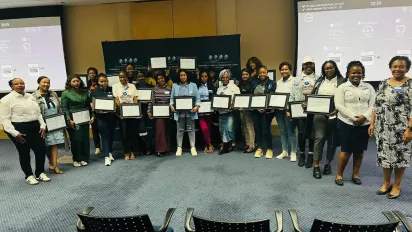
Woman in automotive capacitated through Improve Your Business training and coaching
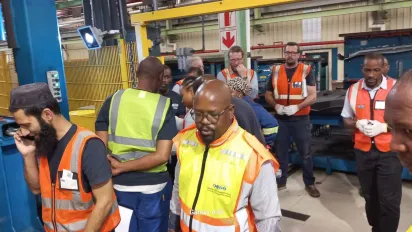
Gauteng Stakeholders Unite to Explore Automotive Industry Cluster
Inclusive growth in motion, Stakeholders mobilize for automotive industry cluster

Productivity Ecosystems for Decent Work Project in South Africa
Mapping illicit trade in illegal and counterfeit footwear and leather goods in South Africa

ILO Supports South Africa's drive for better productivity measurement and collaboration
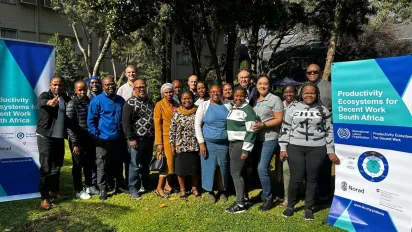
Empowering South Africa's entrepreneurs: ILO's training of trainers workshop

Enhancing productivity measurements in South Africa
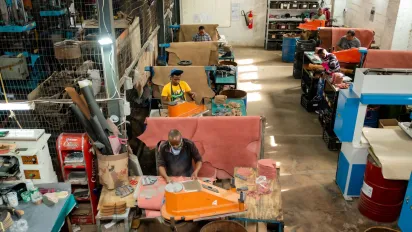
Partnership with South African Footwear and Leather Export Council (SAFLEC)
ILO supports specialized design workshops to strengthen designer capabilities in 50 SMEs from the South African footwear and leather sector

An update on how productivity and decent work are being boosted in South African SMEs
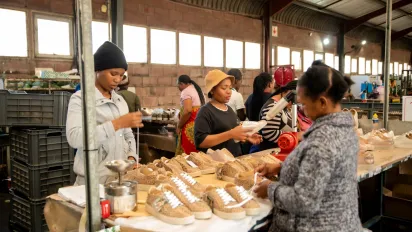
Action toward shared prosperity through dialogue, skills, and inclusion
Trade Unions in South Africa lead the way for fairer productivity gains