

Toward safer seas: Enhancing work conditions in North Kalimantan’s fishing sector in Indonesia
The ILO training programme raises awareness of occupational health standards to help build a safety-first culture in Indonesia's fishing industry.
22 September 2025
Anugrah Rezki Gani, 18 years old, has spent the past two years working at sea as a dockworker on a fishing boat. Alongside two other crew members, he begins his shift around 4 p.m., when the vessel returns to Port Tangkayu II in Tarakan City, North Kalimantan, Indonesia to unload the day’s catch. His primary responsibility is transferring the fish from the boat to the port.
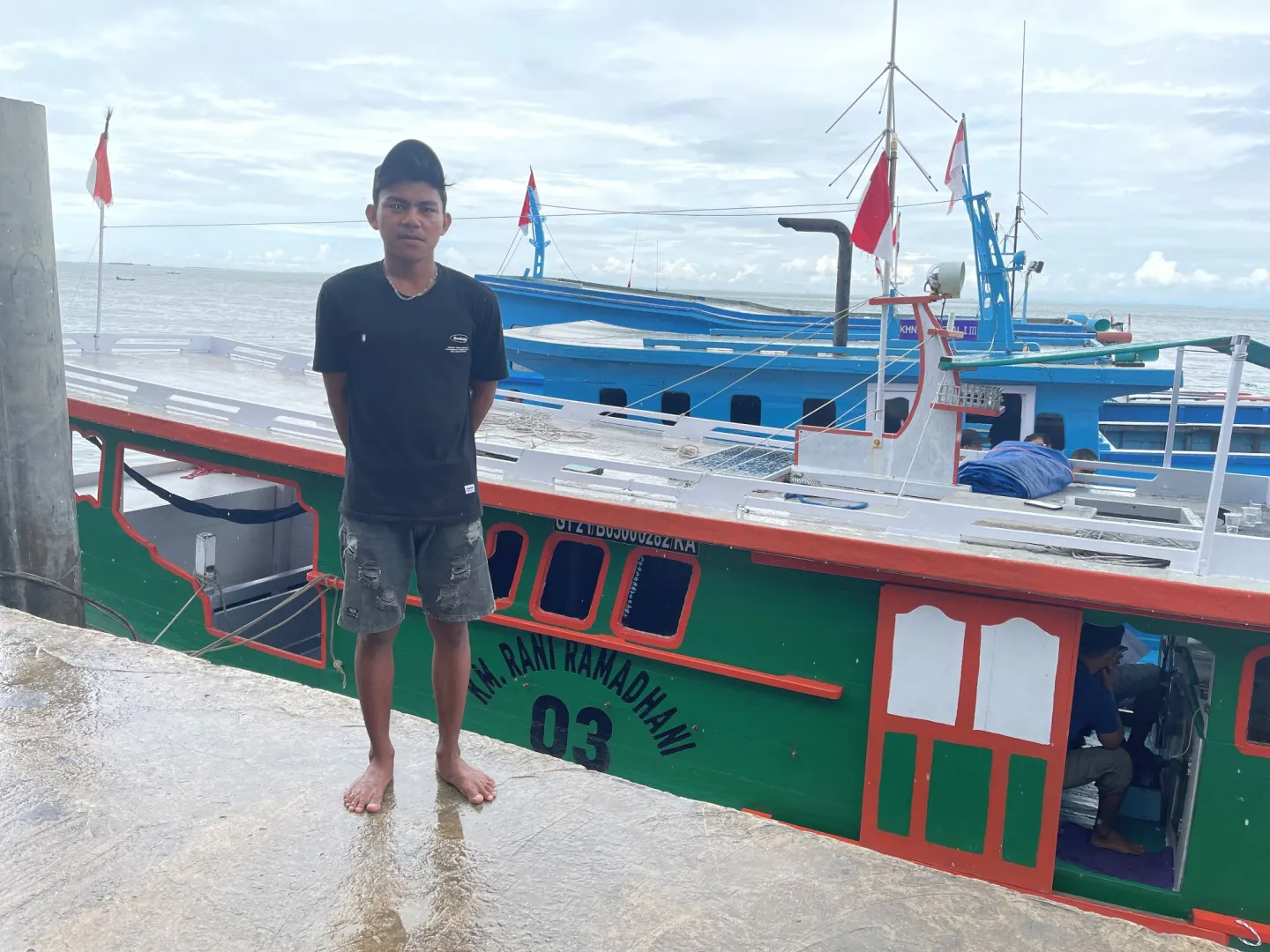
Once unloading is complete, Anugrah cleans the deck and prepares the fishing gear for the next departure at 10 p.m., heading toward the Sebatik waters – a maritime zone that separates Indonesia and Malaysia. The boat typically arrives between 6 and 7 a.m., allowing him a brief rest.
“I do not take part in catching the fish,” he explained. “I get some rest and before we head back to the port, I process and store the catch. Then I unload it once we dock. For six hours, I unload, clean the boat and prepare it for departure. That’s my daily routine.”
After a while, the bridge gets slippery. I often slip and fall into the water. Sometimes I fall with the catch and sometimes I manage to throw the fish onto the dock before falling in myself.
Anugrah Rezki Gani, a young fisher
Regarding safety, Anugrah considers the safety conditions on board to be reasonably adequate: the boat is in good shape, resting room can accommodate all the fishers, safety equipment is available and basic first aid is provided. However, the job remains physically demanding, particularly when he hauls heavy packs of fish, each weighing up to 50 kilograms for snakehead and 100 kilograms for nomei, across a narrow wooden bridge that connects the vessel to the harbour.
“It is tough work,” he admitted. “After a while, the bridge gets slippery. I often slip and fall into the water. Sometimes I fall with the catch and sometimes I manage to throw the fish onto the dock before falling in myself.”
Anugrah sees falling into the water as just part of the job, a risk he has come to accept. “Sometimes I think about quitting,” he admitted, “but I am still unsure. No one in my family works at sea.”
His family relocated to Tarakan City from Sidenreng Rappang Regency in South Sulawesi back in 2020, during the COVID-19 pandemic. He was 13 at the time and continued his education until graduating from junior high school. As the eldest of three siblings, he chose to work at the port as a dockworker for a year. In 2023, he transitioned to working aboard a fishing vessel.
“I want to work at sea,” he said. “But the hard labour often makes me think back to my childhood dream of becoming a soldier.”
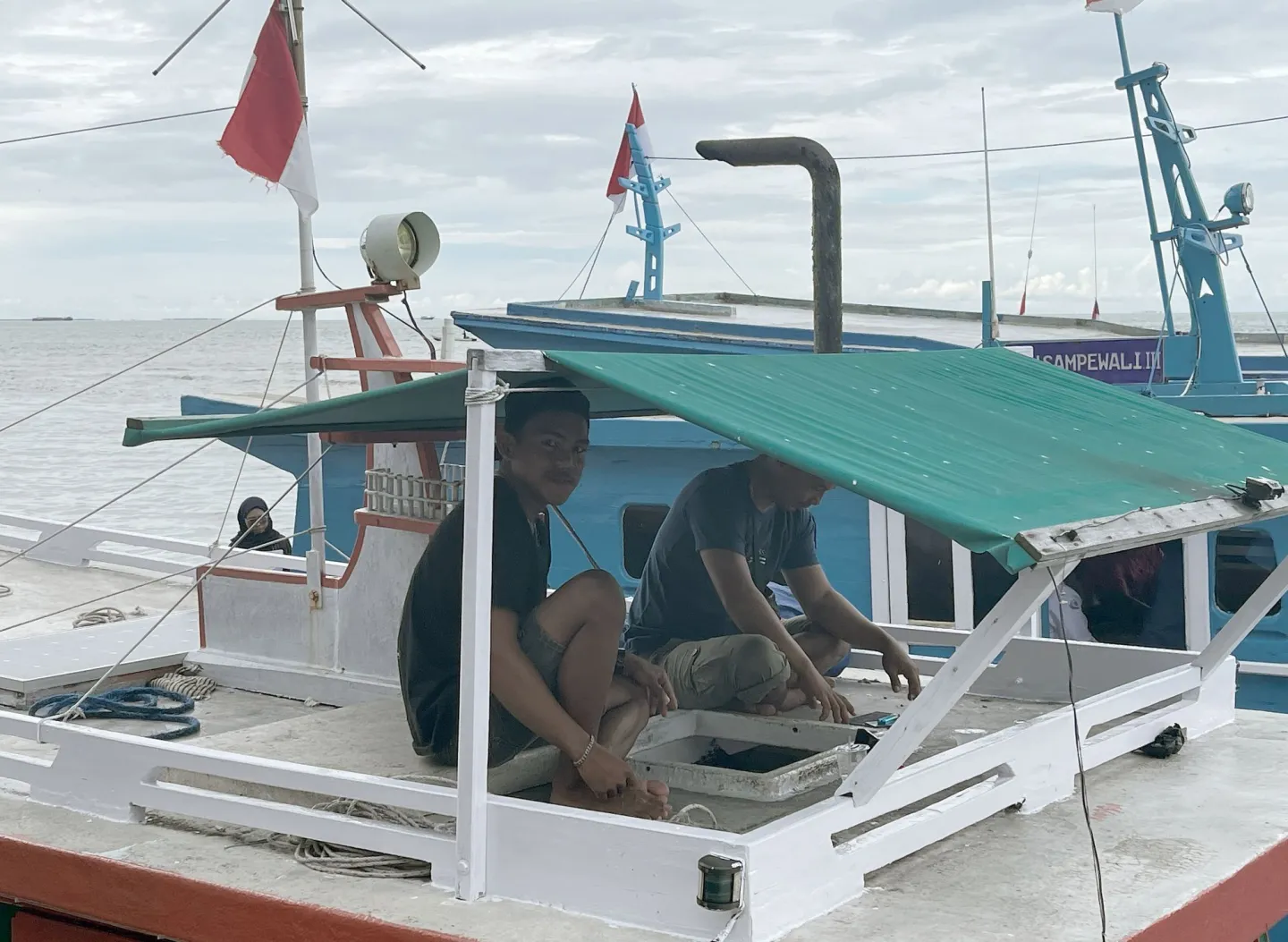
Commenting on Anugrah’s working conditions, Albert Bonasahat, the National Project Coordinator of the ILO’s Ship to Shore Rights South-East Asia programme, highlighted the significance of the official launch of the Joint Inspection Team for Labour Norms onboard Fishing Vessels in North Kalimantan on 9 September. The official launched was followed by the Work Improvement in the Fishing Industry (WIFI) training programme for labour and fishing inspectors from the Provincial Offices of Manpower and the Marine Affairs and Fisheries of North Kalimantan.
OSH is now part of the ILO's ten fundamental conventions. It is also a very strategic issue, serving as the first stepping stone, with a higher level of acceptance among various stakeholders, before promoting broader labour issues relevant to fishers, such as minimum age for work, social security or fishers' work agreement.
Albert Bonasahat, the National Project Coordinator of the ILO’s Ship to Shore Rights South-East Asia programme
As part of the WIFI training programme, 32 labour and fishing inspectors, four of them were women, got onboard four fishing vessels docked at Tangkayu II Fishing Port, including the vessel where Anugrah works. While onboard, using provided handouts and learning to apply the ILO’s OSH checklist, they assessed key aspects of workplace safety, such as safe materials handling, housekeeping, hazard and risk control, and health, welfare, and work organization at the fishing ports and onboard the vessels, to determine whether improvements were needed.
“OSH is now part of the ILO's ten fundamental conventions. It is also a very strategic issue, serving as the first stepping stone, with a higher level of acceptance among various stakeholders, before promoting broader labour issues relevant to fishers, such as minimum age for work, social security or fishers' work agreement,” stated Albert. “The WIFI training will help them to learn how to apply immediate, practical and low-cost improvements for enhancing OSH in North Kalimantan fishing industry.”
The ILO’s Ship to Shore Rights South-East Asia: Safe Migration for Decent Work in the Blue Economy Programme is a regional effort funded by the European Union (EU) and implemented in collaboration with the International Organization for Migration (IOM) and the Food and Agriculture Organization of the United Nations (FAO). The programme promotes safe labour migration and decent work across Southeast Asia’s fish and seafood supply chains.
Related content

Labour migration
Ship to Shore Rights South-East Asia: Safe migration for decent work in the blue economy
Press release
North Kalimantan Province in Indonesia launches a Joint Inspection Team to strengthen labour standards in the fishing sector

Central Java shares good practices with North Kalimantan to strengthen labour standards in the Indonesia's fishing sector
Indonesia's North Kalimantan promotes safer working conditions for fishers
Relevant projects
Labour migration
Ship to Shore Rights South-East Asia: Safe migration for decent work in the blue economy