

Central Java shares good practices with North Kalimantan to strengthen labour standards in the Indonesia's fishing sector
Knowledge exchange between provincial joint inspection teams highlights collaborative efforts to promote labour rights and decent work for fishers across Indonesia.
15 September 2025
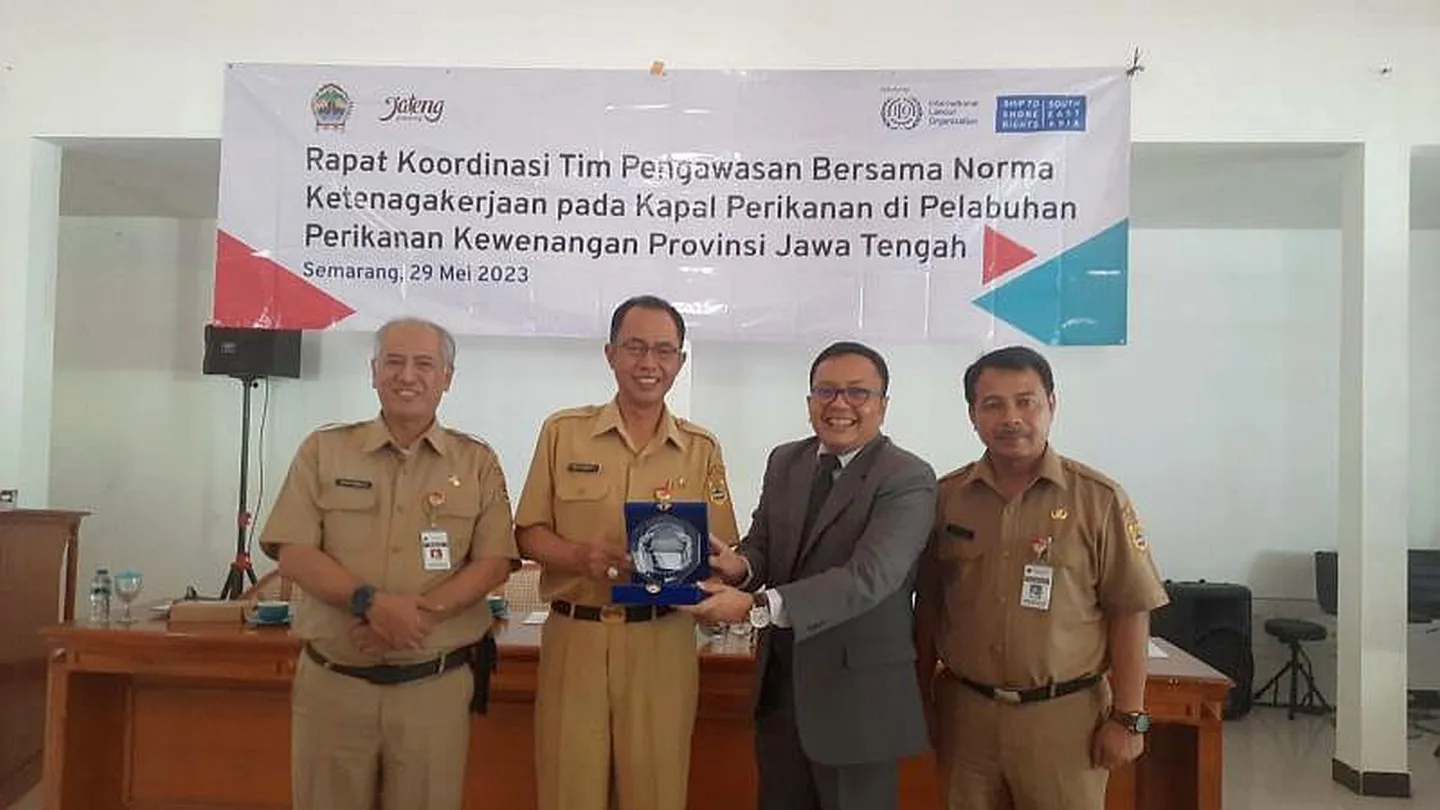
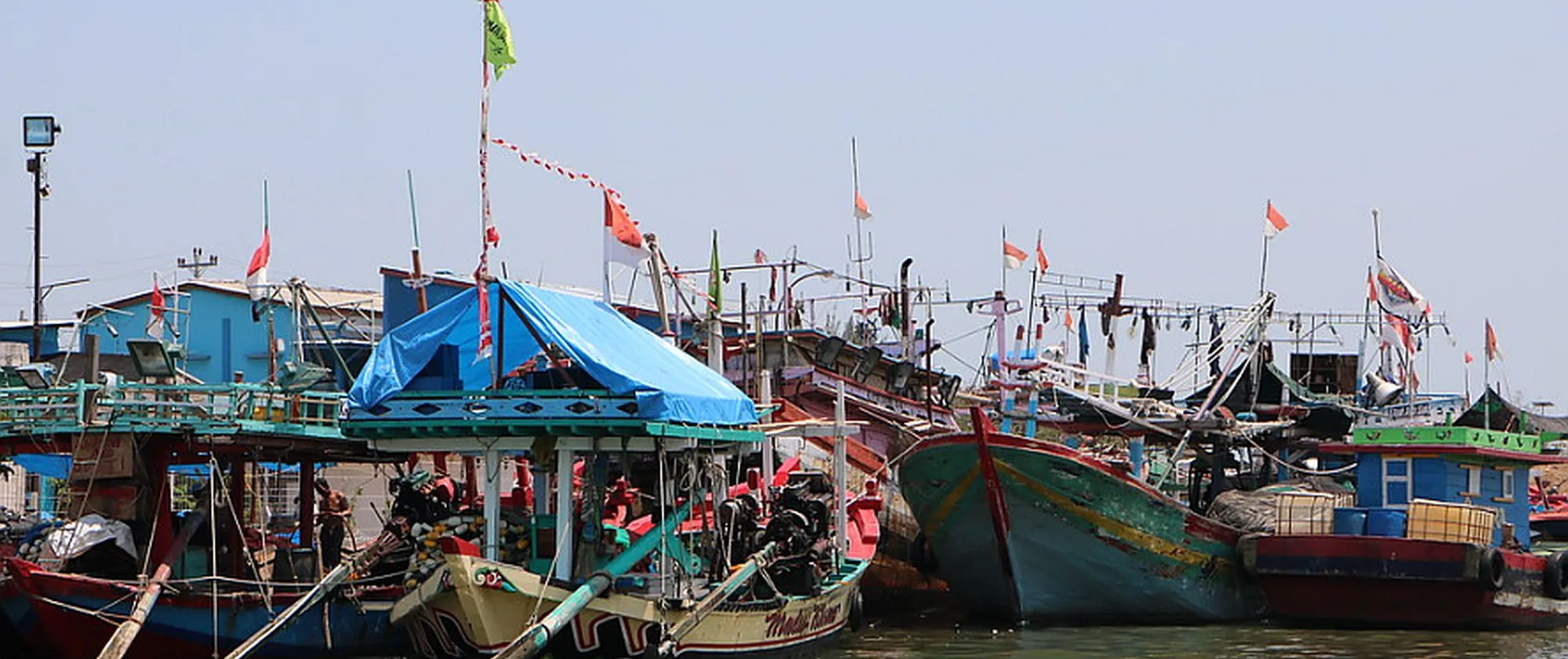
TARAKAN, North Kalimantan, Indonesia (ILO News) - Central Java Province, known for its coastal and fishing communities, is a key province of origin for Indonesian fishers seeking work in both domestic and foreign fishing vessels. With support from the ILO’s Ship to Shore Rights South-East Asia: Safe Migration for Decent Work in the Blue Economy programme, Central Java became the first province to establish a Joint Inspection Team for Labour Norms onboard Fishing Vessels in May 2023, formalized through Regional Secretary Decree No. 523/012 of 2023.
Funded by the European Union (EU) and implemented in collaboration with the International Organization for Migration (IOM) and the Food and Agriculture Organization of the United Nations (FAO), this regional programme promotes safe labour migration and decent work across Southeast Asia’s fish and seafood supply chains.
As agreed upon by the Marine Affairs and Fisheries Office and the Manpower and Transmigration Office of Central Java Province, Ahmad Aziz, S.E., Head of the Manpower and Transmigration Office of Central Java, presented key lessons from two years of joint inspection implementation during an online session attended by 32 labour and fisheries inspectors from North Kalimantan. The session was part of the official launch of the second Joint Inspection Team in North Kalimantan Province, held in Tarakan Island City on 9 September 2025.
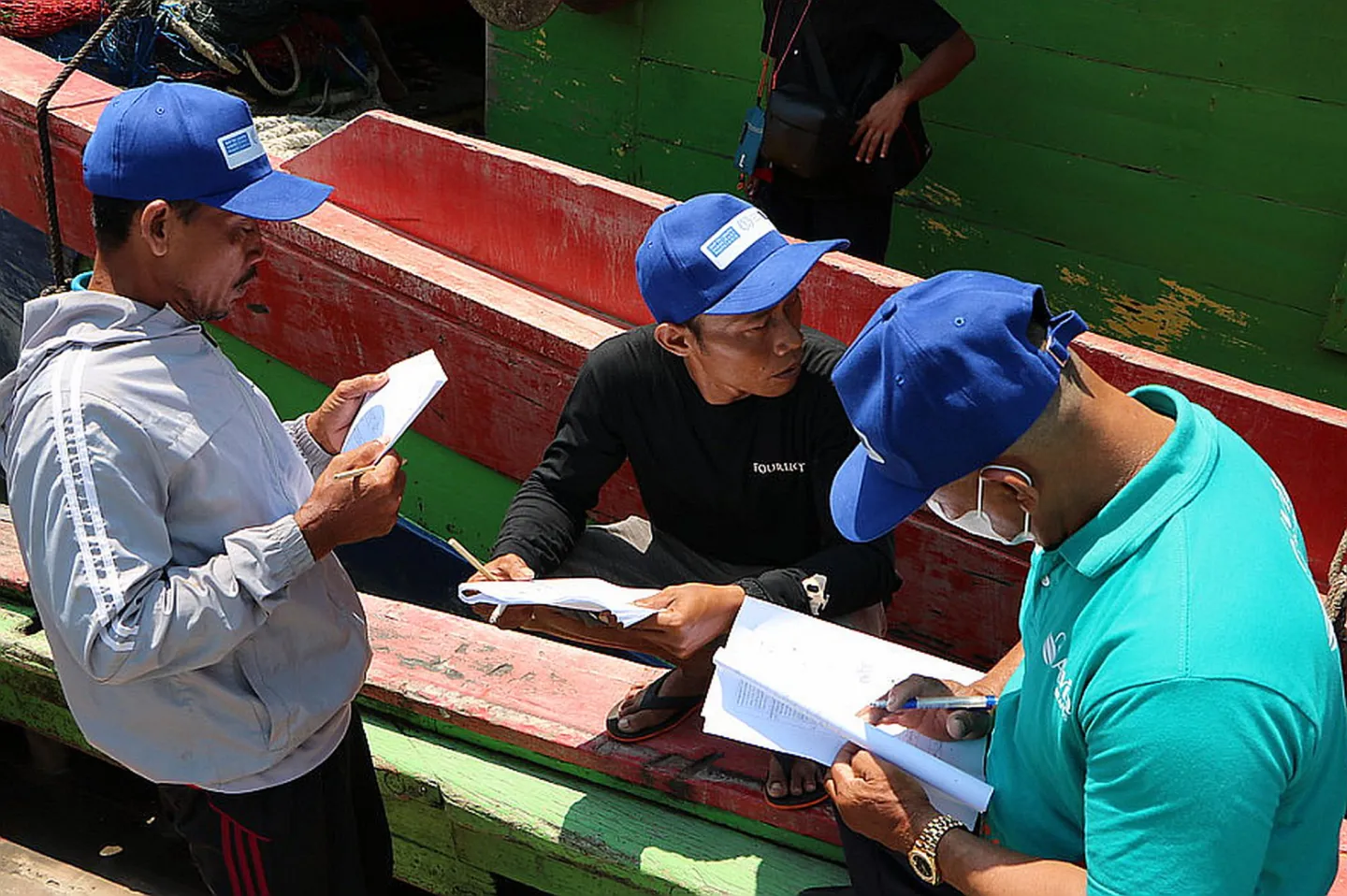
Reflecting on the initiative’s progress since its inception in May 2023, Ahmad highlighted the team’s participation in a earlier series of training sessions centred on the ILO’s Work Improvement in the Fishing Industry (WIFI) training on Occupational Safety and Health (OSH). Supported by the ILO’s Ship to Shore Rights programme, these sessions took place in September 2023 at Klidang Lor Coastal Fishing Port in Batang Regency and again in February 2024 at Bajomulyo Coastal Fishing Port in Pati Regency.
After completing the training, the team carried out joint inspections from March to June 2024 across six coastal fishing ports: Bajomulyo, Cilacap, Tawang, Tegalsari, Larang and Karimunjawa. These inspections reached 37 ship owners, covering 70 vessels and more than 1,000 fishers. The initiative was fully funded by both the national State Budget (APBN) and the Regional Budget of Central Java Province.
Strong collaboration and goodwill from all parties, including the harbour master, have been essential in ensuring smooth coordination during joint inspections. This teamwork is key to protecting the rights and welfare of our fishers.
Ahmad Aziz, S.E., Head of the Manpower and Transmigration Office of Central Java
Ahmad noted that one of the key takeaways was the “shock therapy” experienced by inspectors, both cultural and professional. “The contrast between land-based and sea-based work environments can be striking,” he explained. “Labour inspectors who are used to land-based settings often find the conditions and nature of work at sea unfamiliar and challenging. Understanding these differences is essential for effective inspection and protection of fishers.”
Another major challenge, Ahmad added, was the difference in authority between the Ministry of Manpower (MoM) and the Ministry of Marine Affairs and Fisheries (MMAF). The MoM is responsible for enforcing labour standards, including occupational safety and health (OSH) onboard vessels, to ensure fishers enjoy decent working conditions. Meanwhile, the MMAF oversees compliance with maritime regulations and fishing practices, focusing on the operational aspects of the fishing industry.
“We have managed to overcome this challenge through extensive discussions and by gradually developing shared terms that align with both ministries,” Ahmad explained. “Strong collaboration and goodwill from all parties, including the harbour master, have been essential in ensuring smooth coordination during joint inspections. This teamwork is key to protecting the rights and welfare of our fishers.”
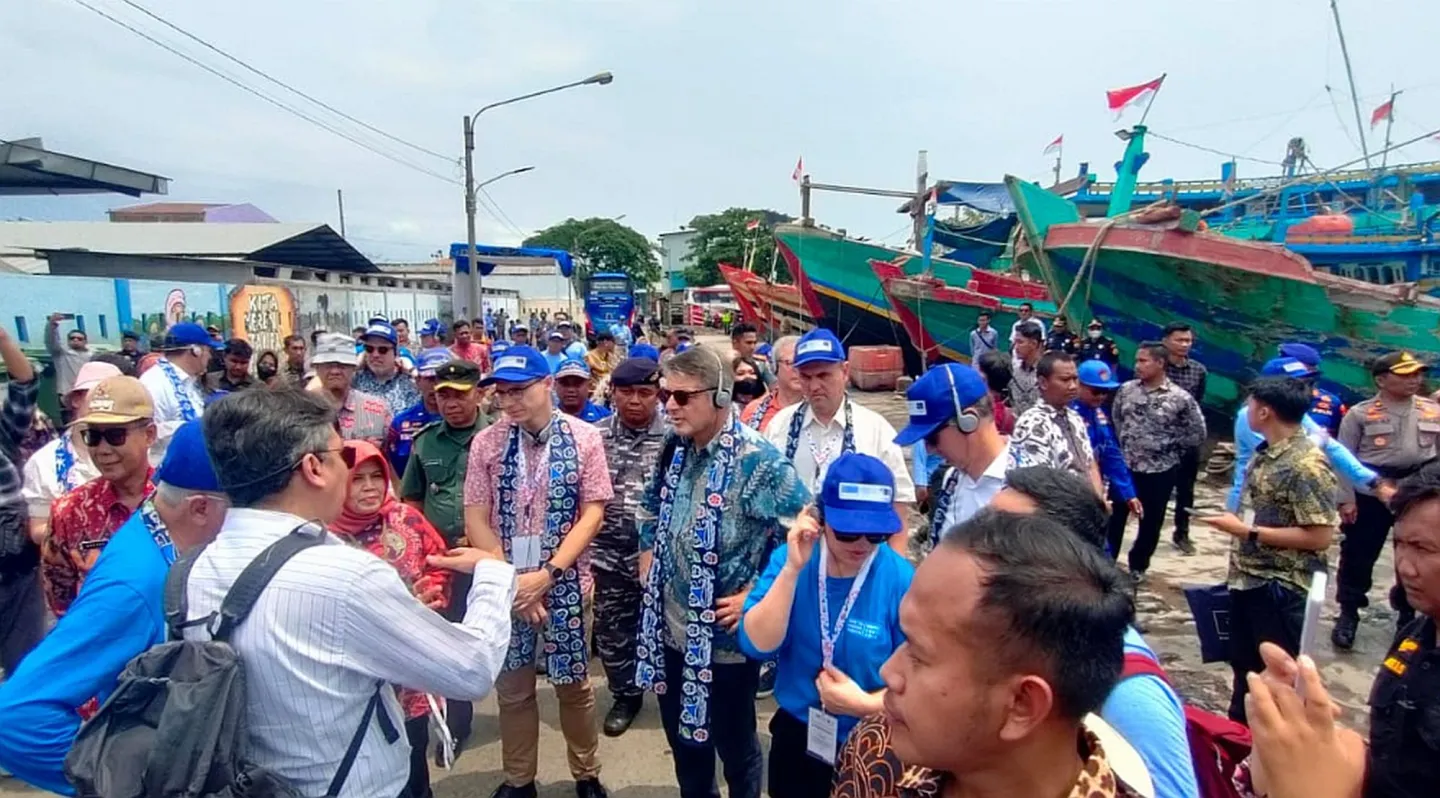
Ahmad shared that the province was honoured to welcome a high-level delegation from the Embassies of EU Member States in Indonesia, the EU Delegation and the ILO during their visit to Tegalsari Port on 9-10 September 2024. The visit aimed to gain deeper understanding of the collaborative efforts to promote safe labour migration and decent work for fishers.
During their time at the port, the Ambassadors and delegates observed ongoing activities and learned about the joint labour monitoring process. They also held discussions with key stakeholders, including representatives from the local government, workers’ unions, and migrant fishers, to explore the challenges faced in the sector and identify potential solutions.
“The Central Java government is proud to contribute to this important initiative,” Ahmad remarked. “We hope that the next high-level international visit, as we had previously, will be to North Kalimantan, where the future delegation can witness how Indonesia is progressively improving its efforts by taking meaningful steps to promote the establishment of joint labour inspection teams in more provinces to ensure safe labour migration and decent working conditions for fishers.
He wrapped up his session by noting that the joint inspections had led to greater awareness of labour rights among fishers, particularly their right to employment social security. “Access to employment social security not only improves fishers’ productivity and well-being,” he said, “but also plays a vital role in driving the country’s economic growth.”
The Central Java government is proud to contribute to this important initiative.
Related content

Labour migration
Ship to Shore Rights South-East Asia: Safe migration for decent work in the blue economy
Press release
North Kalimantan Province in Indonesia launches a Joint Inspection Team to strengthen labour standards in the fishing sector
Indonesia's North Kalimantan promotes safer working conditions for fishers
Toward safer seas: Enhancing work conditions in North Kalimantan’s fishing sector in Indonesia
Relevant projects
Labour migration
Ship to Shore Rights South-East Asia: Safe migration for decent work in the blue economy