

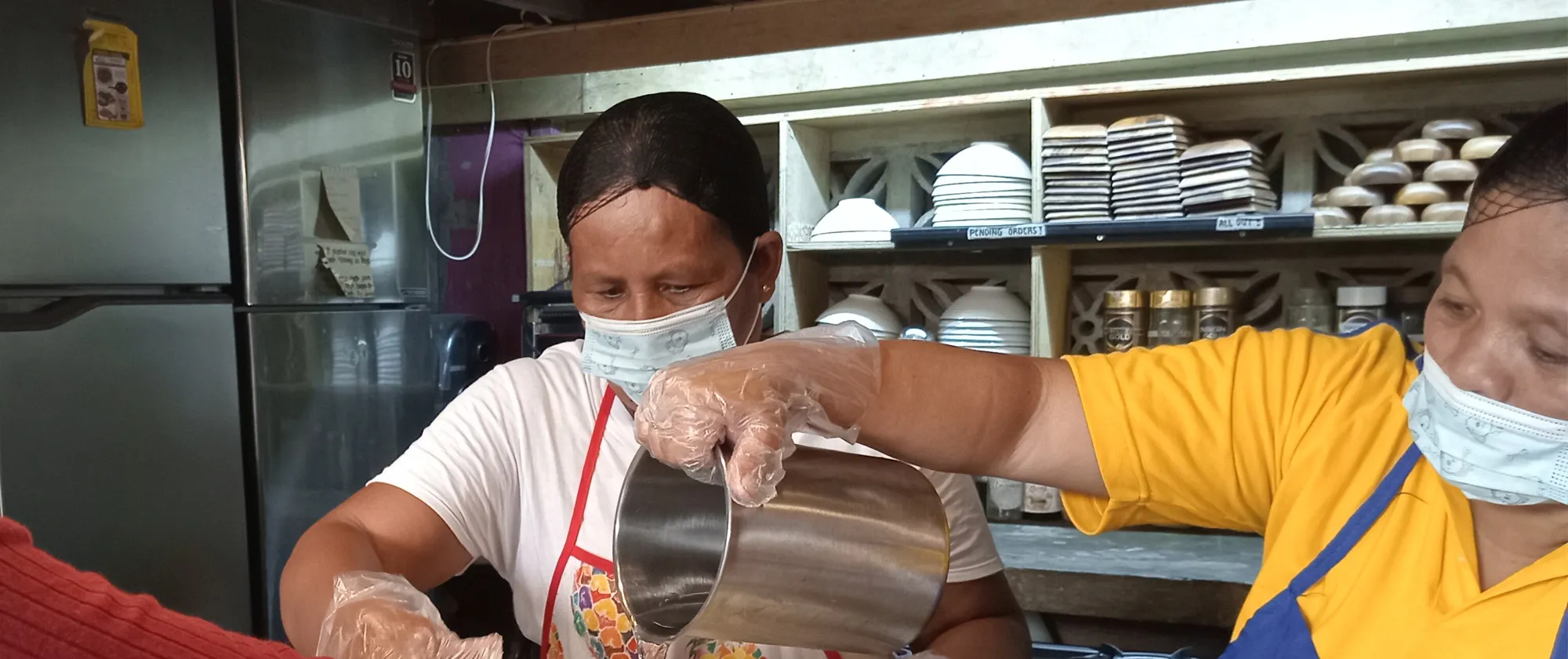
Coconut culinary training
From storm to stove: Coconut culinary skills revive livelihoods in Siargao
A mother and aspiring entrepreneur rebuilt her life through coconut farm recovery and culinary training, which helped turn her loss into coconut muffins, coco balls, and new hope.
22 August 2025
SIARGAO ISLAND, Philippines (ILO News) - Levy Alatraca stood in disbelief when Super Typhoon Odette (Rai) stripped bare their coconut farm. The storm had uprooted hundreds of coconut trees and destroyed their family’s home and livelihood.
“It felt like the end,” the 50-year-old Levy recalls. “The typhoon was too strong. How would we survive without the coconut trees? My children know that coconuts are our lifeline. I feared they would not be able to continue their education.”
For decades, Levy’s family relied on copra, the dried meat of coconuts used to extract oil, as their main source of income. The devastation rippled beyond her household. As a member of the Esperanza Farmers Credit Corporation, Levy was concerned about the fate of the entire community, which also relied on coconut products.
In the aftermath, Levy refused to succumb to despair. She opened a small store, selling snacks and drinks as an effort to keep her family afloat. But recovery was slow and uncertain.
Years later, a partnership between the International Labour Organization (ILO) and the Philippine Coconut Authority (PCA), supported by the Government of Japan, gave her renewed hope.
"We are grateful to the ILO. The PCA provided coconut seedlings, and the ILO paid the farmers who planted them. "We planted new coconuts and coconut seedlings," Levy explains. "The ILO also taught me how to make coconut muffins and coco balls out of shredded coconuts. There are so many recipes you can make with coconut."
The ILO’s Rebuilding Better Coconut Economy Project, funded by the Government of Japan, partnered with the Siargao local government and Lokal Lab to restore coconut farms and provide culinary training to supports the island’s thriving tourism. Known as the surfing capital of the Philippines, Siargao is leveraging its coconut industry to boost sustainable development.
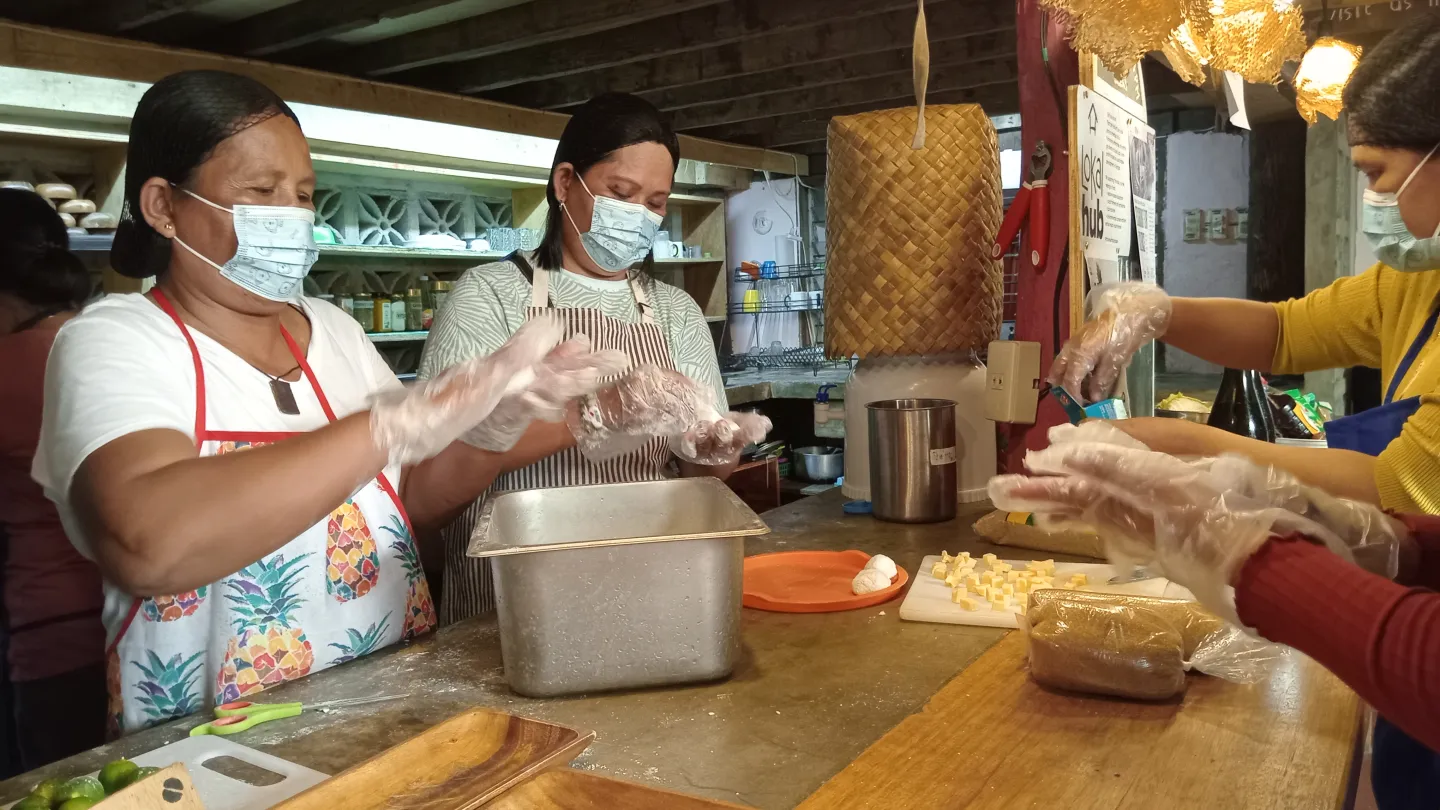
Creating waves of change, the ILO’s Formalization of the Informal Economy Project introduced a one-stop Social Protection registration in Siargao Island to connect informal workers with employment, social protection and business services. The project is funded through the Regular Budgetary Supplementary Account of the Governments of Belgium, Denmark, France, Germany, Italy, Luxembourg, Netherlands, Norway and Sweden.
“By developing coconut culinary skills, we unlock new market options to transform coconuts into high-value products. With the right support, this model can be scaled and enhanced to offer decent work, social protection, and a just transition for more communities,” explains Khalid Hassan, Director of the ILO Country Office for the Philippines.
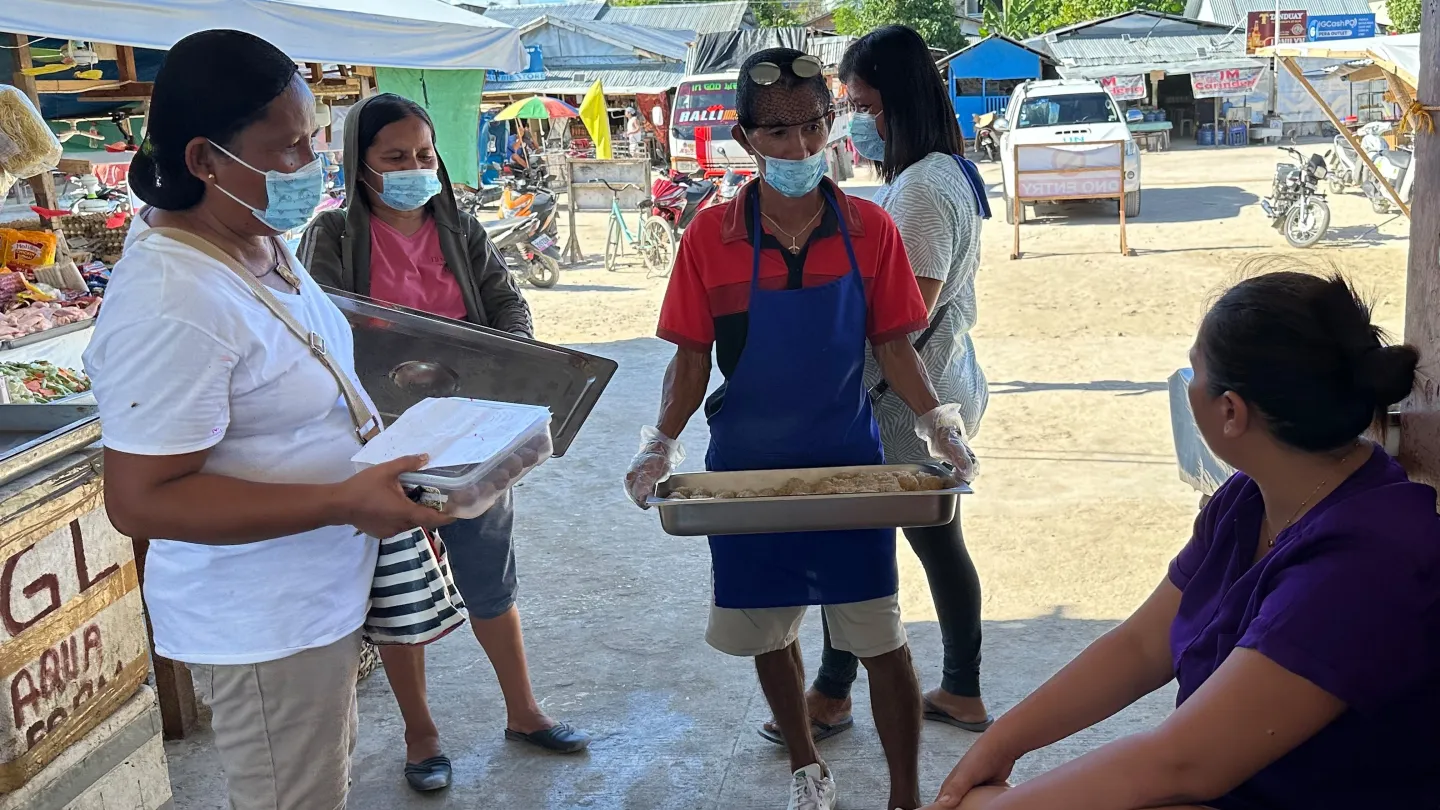
Levy brought back her coconut creations such as coconut muffins and coco balls during the Social Protection registration, which she learned during the training. She is also excited to sell the products in her store, both as healthy snacks for schoolchildren and as a new business opportunity for her organization.
“Coconut is not just copra anymore. It is coconut juice, coconut muffins, coco balls and coco palitaw (rice cakes with coconut). There are so many ways to use it. I will share this with our community and the farmers in our village,” Levy says with delight.
Levy no longer waits years to earn from coconuts. With her new skills in cooking and baking, she turns simple ingredients into products that help support her family. Her dream of growing a small business as a budding entrepreneur is now within reach.
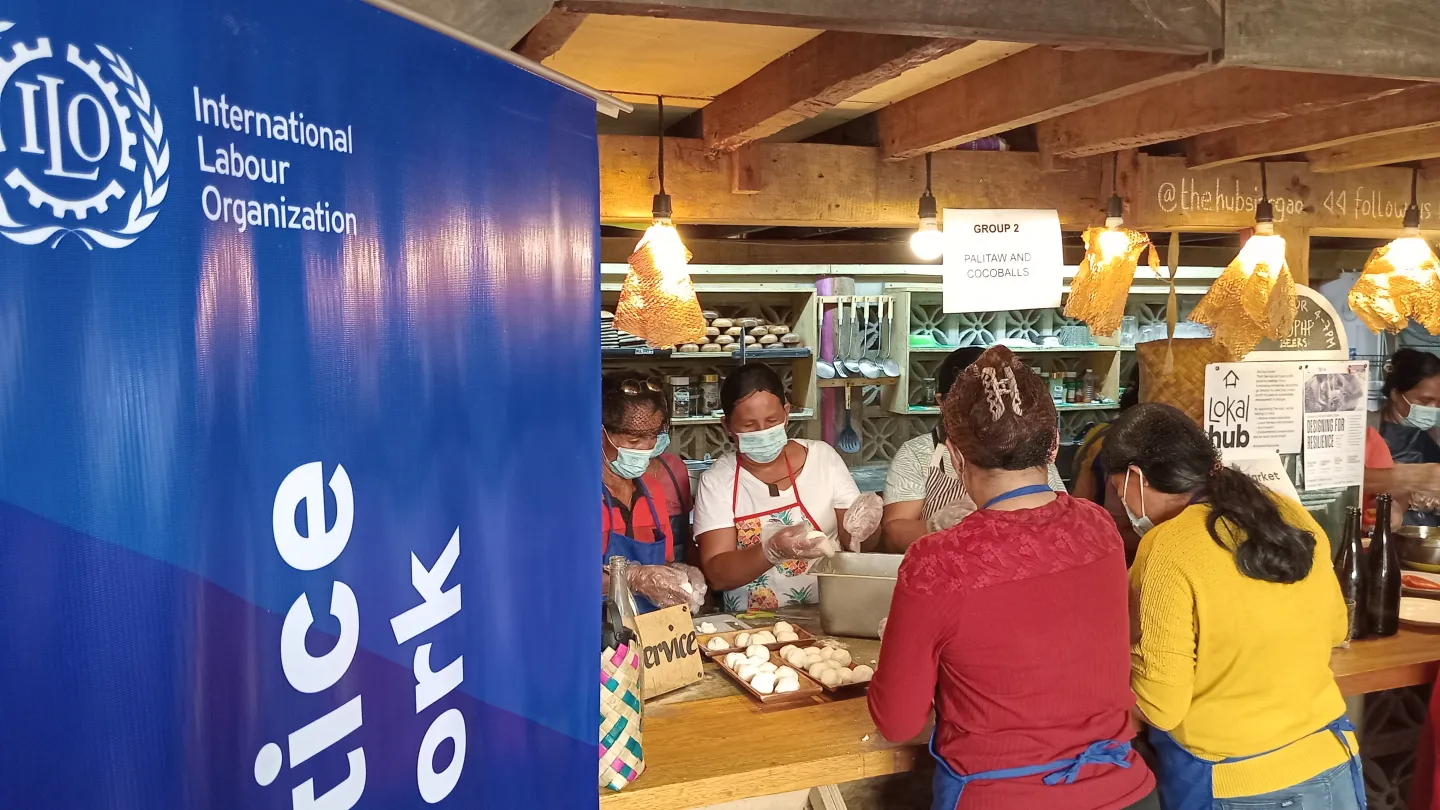
Learn how to make coconut muffins and coco balls with Levy
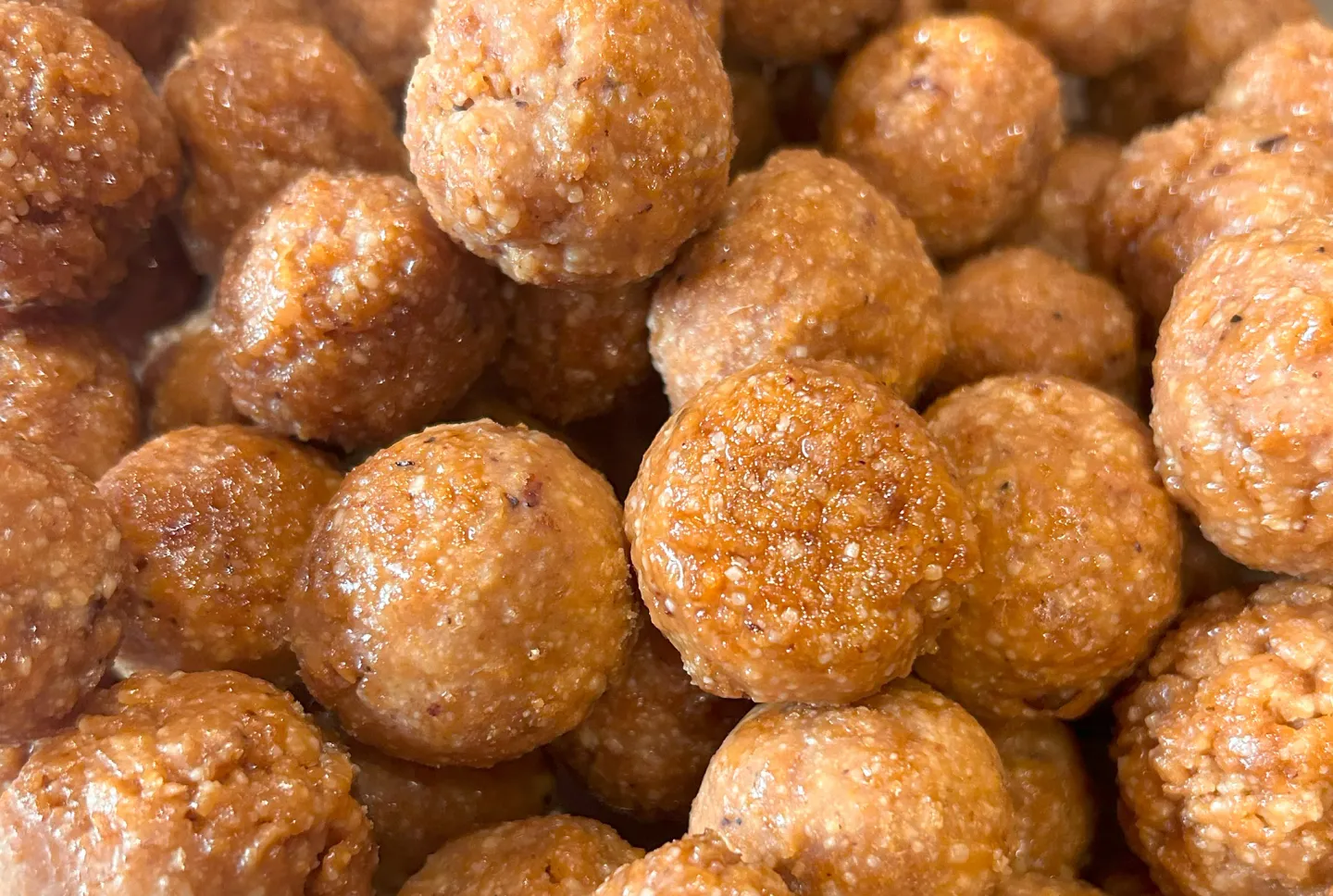
Coco balls
Ingredients:
2 old coconuts (grated)
1.5 kg brown sugar
10 pcs agry or vinegar
Procedure:
- Toast the grated coconut until golden brown.
- Set aside the toasted coconut.
- Melt the brown sugar.
- Add the toasted coconut to the melted sugar and mix with vinegar.
- Once cooked, place on banana leaves and shape into balls for the final product.
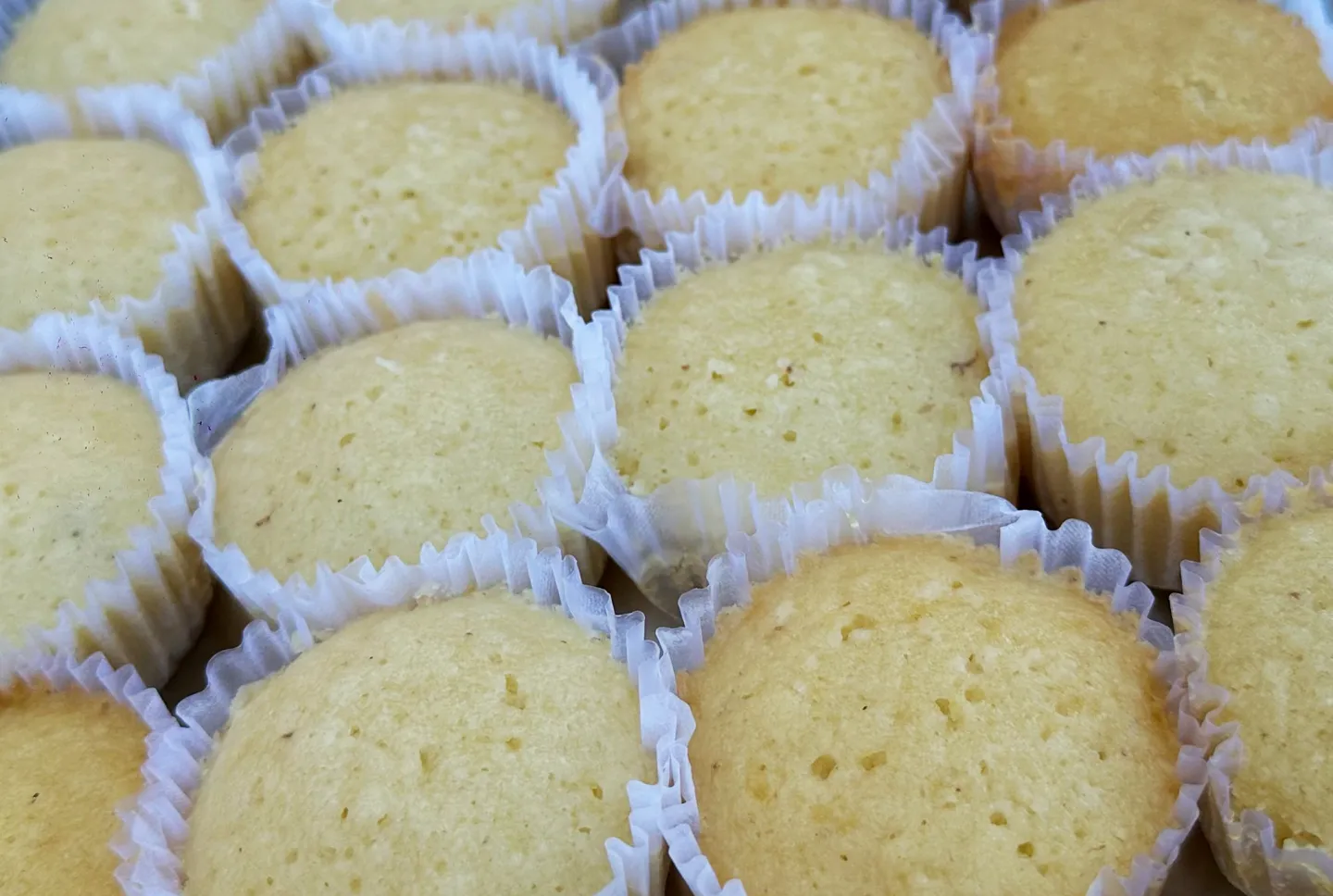
Coconut muffin
Ingredients:
2 cups all-purpose flour
1.5 tsp baking powder
0.5 tsp salt
2 cups white sugar
1 cup unsalted butter
1.5 tsp vanilla extract
4 large eggs
1 cup coconut milk
1 cup shredded coconut (unpressed)
Procedure:
- Preheat oven to 180°C for 20 minutes.
- Mix all dry ingredients: flour, baking powder, salt, and sugar.
- In a separate bowl, mix wet ingredients: eggs, coconut milk, butter, and vanilla.
- Gradually add wet ingredients to dry ingredients, mixing well. Fold in shredded coconut.
- Pour batter into muffin cups, filling up to 3/4 full.
- Bake for 25 minutes or until a toothpick comes out clean.
- Let cool and enjoy.
Tools:
Measuring cups
Measuring spoons
Oven
Mixing bowls
Muffin pans
Muffin paper cups
Relevant projects

Sustainable enterprises
Rebuilding better coconut economy: Integrated inclusive recovery model from Super Typhoon Rai (Odette) and overlaying crises

Informal economy
Rise from multiple crises through the integrated formalization of informal economy with social protection and decent work in the...