

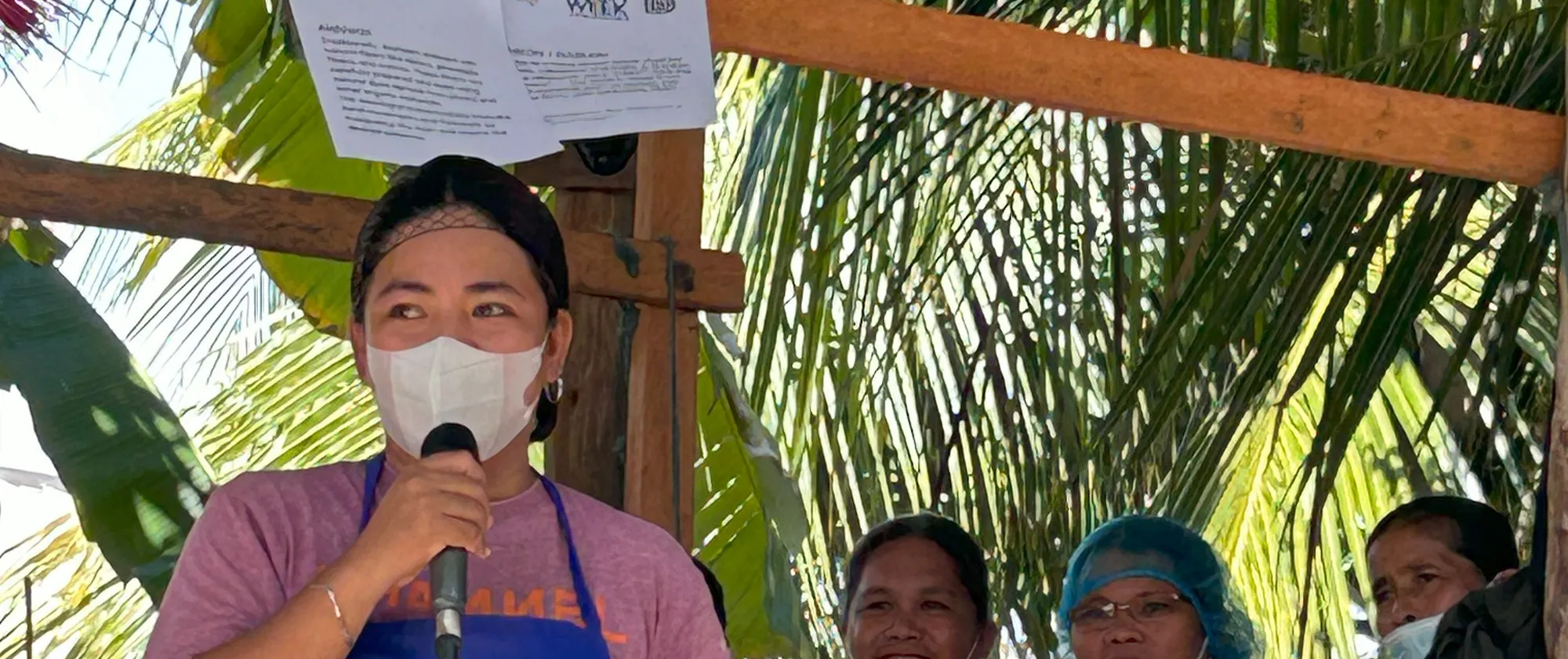
Coconut culinary training
Hope afloat: Coconut culinary upskills workers, uplifts livelihoods
A coconut culinary training helps typhoon-affected workers rebuild their lives and gain new skills in Siargao Island, the Philippines’ coconut and surfing capital.
24 August 2025
SIARGAO ISLAND, Philippines (ILO News) - The scent of boiling water fills the air as Jonalyn Millana gently drops rice cakes into the pot. As they rise and float, transforming into coco palitaw, they carry more than tradition. For Filipinos, palitaw symbolizes progress and prosperity, which Jonalyn dreams for her family.
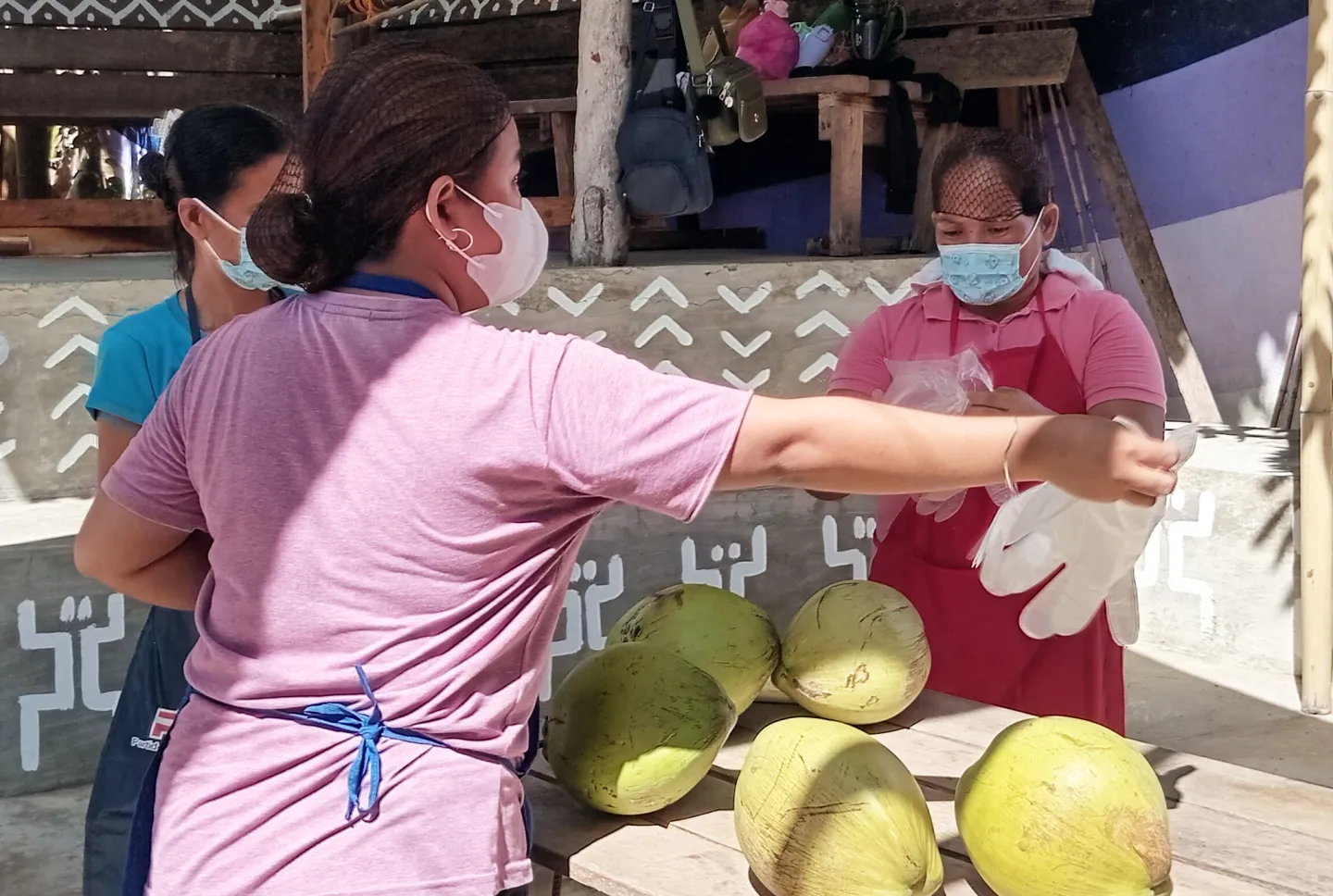
Nearby, she stirs coconut strips, crafting buko pancit (coconut noodles), a dish served in Filipino celebrations to wish for long life. For Jonalyn, these coconut creations are more than food. They are sources of income to rebuild her life and support her family after a super typhoon.
She will never forget the day when Super Typhoon Odette (Rai) tore through Siargao Island. “We lost our home,” she recalls, her voice steady but heavy. “My husband could not work right away. There were typhoons before, but not like that. I felt very sad. The coconut trees had fallen.” As she ran to the evacuation centre clutching her child, everything she owns including her house was swept away.
Following the disaster, the International Labour Organization (ILO), with funding from the Government of Japan, launched an emergency employment and coconut culinary skills training programme in Siargao, the Philippines’ surfing capital.
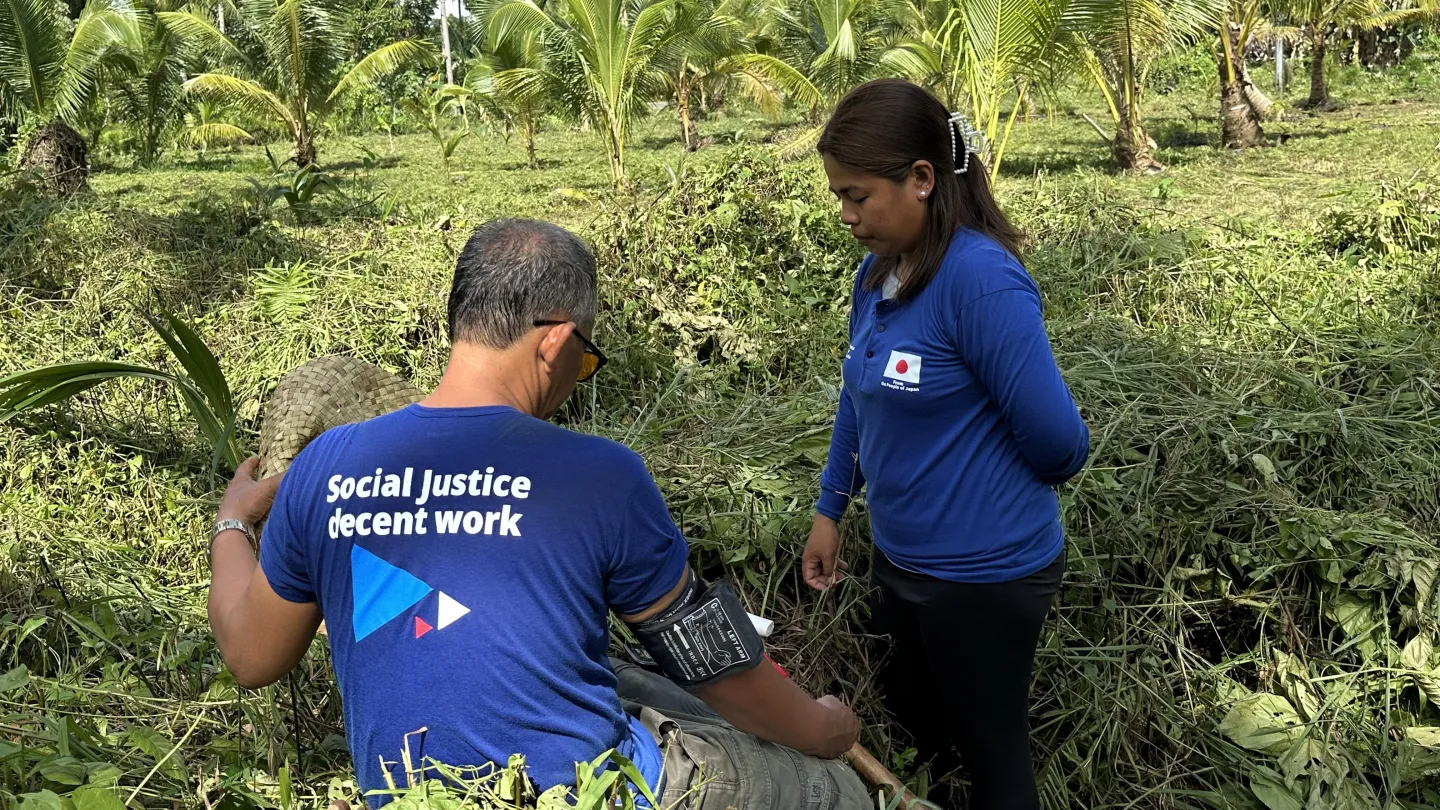
At 29, Jonalyn became a Health Monitor for the ILO’s Rebuilding Better Coconut Economy Project, a partnership with the local government, the Philippine Coconut Authority (PCA), and Lokal Lab. Through this, she received social protection benefits like health insurance and social security, which she deemed critical for a family starting over.
Then came the coconut culinary training. “I learned a lot like how to make coco palitaw, coco balls, and for the first time, buko pancit,” Jonalyn shares with a smile. “If I start a business, I can use these skills. It will be a big help to my family. I can even post on Facebook for orders.”
Her dishes soon reached a wider audience. During the ILO’s Social Protection registration event in Siargao, Jonalyn served her coconut specialties to hundreds of residents, tourists, and nearby communities. Many came for employment, social protection and business services, but left with a taste of something new and hopeful for Siargao’s coconut and eco-tourism industry.
The initiative was further supported by the ILO’s Formalization of the Informal Economy Project, funded by the Governments of Belgium, Denmark, France, Germany, Italy, Luxembourg, Netherlands, Norway, and Sweden.
“By investing in upskilling, decent work, and social protection, we help communities to thrive, not just survive. These pilot initiatives are more than temporary solutions and market options, they are models that we hope to scale and enhance to support workers and their families living in disaster-prone communities,” said Khalid Hassan, Director of the ILO Country Office for the Philippines.
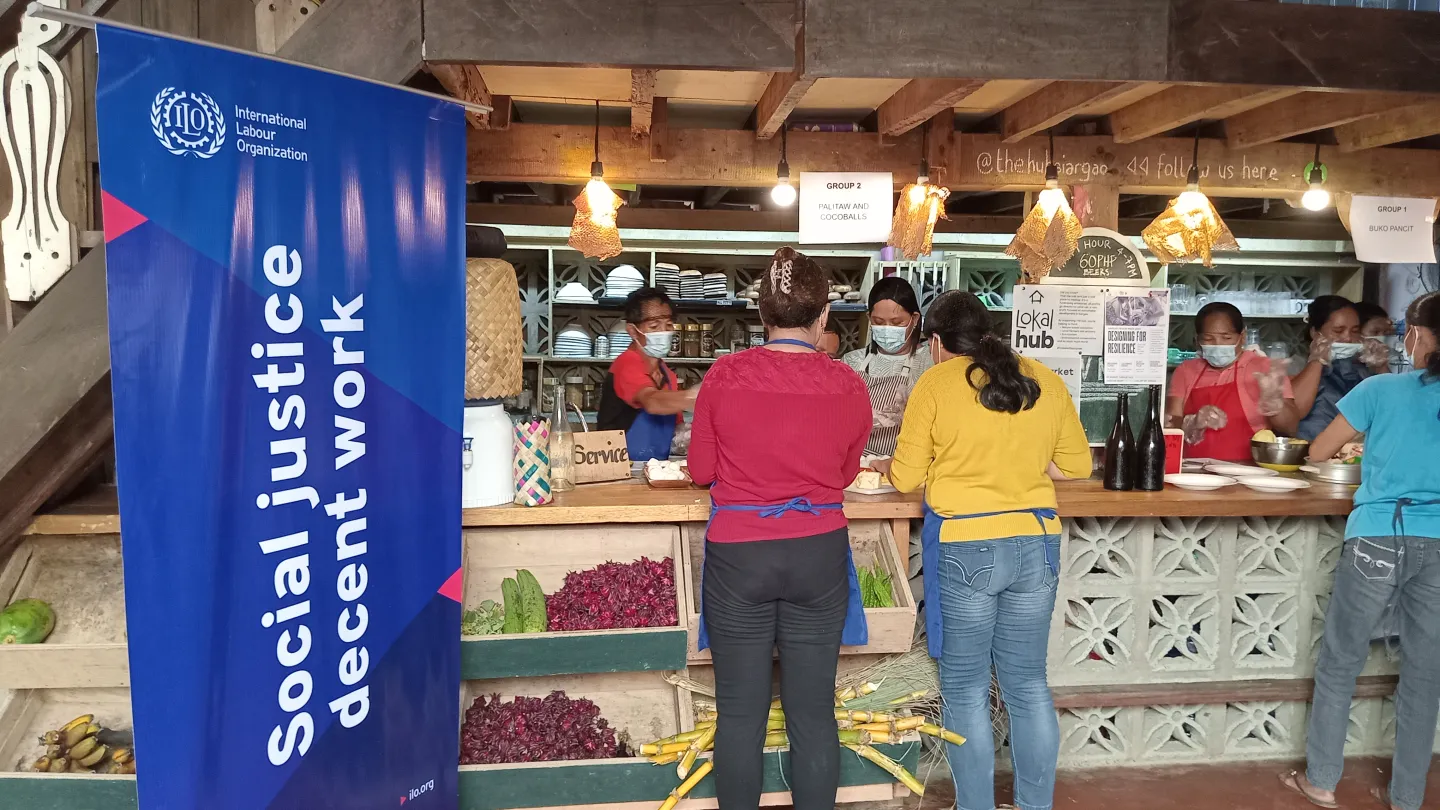
This commitment is reflected in the lives of workers like Jonalyn. It was not just about food but also about dignity and opportunity. Every coconut dish she prepares is a quiet triumph. It is a reminder that even after the strongest storms, hope floats and something beautiful can rise again.
Learn how to make coco palitaw and buko pancit with Jonalyn
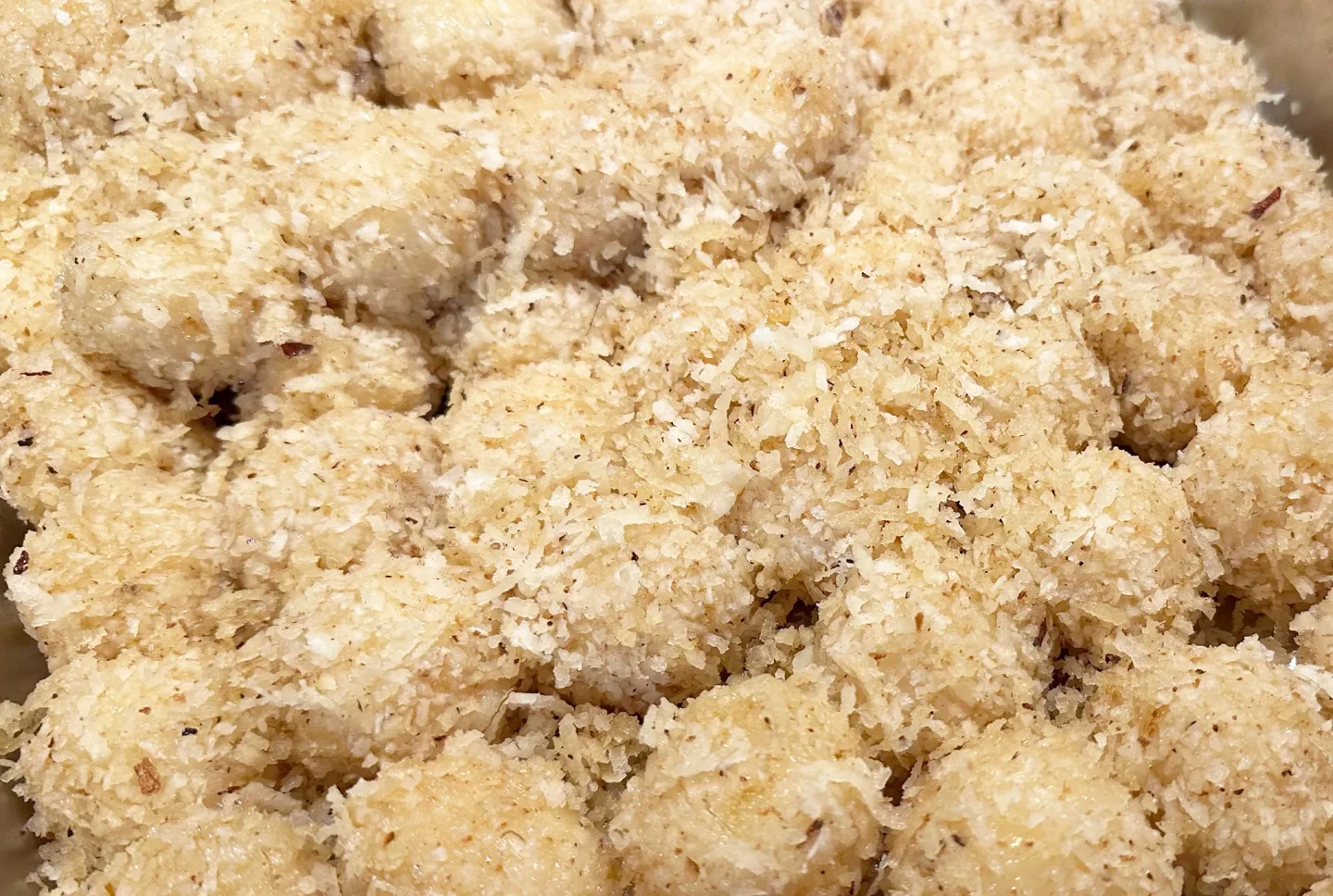
Coco palitaw
Ingredients:
4 packs glutinous rice
1/2 kg brown sugar
1 pack cheese
2 pcs old coconut (grated)
Water
Procedure:
- Boil water in a pot.
- Mix glutinous rice with water, ensuring the mixture is not too watery. Let it rest.
- Shape the mixture into small circles and insert cheese in the center.
- Drop the shaped dough into boiling water and wait until it floats (indicating it's cooked).
- Roll the cooked palitaw in toasted or fresh grated coconut for the final output.
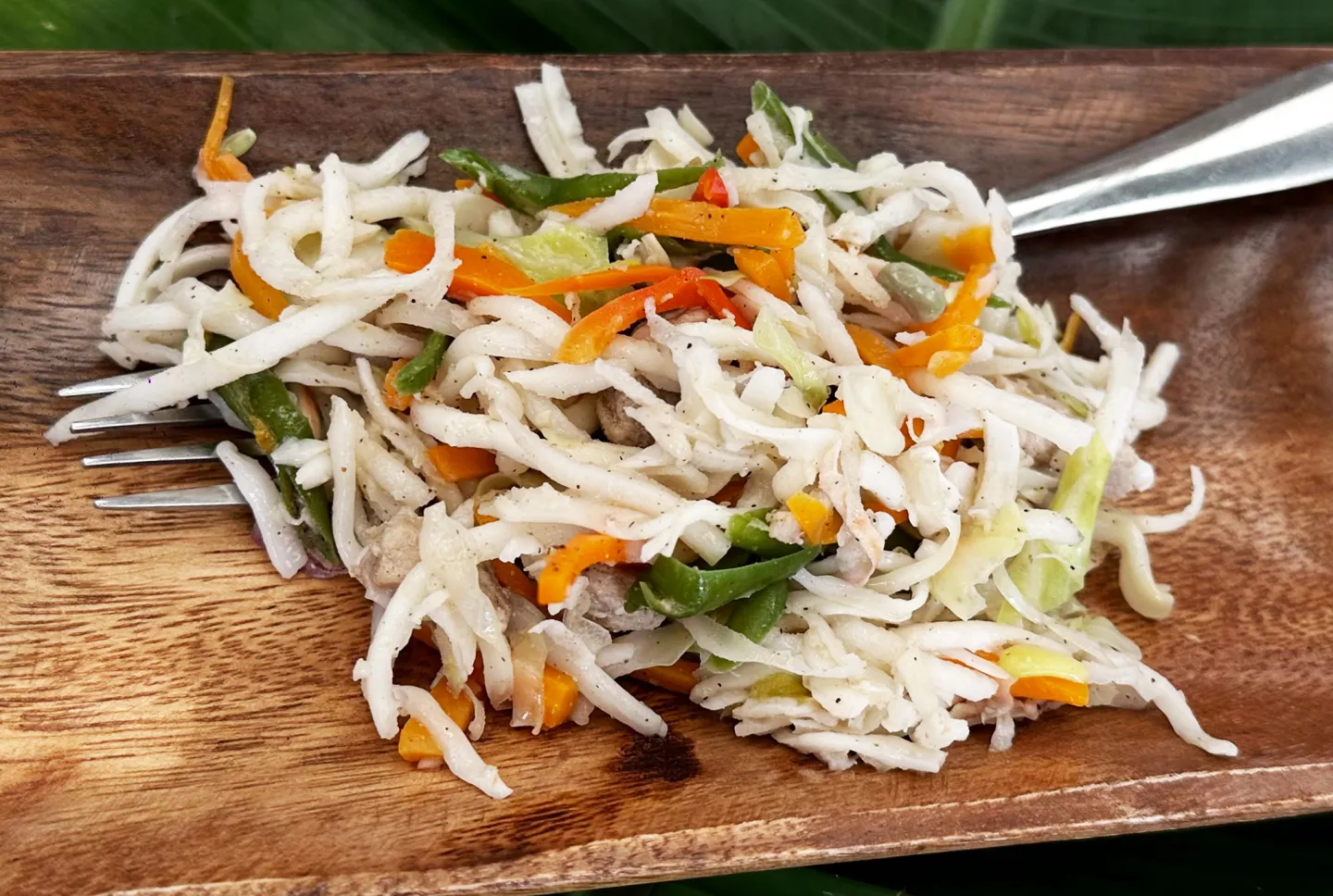
Buko pancit
Ingredients:
40 pesos worth of cooking oil
1 kg pork
Salt
3 pcs onions
2 pcs garlic
Anatoside (optional food coloring)
5 pcs carrots
1 head cabbage
14 pcs middle-aged coconut (buko)
Fish sauce (patis)
Crushed black pepper
1/2 kg baguio beans
8 pcs bell peppers
Cake yam (optional)
Procedure:
- Heat oil in a pan.
- Sauté garlic and onions until fragrant.
- Add pork and cook until browned.
- Add carrots, cabbage, and bell peppers, stirring well.
- Mix in sliced buko and season with fish sauce, salt, and pepper.
- Continue cooking until vegetables are tender.
- Serve hot and enjoy.
Relevant projects

Sustainable enterprises
Rebuilding better coconut economy: Integrated inclusive recovery model from Super Typhoon Rai (Odette) and overlaying crises

Informal economy
Rise from multiple crises through the integrated formalization of informal economy with social protection and decent work in the...