

Voices of Action - Child labour
From hazardous work to school: How the Philippines is breaking the child labour cycle
In Bangsamoro's shadow of dump sites, children swap hazardous scavenging for education and family mushroom farms ahead of the 6th Global Conference on the Elimination of Child Labour, paving paths to brighter futures.
20 January 2026
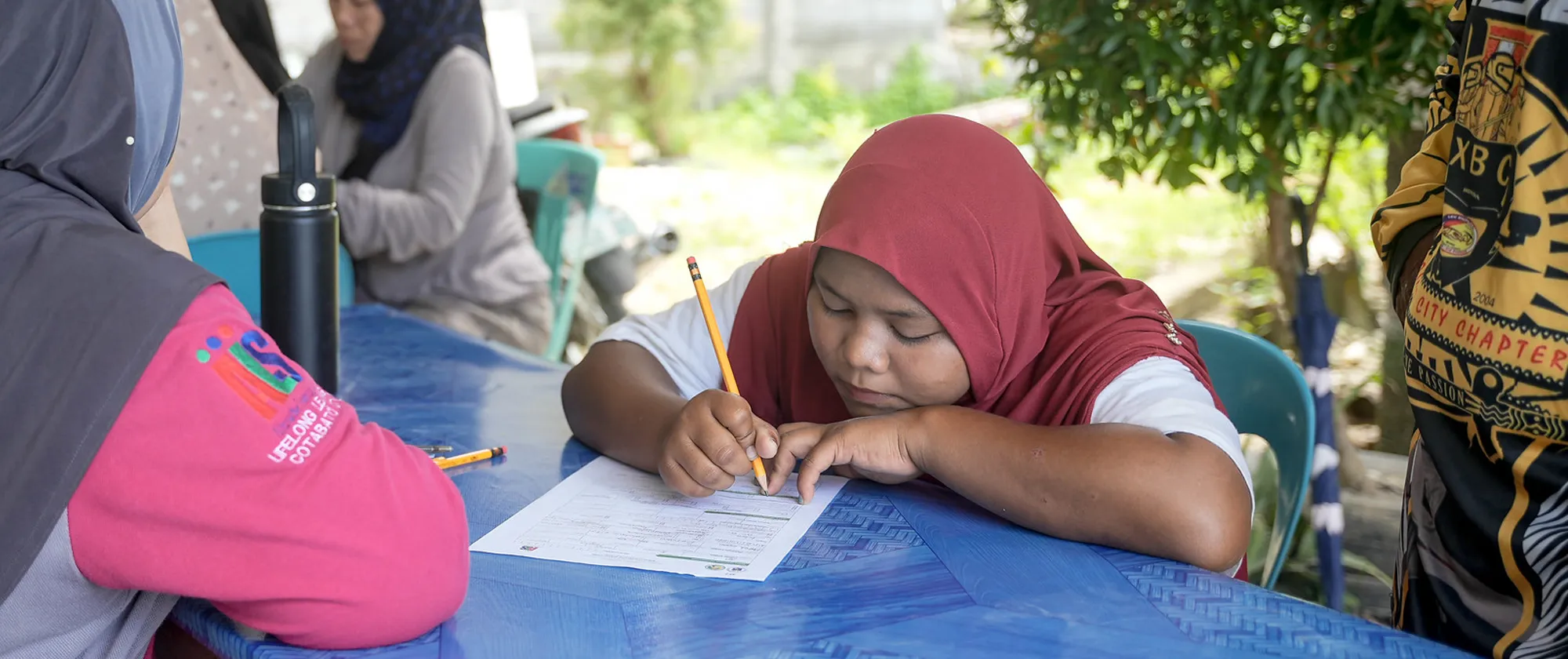
MANILA (ILO News) - Children in the Bangsamoro region of the southern Philippines once scavenged dump sites and toiled agricultural fields from dawn till dusk.
They collected plastics and cans for sale, exposed to toxins and missing school. A former scavenger recalls: "We live near the garbage dump. We are scavengers."
The Bangsamoro region is largely agriculture-based, with children often trapped in child labour. A child shared that she has been working almost nine hours daily since she was 12.
Child labour strips rights to protection, learning and health. Change restores them. Now initiatives replace danger with opportunity.
The film Learning Not Labour, is a short film commissioned by the International Labour Organization (ILO) as part of its Voices of Action global series. The series features work by journalists producing impactful stories on child labour from around the world and was released ahead of the 6th Global Conference on the Elimination of Child Labour, to be held from 11 to 13 February 2026 in Marrakech, Morocco.
The film was directed by Tu Alid Alfonso.
It showcases the ILO Japan Achieving Reduction of Child Labour in Support of Education (ARISE) project's sustainable livelihoods like mushroom farming in Barangay Looy, South Upi, Maguindanao del Sur.
These livelihoods free families from child labour while the Alternative Learning System (ALS) returns out-of-school youth to education.
Philippines tackles child labour
Child labour in the Philippines has declined from 828,000 in 2022 to 509,000 in 2024, per Philippine Statistics Authority data. Majority engage in hazardous work, often scavenging or farming.
Bangsamoro's poverty and decades of armed conflict amplify risks. In response, the ILO Japan ARISE Project helps improve access to education, provide sustainable livelihoods for economic empowerment and social mobilization, and strengthens policies and institution building. The Supporting Children's Rights through Education, the Arts and the Media (SCREAM) programmes and the Bangsamoro Labour and Employment Code (BLEC) further build safeguards.

ALS bridges gaps. Learners pass Accreditation and Equivalency (A&E) exams to advance - elementary passers enter junior high, then senior high or formal school. One student felt: "I feel envious of my colleagues who are studying, even though they are already old. I decided to join them and enrolled in ALS."
The BLEC provisions also cover minimum employment age, skills training and out-of-school aid, preventing child labour.
From dumps to dreams
Cotabato City Councilor Shalimar Candao champions action via the Cotabato City Council Against Child Labour. She prioritised: "Relocating the families living inside the dump site."
A Labour and Employment Ministry official adds: "Under the BLEC, we have a provision for the apprenticeship of our youth. And for those children at risk of child labour, we also have interventions."
Director Tu Alid Alfonso observes, "These stories show policy and community interventions creatively uniting to reclaim childhoods. Bangsamoro leads the way to Marrakech."
Safe housing, schools and livelihoods let families thrive. SCREAM empowers youth to spot and challenge child labour through education, arts, and the media.
Momentum for Bangsamoro children
Partners forge ahead for a region where children learn, play and dream. The 6th Global Conference on the Elimination of Child Labour (11-13 February 2026, Marrakech) will amplify such victories worldwide.
Related content
Voices of Action - Child labour
Farm work threatens Egyptian boy’s dream of becoming an engineer
Voices of Action - Child labour
Tourism boom exposes child labour risks in Viet Nam’s northern highlands

Topic portal
Child Labour

Country portal
Philippines
Relevant projects

Reduction of child labour in Myanmar
Achieving Reduction of Child Labour in Support of Education (ARISE): Programme to reduce the worst forms of child labour in agriculture

Child labour
Achieving reduction of child labour in support of education