

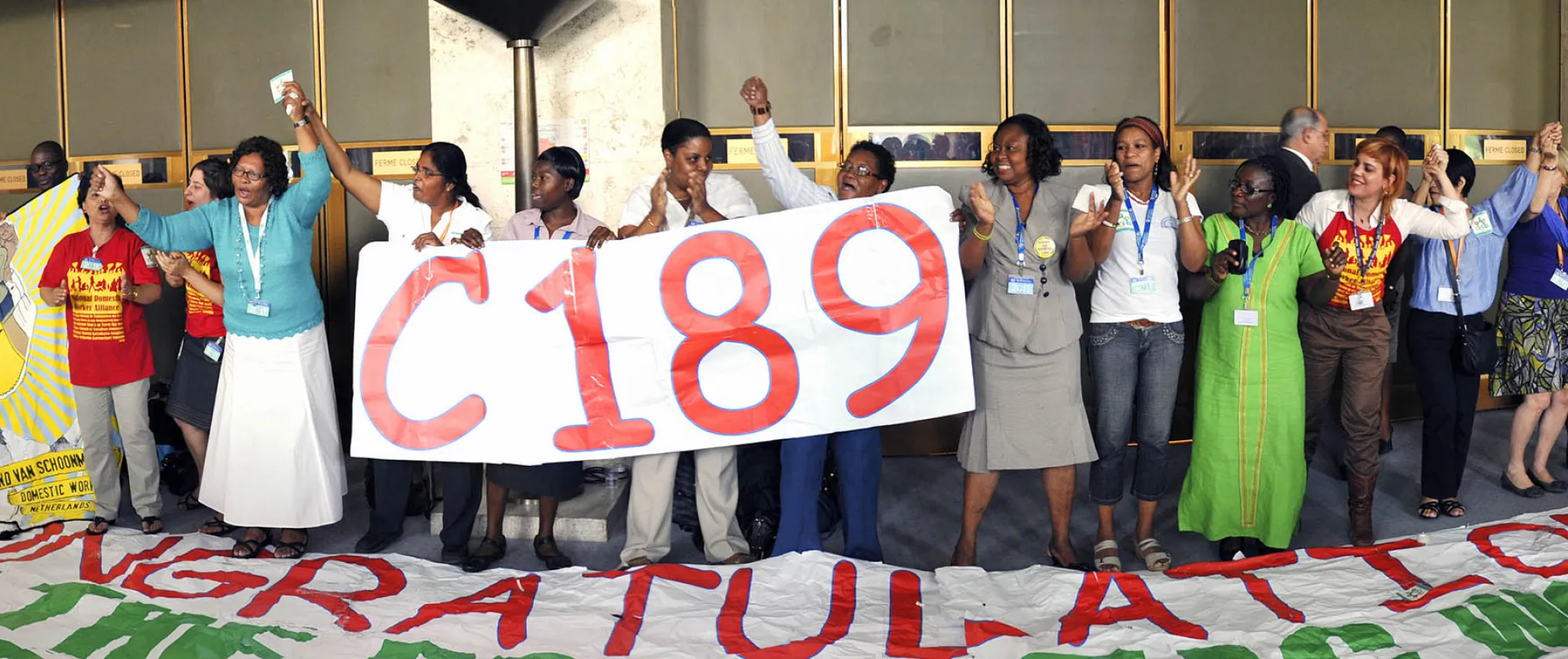
Convention No. 189
15 years of progress toward decent work for domestic workers
Since the adoption of the ILO Convention No. 189 in 2011, 40 countries have ratified the Convention and reforms have strengthened rights and social protection for millions of domestic workers. Explore 15 years of progress and key milestones in the global implementation of the Domestic workers convention.
16 June 2026
GENEVA (ILO News) - Over the past 15 years, the Domestic Workers Convention, 2011 (No. 189) has helped drive reforms benefiting millions of domestic workers through improved labour protections, access to social security and recognition of their contribution to economies and societies. The timeline below looks back at key milestones that have shaped progress on rights and protections for domestic workers worldwide.
Why does the ILO Domestic Workers Convention matter?
Every morning, millions of women, and many men, wake early to cook, clean and care for other people's families and homes. For generations, this work was invisible. Convention 189 made it visible. Domestic workers have sustained households and economies while being denied basic labour rights. Until the Domestic Workers convention C189.
C189 changed the conversation: it established that domestic work is work, and that domestic workers are entitled to dignity, protection, and voice, like all workers. They should enjoy fundamental principles and rights at work and the same working conditions as other workers. Today, more domestic workers are covered by labour laws thanks to C189 – but many still do not benefit from its protections.
Demand for care is growing, and with it, the need for domestic work. We must ensure all domestic workers are protected, in law and practice. On this 15th anniversary, it’s time to recommit: to ratify and implement C189, for decent work for domestic workers, and sustainable, quality care for all.
Related content

Topic portal
Domestic workers