


Article
The care economy in crisis: a driver of recovery, resilience and peace
In crisis and displacement settings, the care economy plays a pivotal yet often overlooked role. When families face the consequences of conflict, forced migration or climate shocks, the burden of care intensifies—falling disproportionately on women and girls. This unpaid, invisible labour sustains households but often limits access to education, livelihoods and public life.
2 October 2025
Doha, ILO News – The role of the care economy in crisis recovery took centre stage at the South for Care Conference in Qatar, where leaders, civil society and policymakers emphasized that care is not just a private burden but a strategic driver of resilience, livelihoods and peace. Supported by Sweden, the high-level session, “Recognizing the Role of the Care Economy in Fragile Settings,” brought together governments, UN agencies, trade unions and academics to explore how care systems can strengthen social cohesion in contexts marked by conflict, displacement, and climate shocks.
Reframing care as a pillar of crisis recovery positions it not as a private burden but as a public good and strategic investment. Well-designed care systems create jobs, strengthen social cohesion and build the foundation for peace. They connect humanitarian relief to long-term development, anchoring the Humanitarian–Development–Peace (HDP) Nexus in everyday life.
Care in early recovery
Speakers warned that crises often deepen care needs while reducing families’ capacity to meet them. “Inclusive care systems are not just about services,” said Nieves Thomet, Senior Specialist at the International Labour Organization. “They create jobs, safeguard rights and lay the foundation for social dialogue and peacebuilding.”
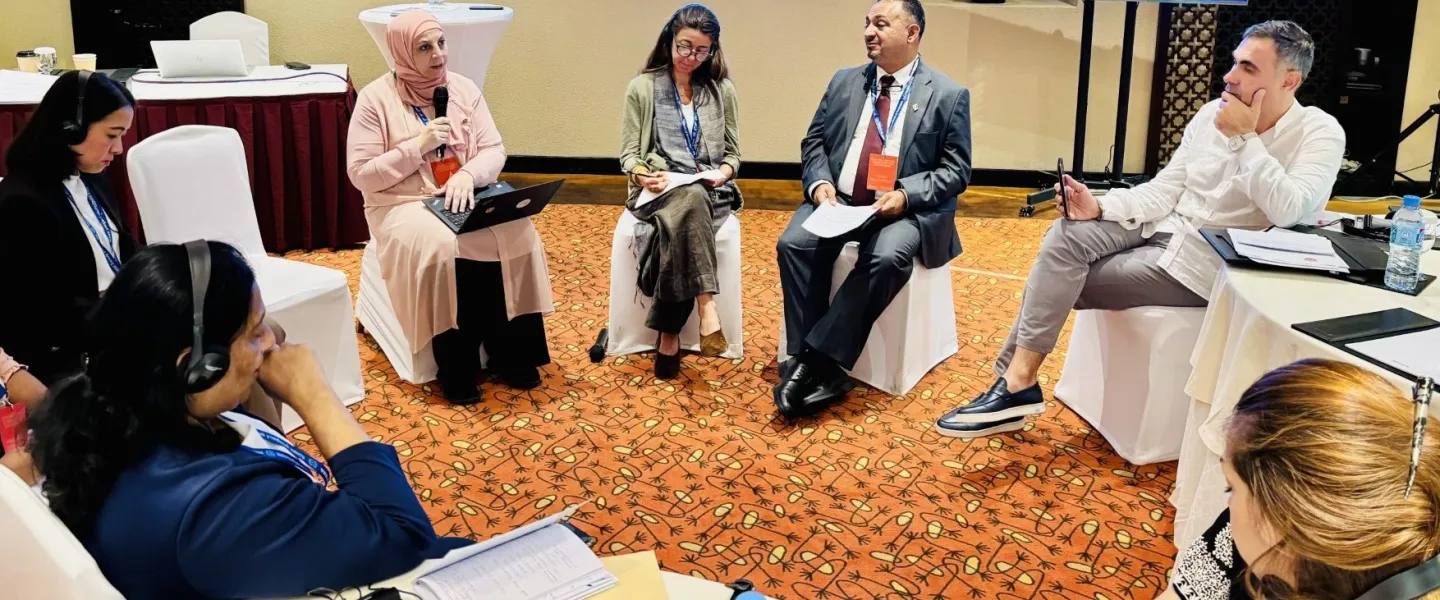
UNICEF Regional Gender Advisor Maha Muna underlined the importance of preparing the next generation of girls with the skills needed for a just transition. “When care is integrated into system strengthening,” she noted, “we see improvements not only in resilience but also in child protection and education outcomes.”
Participants reflected on how gender-responsive policies can relieve these pressures, enabling women and girls to participate more fully in recovery and community life.
Adapting global practices to local contexts
Across regions scarred by conflict and crisis, communities are finding creative ways to put care at the heart of recovery. Case studies from five countries illustrated how locally designed initiatives are not only meeting urgent needs but also shaping new pathways for stability and growth.
In the Occupied Palestinian Territory, community-run cooperatives are emerging as lifelines. By pooling resources to provide childcare and eldercare, these initiatives not only ease the daily pressures on families but also generate employment and strengthen solidarity in communities living under prolonged stress.
Iraq offered another example of innovation, where care services have been integrated into the National Public Works Programme. By linking public employment with social protection, the government has turned care into a tool for both job creation and social resilience—a model that directly ties humanitarian relief to development.
In Lebanon, where displacement has stretched social systems to breaking point, partnerships between NGOs and universities have stepped in to provide childcare in refugee camps. These centres do more than watch over children; they open doors for mothers to pursue education, training, or work, supporting both immediate coping and long-term empowerment.
The ongoing war in Ukraine has made emergency care services a frontline necessity. Mobile and community-based care facilities for displaced families are bridging the gap between humanitarian response and longer-term recovery. They allow families to re-establish a sense of normalcy while also laying the groundwork for rebuilding livelihoods.
In Colombia, care has become part of the peace process itself. Post-conflict reintegration strategies include community-based care services, designed not only to support families but also to foster reconciliation. By embedding care into reintegration, Colombia is using everyday life to rebuild trust and strengthen peace.
What these diverse cases make clear is that care is adaptable—it can be rooted in cooperatives, linked to national labour schemes, or integrated into peacebuilding frameworks. For participants in Doha, the question was not whether these practices could work elsewhere, but how governments and social partners can adapt them nationally: by formalizing unpaid care, supporting cooperative enterprises and ensuring care policies are seen as central to recovery strategies rather than peripheral services.
From social service to peacebuilding strategy
A recurring theme was the need to elevate care from a “secondary” service to a cornerstone of recovery. Expanding care infrastructure not only enables more women to enter the workforce but also strengthens trust in institutions.
“When communities see that care is prioritized, they see that their dignity and well-being matter,” one participant reflected. “That builds cohesion, prevents conflict, and gives people hope.”
National strategies and the role of social partners
Lebanon’s experience provided a national perspective. Dr. Suheir Al-Ghali of the Ministry of Social Affairs presented the 2025–2026 Social Protection and Recovery Strategy, which places care at the centre of rebuilding efforts. Trade union leader Walid Hosni Olleik called for reforms to protect care workers, including the dismantling of the exploitative kafala system. From Sri Lanka, Waruni Apsara Walpita shared how care provision helped stabilize families during past crises, becoming a pillar of resilience.
The participants identified three key insights as the main outcomes of the discussion:
- First, care builds resilience, by cushioning families and communities from the worst impacts of crisis, offering stability when everything else feels uncertain.
- Second, care creates decent work by generating jobs, formalizing informal labour, and empowering women. When women and girls are freed from the most exhausting care burdens, they gain the chance to study, work, and lead. New care jobs—from childcare providers to eldercare workers—inject livelihoods into fragile economies. As one delegate noted, “Every job in care is a job in rebuilding.”
- Finally, care fosters peacebuilding. When governments invest in visible, inclusive care systems, they send a signal to communities: your dignity matters, your well-being is a priority. That recognition helps repair the trust between citizens and institutions—trust that is often the first casualty of conflict. “When people see care prioritized, they see hope,” a speaker reflected. “And hope is the foundation of peace.”
By placing care at the centre of early recovery, the crisis track of the South for Care Conference advanced a powerful message: the care economy is not only about gender equality and livelihoods—it is also about rebuilding resilience and peace in fragile contexts.
Related content

Topic portal
Crisis situations and response