


Sector portal
Textiles, apparel, leather and related products
The sector is characterized by geographically dispersed production and dynamic market-driven transformations. It contributes significantly to economic and social development and provides employment opportunities to millions of workers worldwide, especially young women.
The future of work in textiles, clothing, leather and footwear is increasingly uncertain. The tragedy of the Rana Plaza collapse brought worldwide attention to the urgent need to improve workplace safety and working conditions in line with the ILO Code of practice on safety and health in textiles, clothing, leather and footwear. A just transition is key to advancing sustainability, circularity and decent work in the sector.
Key resources
- Technical meeting on challenges and opportunities for promoting decent work, productivity and a just transition arising from artificial intelligence in the manufacturing industry (April 2026)
- Meeting of experts to discuss and adopt a code of practice on safety and health in textiles, clothing, leather and footwear
- Global Dialogue Forum on Wages and Working Hours in the Textiles, Clothing, Leather and Footwear Industries

RECYCLING
Recycling is key to the circular economy, employing at least 6.9 million workers worldwide, many in the informal sector. Expanding recycling could create 7 million more jobs by 2030, but current roles often lack decent work standards.
Technical meeting on challenges and opportunities arising from AI in the manufacturing industry
The meeting will discuss AI’s impact on manufacturing, focusing on opportunities and challenges for decent work, productivity, and a just transition, aiming to adopt conclusions and recommendations.
Data and statistics
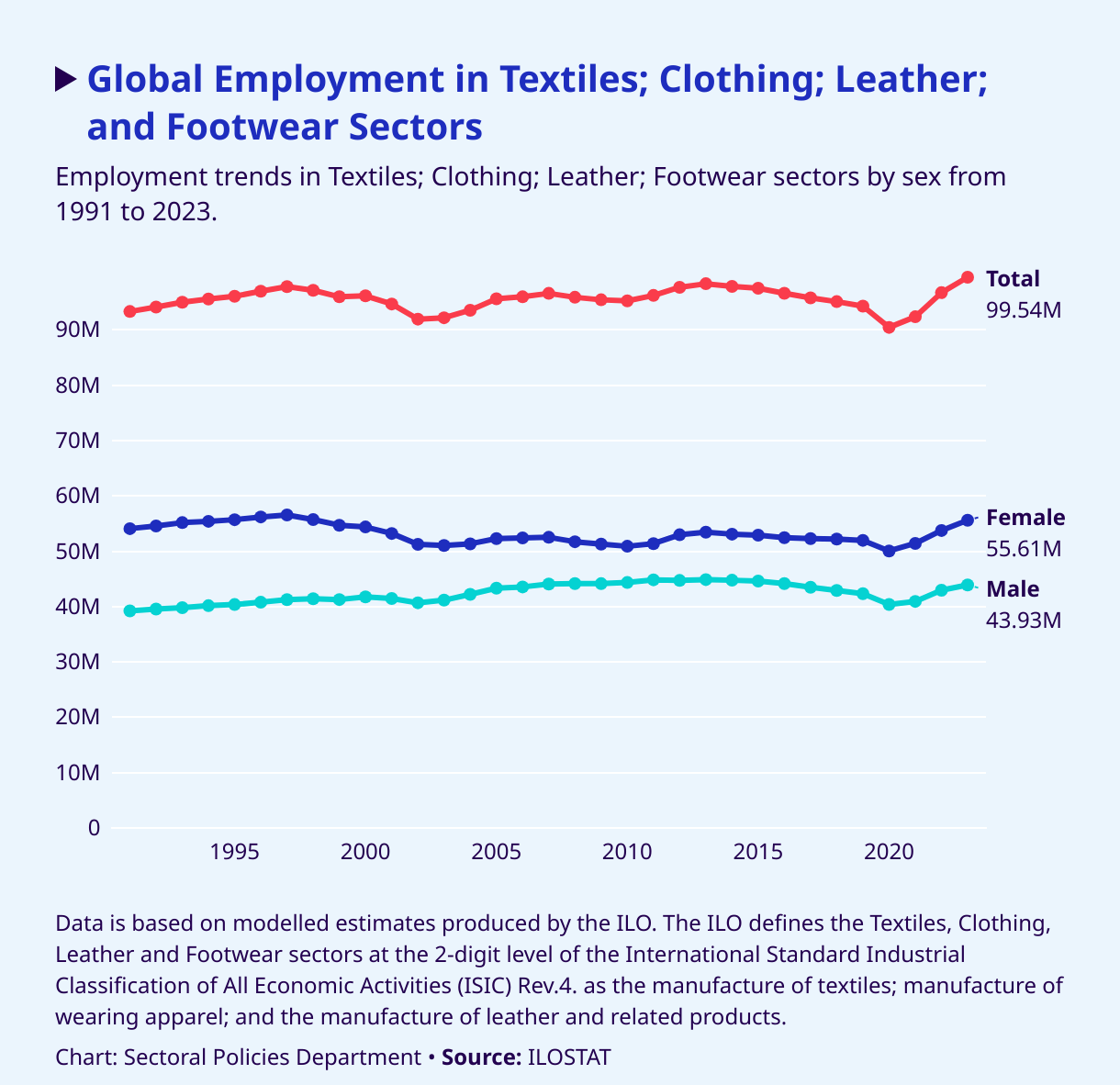
The line graphs show a time series of modelled global and regional employment estimates at the sectoral level. The ILO modelled estimates generally cover 189 countries, offering a comprehensive set of internationally comparable labour statistics. These include both reported data and imputed figures for countries with missing information. The imputations are generated using econometric models developed by the ILO.
For more detailed labour market indicators and country-level data, visit the Sectoral Employment Statistics page of the ILOSTAT database.
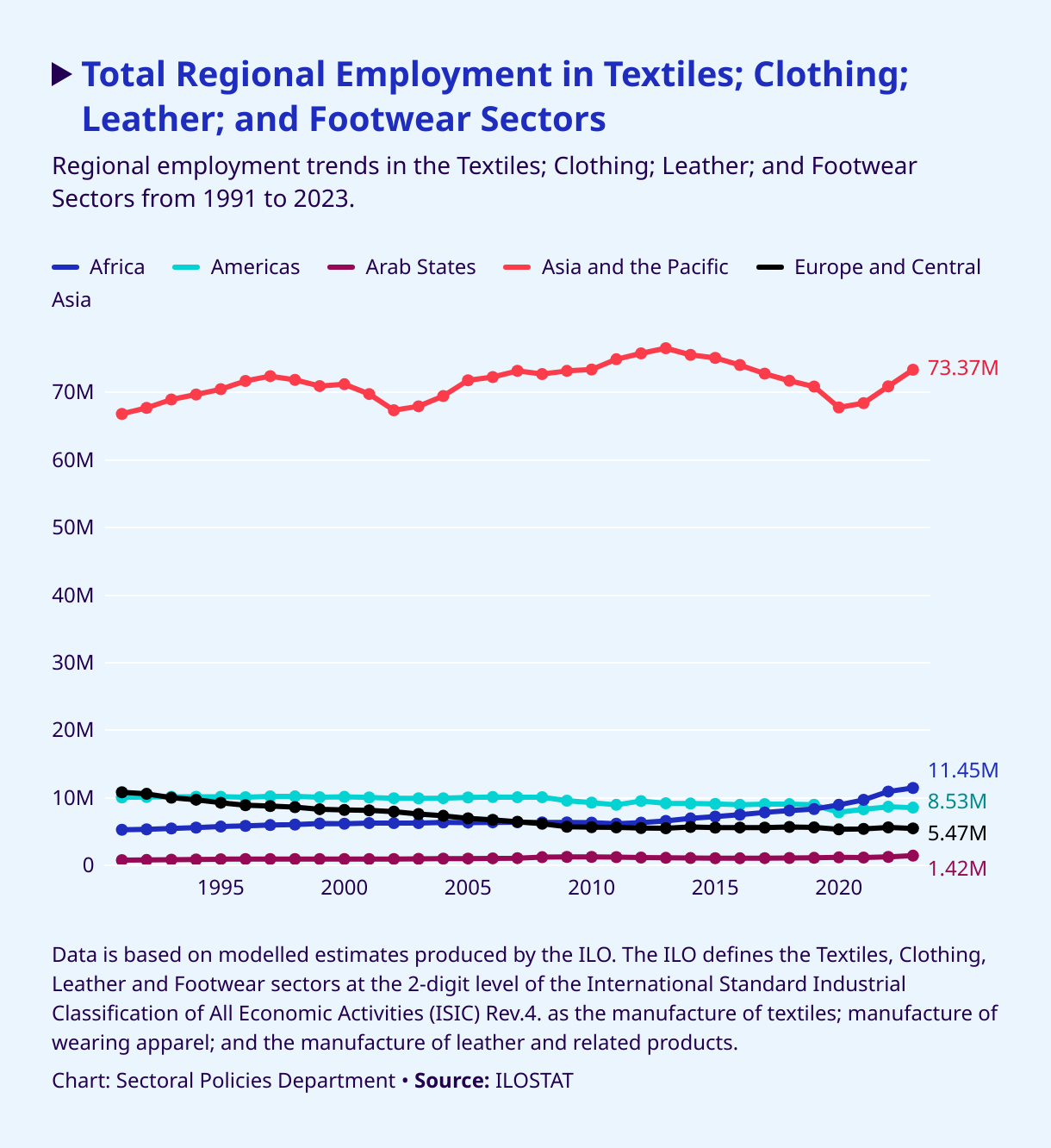
The line graphs show a time series of modelled global and regional employment estimates at the sectoral level. The ILO modelled estimates generally cover 189 countries, offering a comprehensive set of internationally comparable labour statistics. These include both reported data and imputed figures for countries with missing information. The imputations are generated using econometric models developed by the ILO.
For more detailed labour market indicators and country-level data, visit the Sectoral Employment Statistics page of the ILOSTAT database.
Programmes and projects
The ILO promotes Decent Work in the textiles, apparel, leather and footwear sectors in the following regions and countries. To learn more, please click on the relevant button.

News
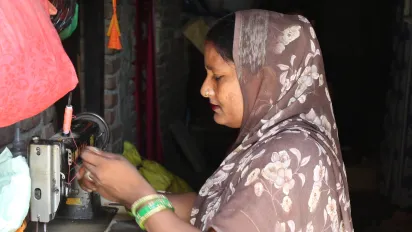
Women’s entrepreneurship in Nepal
Stitching a future of her own: From tailoring at home to entrepreneurship
Inclusive workplaces
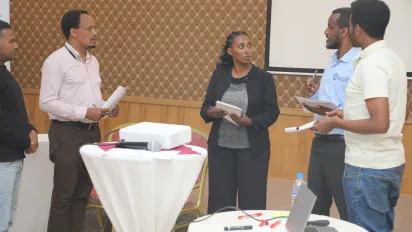
ILO advances leadership and disability inclusion in Ethiopia’s textile, garment and leather sector

Government of Jordan and ILO sign letter of intent for immediate and long-term support to advance decent work in the garment sector
Publications and documents
Jordan annual report 2025
Narrative recap of the development cooperation implementation of the ILO programme in the Hashemite Kingdom of Jordan
Productivity Ecosystems for Decent Work in Egypt
SCORE brochure in Egypt
Productivity Ecosystems for Decent Work in Egypt
Enhancing productivity and improving working conditions in Egypt's marble sector
Projects
Project
Weaving Hope: Upgrading Syria’s Garment Industry and Workforce
Project
Realizing trade gains free from gender discrimination and child labour (RealGains)
Project
Realizing trade gains free from gender discrimination and child labour (RealGains)
Contact information
Sectoral Codes of Practice and Guidelines
Sectoral meetings
Conclusions and recommendations of sectoral meetings
Sign up to our newsletter!
Receive ILO news about sectoral work