

ILO Voices | Disability inclusion
I discovered the SPARK within me to promote disability inclusion
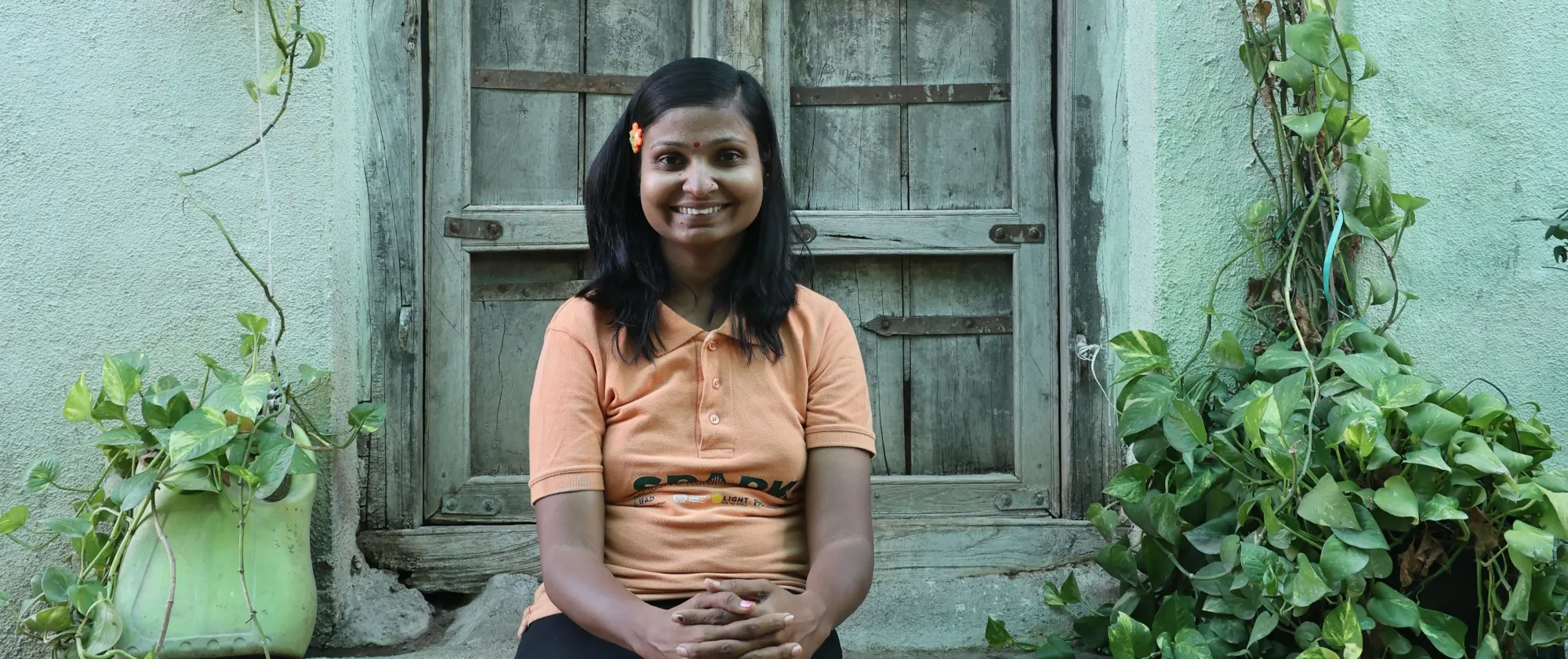
My name is Lata Korde. I work as a disability inclusion facilitator in Maharashtra, India. This work is important to me. Having a disability myself, I want to ensure that people like me are recognized and included in society.
3 December 2025
I have a Master’s degree in social work. After finishing my studies, I was looking for work when I saw a newspaper advertisement about the SPARK project of the International Labour Organization (ILO). It said they were working for the inclusion of people with disabilities.
Since I also have a disability, I felt this was the right opportunity for me to do something meaningful. I went there, took the exam, got selected, and later had an interview, which I also completed successfully.
SPARK stands for Sparking Disability Inclusive Rural Transformation. Along with ten other disability inclusion facilitators, my job was to raise awareness in rural areas about the barriers persons with disabilities face to access work and social protection, and share ideas on how to overcome them.
Even though I have a disability myself, I had never really interacted with others like me. My friendships were only with non-disabled people. SPARK gave me the opportunity to build relationships with disabled individuals, to understand their problems, and to think about how I could help solve them.
In villages, people with disabilities are often only identified by their disability. People don’t call them by their names.
Lata Korde, Disability inclusion facilitator
In villages, people with disabilities are often only identified by their disability. People don’t call them by their names. Through the SPARK project, I conducted meetings in 25 villages and emphasized that people with disabilities have names too, and people should address them by their names.
When I would say this, many women’s eyes would fill with tears, and they would tell me, “Ma'am, no one has ever thought about us like this before.” Seeing their smiles and happy tears made me feel that, yes, this was something important – and I made it happen!
Now, whenever I visit a village, the first thing I do is ask about people’s well-being. They also ask me, “Madam, how are you? Have you eaten?” Sometimes, we even share meals, and that feeling of eating together brings a different kind of happiness.
It feels like the biggest achievement in life to support people with disabilities – people that society has never valued. We, as a group, can share our problems and live happily by working together.
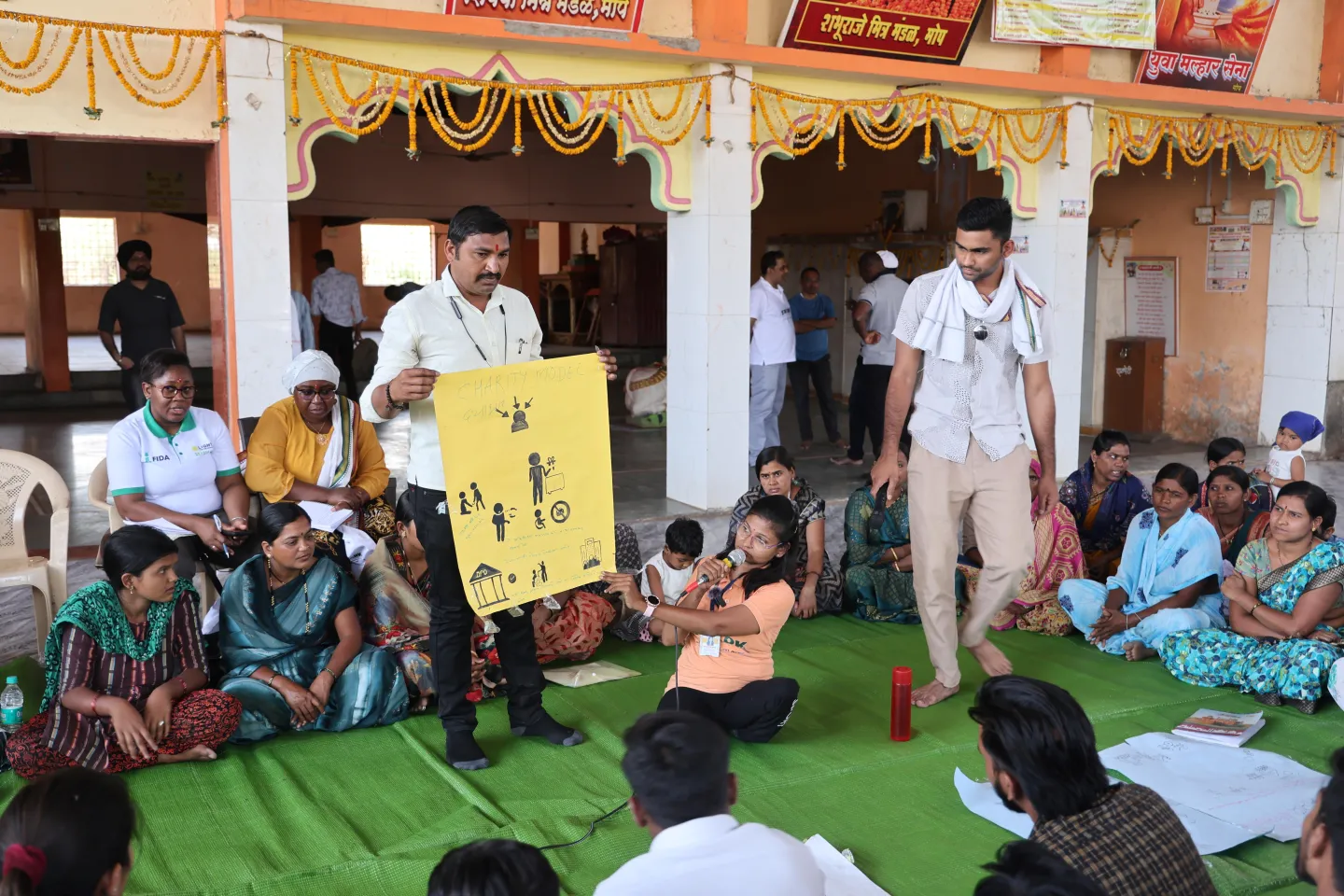
While working on the SPARK project, I gained knowledge about various laws and schemes for persons with disabilities, my communication skills were enhanced, and I was able to talk to government officers confidently.
The skills I gained from the SPARK project proved to be a boon for me and helped me to get my next job.
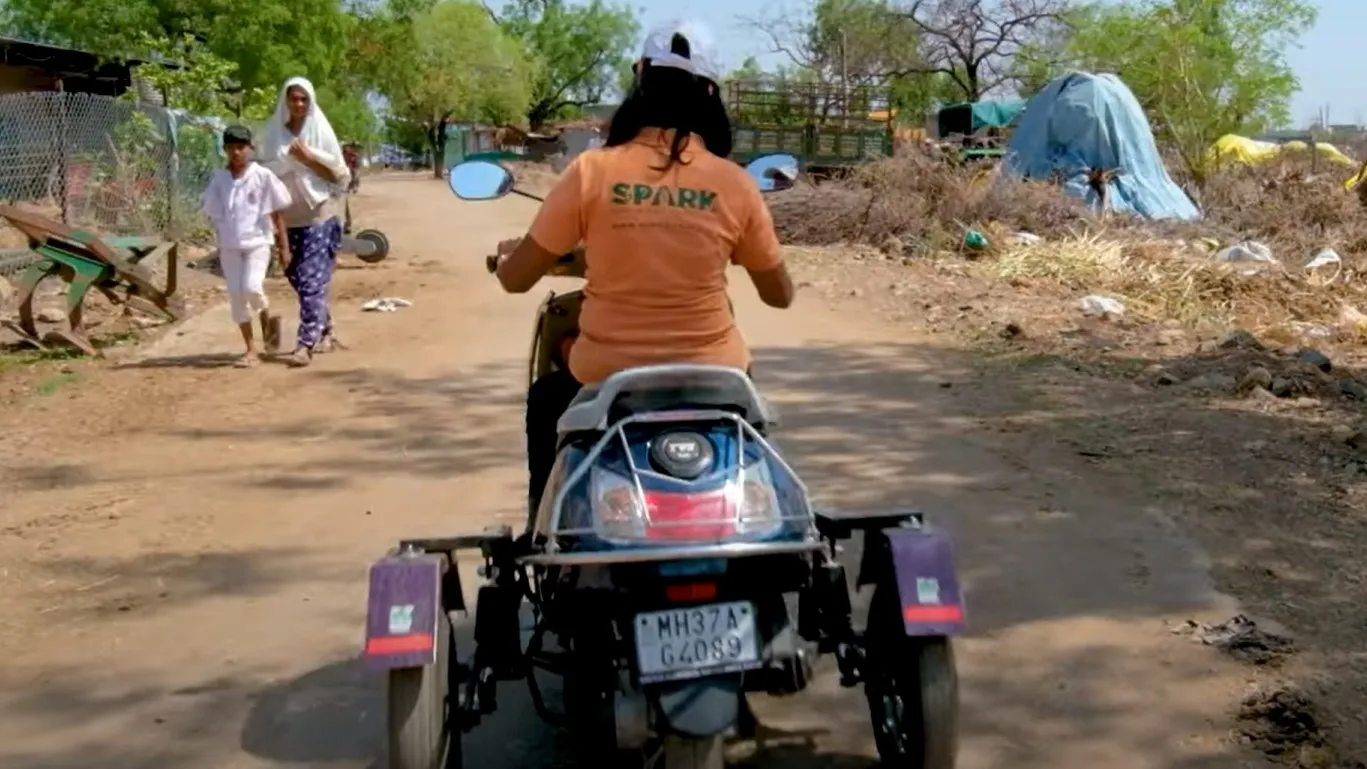
I now work as a Community Facilitator with a WaterAid project in Maharashtra, promoting the rights of persons with disabilities and applying what I learned through the SPARK project.
I want more people with disabilities in my region to become aware of their rights and entitlements and be able to access social protection schemes meant for them.
I want more people with disabilities to become aware of their rights and be able to access social protection schemes meant for them.
Lata Korde, Disability inclusion facilitator
SPARK was an amazing initiative. The meaning of SPARK is "brightness." If you get involved in disability inclusion facilitation work, you will become a light yourself, a star. You will inspire many people, just like me. I want many “Latas” to emerge in India.
Previously I thought of opening a non-governmental organisation (NGO) related to education or for orphans, but after working with SPARK, my thinking has changed. Now, I want to create something for people with disabilities – to provide them with work and make sure that society does not see them as objects of charity or pity. No one should be dependent on others. I want to give persons with disabilities employment opportunities.
Fast facts
- Worldwide, there are an estimated 1.3 billion people, or 16 per cent of the population, who have some form of disability.
- The “Sparking Disability Inclusive Rural Transformation” SPARK project was implemented in four countries: India, Malawi, Burkina Faso and Mozambique.
- It ran from 2021 to 2024 in partnership with Light For the World International and Procasur.
- In India, SPARK was integrated into the Nav Tejaswini Yojana project, an International Fund for Agricultural Development (IFAD)-funded Maharashtra government project for the sustainable development of rural households, particularly women, by improving their enterprise skills and access to markets.
- The project built a sustainable network of disability inclusion facilitators (DIFs) to support persons with disabilities living in rural areas to access services and raise awareness of their rights. Lata Korde worked with the project from 2022 to 2024.
- 3 December marks International Day of Persons with Disabilities. It aims to promote the rights and well-being of persons with disabilities.
Interview with Meera Mishra, Country Programme Coordinator, IFAD India
Find out more
Relevant projects
Development Cooperation Project
Sparking Disability Inclusive Rural Transformation (SPARK)