


Labour migration
Forced displacement contexts
Conflict, violence, human rights violations and climate change continue to drive forced displacement worldwide, contributing to large‑scale population movements. Persistent instability and the absence of durable solutions lead to protracted displacement, creating significant socio‑economic challenges for both refugees and host communities.
Refugees face several legal and practical barriers to access the labour market and secure decent work. As a result, many refugee workers are often concentrated in low-skilled, informal employment or under-regulated sectors where they are highly vulnerable to poor working conditions, discrimination and exploitation.
Ensuring access to decent work is a vital element of sustainable development solutions. It empowers refugees to actively participate in and contribute to the economies and societies of host communities, while fostering equitable opportunities for national workers and other vulnerable groups in conditions of equality.
117.8 million
people forcibly displaced worldwide, including 41.6 million refugees and other persons in need of international protection, and 68.7 million internally displaced persons.
68%
of refugees are hosted in low- and middle-income countries.
62%
of refugees have the legal right to work, while access is restricted for 31% and denied for 7% of refugees.
ILO response

The ILO has engaged in the labour aspects of forced displacement since its inception, focusing on ensuring access to decent work for both refugees and host communities. Its work is grounded in a comprehensive rights-based framework, aimed at reducing vulnerability and exclusion, enabling rights, ensuring social cohesion, and promoting greater protection and durable solutions for women and men.
Collaborating closely with governments, workers’ and employers' organizations, the ILO implements interventions to:
- Enhance governance of labour market access and decent work, by strengthening policy and regulatory frameworks to facilitate refugees' entry into labour markets, enhance institutional capacities and support transition to the formal economy
- Ensure respect of fundamental principles and rights at work and access to social protection, including through enhancing awareness and improving enforcement capacities, including for workers in the informal sector
- Expand opportunities for employment, skills development and lifelong learning, encompassing initiatives to create jobs, enhance vocational training, and support sustainable income-generating activities for both refugees and host communities.
The ILO ensures that decent work is positioned at the core of the humanitarian, development and peace nexus, fostering sustainable solutions that enhance economic stability, social cohesion, and long-term resilience for both displaced populations and host communities.
News and stories
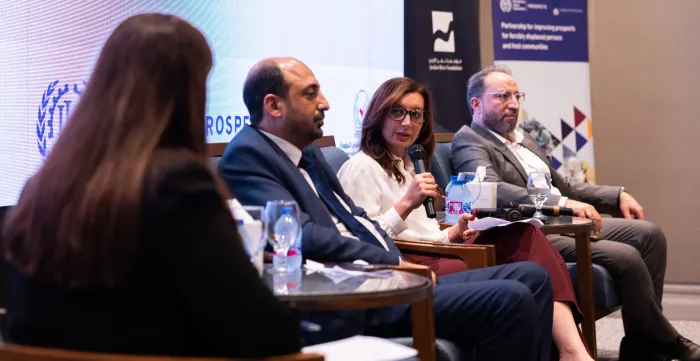
ILO and partners establish official recognition of prior learning system in Jordan, expanding pathways to decent work
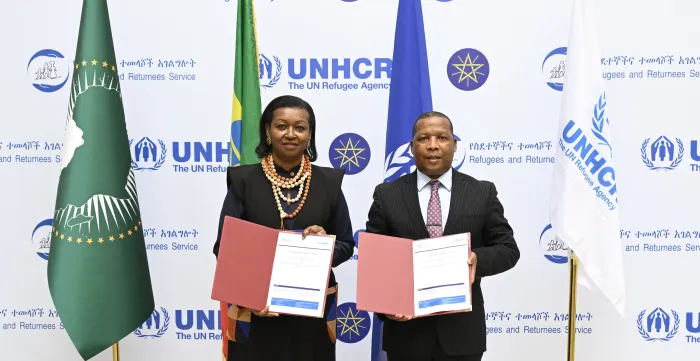
ILO-UNHCR partnership
ILO and UNHCR strengthen partnership to advance decent work for refugees and host communities in Ethiopia
Latest publications and documents
Labour market inclusion for refugees and other forcibly displaced persons
Governance frameworks for inclusive access to labour markets in Thailand
September 2026
PROSPECTS Partnership Factsheets
Global factsheet (September 2026)
ILO PROSPECTS: Results at a glance
ILO tools and intervention models
Projects
PROSPECTS Opportunity Fund project
PROSPECTS4Youth: Unlocking youth engagement in education and employment opportunities in forced displacement contexts
PROSPECTS Opportunity Fund project
PROSPECTS Digital Opportunity Accelerator

PROSPECTS Opportunity Fund Project
Fair Recruitment for Refugees
Partnerships
The ILO and the Global Compact on Refugees
The ILO and UNHCR
See also

Topic portal
Labour migration

Topic portal
Crisis situations and response