

SAW-A Project
Setting Adequate Wages - a focus on agriculture in Ethiopia
Overview
The Setting Adequate Wages – a focus on agriculture (SAW-A) initiative in Ethiopia has supported national efforts to strengthen wage policy, encourage evidence-based social dialogue, and improve agricultural incomes. Led by the International Labour Organization (ILO) and supported by the German Federal Ministry for Economic Cooperation and Development (BMZ), the project collaborates with public institutions, employers’ and workers’ organizations, and sector stakeholders to promote transparent and sustainable wage-setting practices.
Across Ethiopia’s agricultural economy, wages remain a central development and labour-governance challenge. Many workers still rely on earnings that do not cover basic needs, and wage practices vary widely by region, sector and enterprise. Well-designed wage-setting frameworks, including statutory mechanisms and collective bargaining, are critical for improving living standards and safeguarding enterprise sustainability. In recent years, Ethiopia has begun laying the institutional groundwork for a national wage-regulation approach. Under the Labour Proclamation, preparatory steps have been taken to establish a Minimum Wage Board, creating a formal structure for setting wages based on social dialogue, economic conditions, and labour-market evidence.
At the same time, important structural constraints persist. Agricultural employment is marked by low and uneven pay, limited collective bargaining coverage, and high informality that weakens compliance with wage standards. Inflation and regional differences in the cost of living further complicate efforts to ensure wages provide adequate living conditions for workers and their families.
Against this backdrop, the SAW-A initiative in Ethiopia has supported a more evidence-driven approach to wage policy and practice. Its work has focused on strengthening data use in wage discussions, enhancing institutional capacity for wage governance, promoting awareness of living wage concepts, and providing targeted technical assistance to government, employers’ and workers’ organizations. By engaging national stakeholders and aligning with existing initiatives, the project has helped embed ILO living wage principles in ongoing wage-setting processes.
What has been done in Ethiopia
SAW-A activities in Ethiopia have focused on establishing fair, evidence-based wage policies in agriculture and supporting the introduction of a minimum wage. The project was formally launched at a national stakeholder event attended by representatives from government, trade unions, employers’ organizations, and development partners. The launch presented the SAW-A approach, emphasized the need to align wages with workers’ needs and economic conditions, and initiated dialogue on living wages and wage governance in the agricultural sector.
To strengthen workers’ organizations in wage policy debates, the ILO provided targeted technical support to Ethiopian trade unions. This support included capacity-building on wage analysis, living wage concepts, and the use of economic and cost-of-living indicators, enabling more informed participation in social dialogue and national wage policy discussions.
At the institutional level, the ILO supported national consultations to strengthen tripartite cooperation on minimum wage governance. These consultations brought together federal and regional stakeholders to clarify the roles, structure, and operating principles of the future Minimum Wage Board, and to consolidate input for draft minimum wage regulations. The process emphasized evidence standards, transparency, adjustment mechanisms, and coordination between national and regional bodies.
To inform policy design and engagement, a stakeholder mapping and analysis was conducted across Ethiopia’s agricultural sector. The exercise identified key institutions, employers, workers’ organizations, civil society actors, and development partners involved in wage and income setting, and examined their interests, influence, and roles. The findings established a structured evidence base to guide dialogue and support more coherent and inclusive wage policy processes.
In the horticulture sector, the project partnered with the Ethiopian Horticulture Producer Exporters Association (EHPEA) to review and improve wage-setting practices across major production clusters. The review examined wage structures, allowances, and in-kind benefits, assessed variations related to cost of living, inflation, contract types, and gender dynamics, and documented practices across seven geographic clusters. Based on this analysis and consultations with employers, workers, and public institutions, a standardized framework for cluster-based wage systems was developed, including methods for valuing in-kind benefits and mechanisms for regular wage review and collective bargaining.
Areas of engagement
Strengthening
national dialogue on wage governance and minimum wage policy
Supporting
workers’ organizations to engage more effectively in evidence-based wage discussions
Improving
the technical foundations of wage systems in key agricultural value chains, particularly horticulture
Promoting
the use of data, structured consultation and international good practice in wage-setting processes.
Partnerships
The implementation of SAW-A in Ethiopia has been carried out in collaboration with national and regional government institutions, employers’ and workers’ organisations, sector associations, and development partners. Key partners have included the Ministry of Labour and Skills, the Ethiopian Horticulture Producer Exporters Association, and the Confederation of Ethiopian Trade Unions, alongside other stakeholders engaged in agricultural labour and wage policy.
The project has also engaged with international and multi-stakeholder organisations active in sustainable supply chains and labour standards, including Fair Trade International, Friedrich-Ebert-Stiftung (FES) and the Sustainable Trade Initiative (IDH). Working with these partners has supported dialogue on wage adequacy, living wage approaches and responsible business practices in agricultural value chains, and helped align national wage discussions with broader international initiatives on decent work and sustainable production.
Publications
Fair Wages and Decent Work
ILO launches project to advance living wages and income in Ethiopia’s agriculture sector
Fair wage and social dialogue
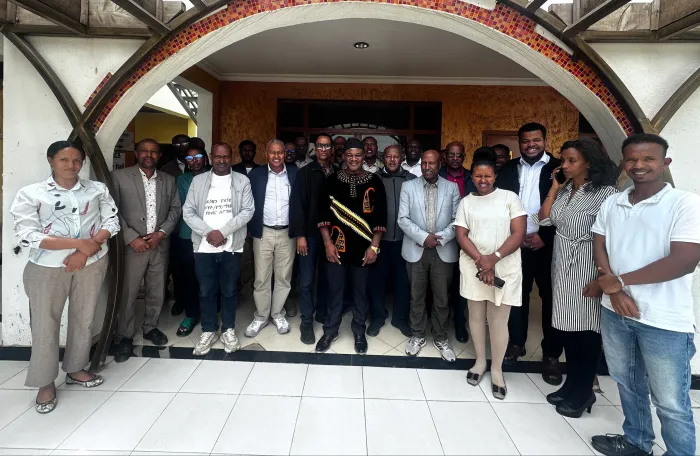
ILO backs trade unions to strengthen capacity on wage policy in Ethiopia
For further information, please contact:
Mr Nahom Teklewold
National Project Coordinator
Email: [email protected]

You may also be interested in

SAW-A Project
Setting adequate wages - a focus on agriculture

SAW Project
Setting adequate wages
Country portal
Ethiopia

Meeting of experts on wage policies, including living wages
Relevant projects
Development Cooperation Project
Setting Adequate Wages a focus on Agriculture (SAW-A)
SAW-A Project
Setting adequate wages - a focus on agriculture