

Fair wage and social dialogue
ILO backs trade unions to strengthen capacity on wage policy in Ethiopia
The International Labour Organization (ILO) supports Ethiopian trade unions in strengthening their technical and institutional capacity to engage in wage policy development.
30 October 2025
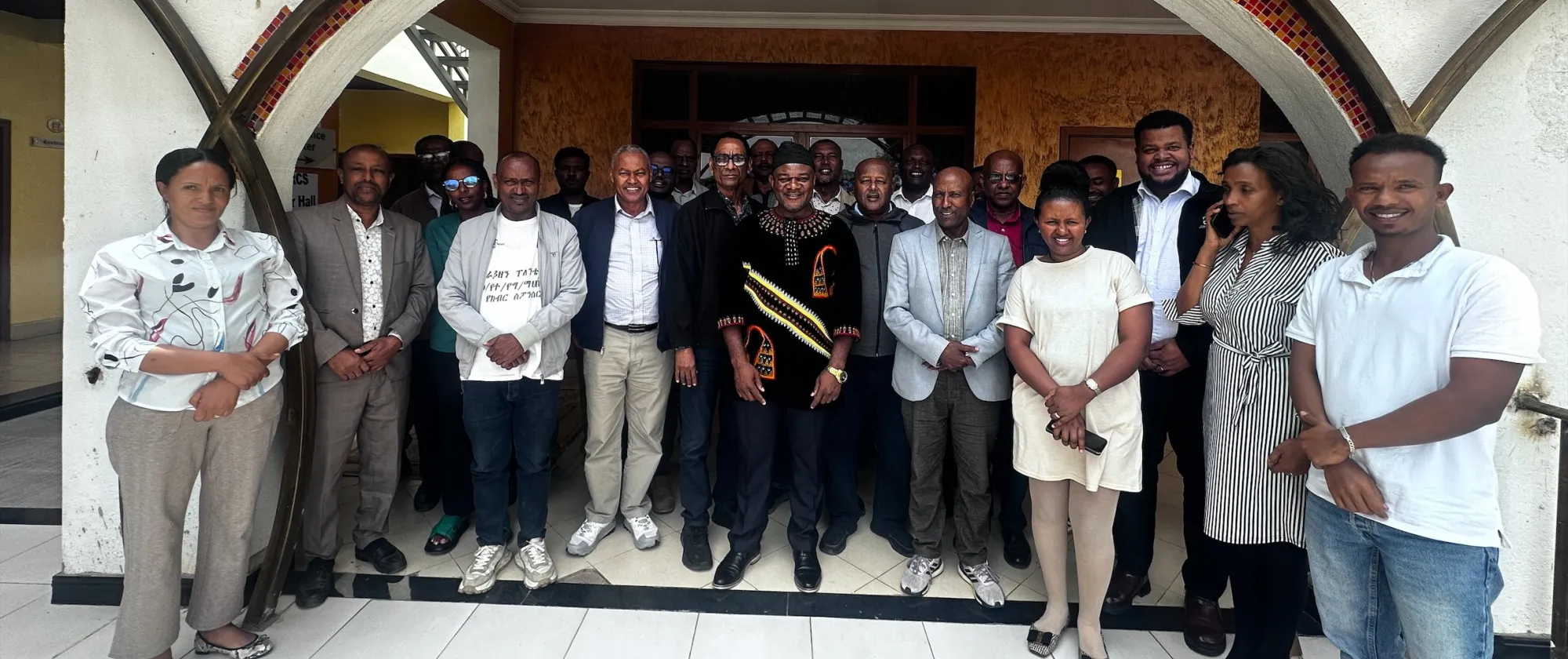
Bishoftu, Ethiopia (ILO News) - The International Labour Organization (ILO), in collaboration with the Confederation of Ethiopian Trade Unions (CETU), delivered a three-day Training-of-Trainers on Comprehensive Wage Policy from 30 September to 2 October 2025 in Bishoftu. Conducted under the ILO’s Setting Adequate Wages in Agriculture (SAW-A) project and funded by the German Federal Ministry for Economic Cooperation and Development (BMZ), the training aimed to strengthen the technical and institutional capacity of trade unions to engage effectively in evidence-based wage setting and social dialogue.
Building technical capacity for wage policy and dialogue
The training brought together 26 trade union leaders and regional representatives of CETU for an intensive programme facilitated by ILO specialists from Cairo and Geneva. The sessions examined Ethiopia’s wage landscape, principles of minimum and living wages, and international experiences in wage policy formulation and implementation.
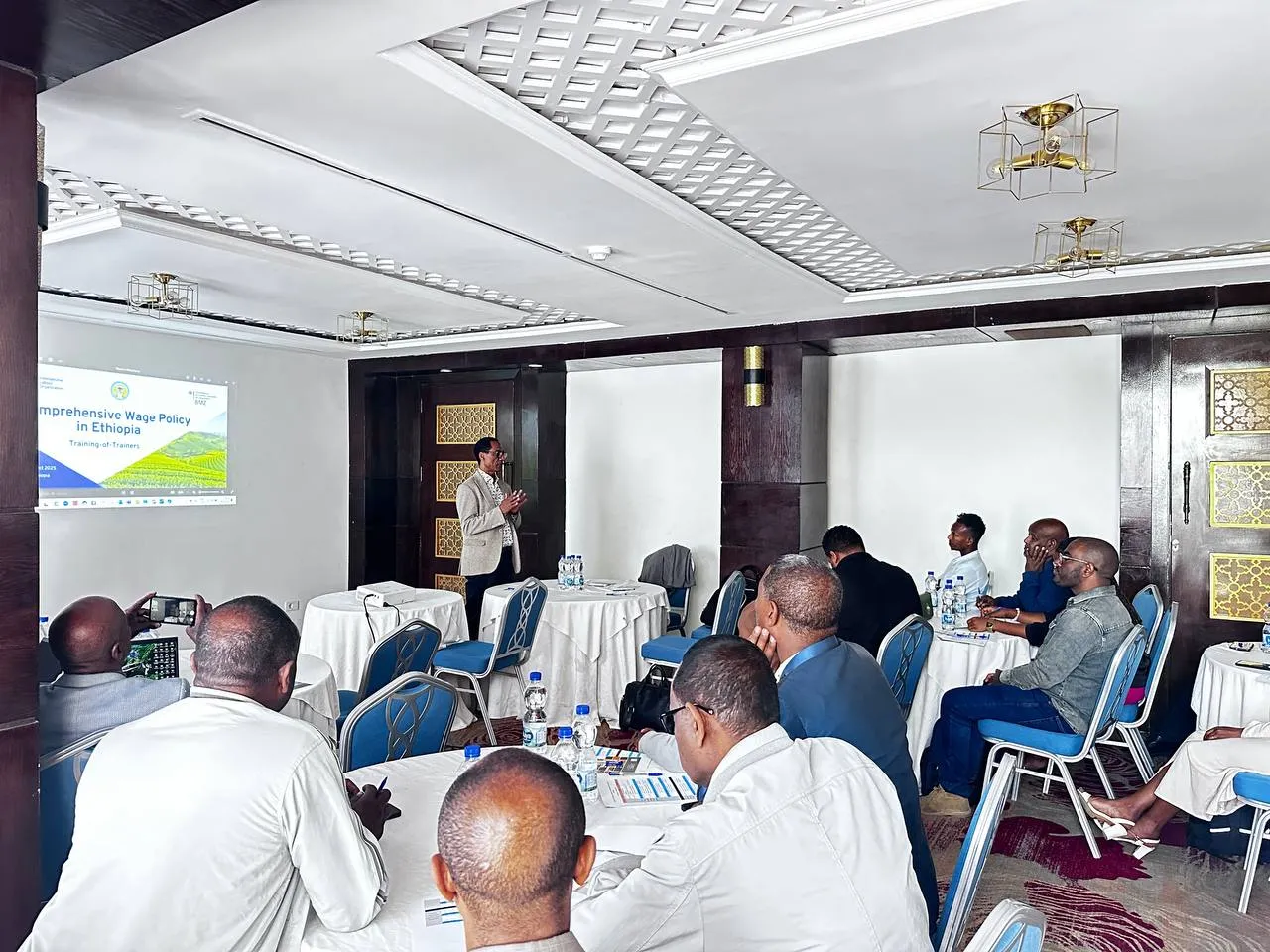
Participants reviewed findings from the ILO’s 2024 Wage Study, explored methodologies for estimating living wages, and discussed the economic and social factors shaping wage determination. Dedicated sessions addressed the gender pay gap, the link between wages, productivity, and employment, and the application of the Fair Work Monitor tool to strengthen compliance and collective bargaining practices.
The training concluded with simulation exercises on national minimum wage negotiation, allowing participants to apply the concepts and analytical tools in practice and strengthen their negotiation and consensus-building skills.
CETU President commends ILO’s continued partnership
In his opening and closing remarks, Mr. Kassahun Follo, President of CETU, expressed appreciation for the ILO’s continued partnership in advancing fair and equitable wage policies in Ethiopia.
“The ILO’s support comes at a critical moment, as Ethiopia is moving towards the establishment of a national minimum wage system,” Mr. Follo said. “This training is an opportunity for trade union leaders to equip themselves with the knowledge and tools needed to represent workers with confidence, competence, and integrity.”
He urged participants to apply the lessons learned and share the knowledge within their respective federations and affiliates, reaffirming CETU’s commitment to fair, data-driven, and inclusive wage-setting processes in collaboration with government and employer organizations.
Advancing SAW-A and national wage policy objectives
This training directly contributes to the objectives of the SAW-A project, which promotes adequate and living wages in the agricultural sector through stronger social dialogue, evidence-based policymaking, and enhanced institutional capacity. It also supports Ethiopia’s national goal of establishing a functional minimum wage system, a key component of the country’s broader agenda for decent work and inclusive growth.
By equipping trade union leaders with practical tools and technical understanding, the ILO and CETU partnership advances both organizations' shared commitment to ensuring that wage policies are socially just, economically sustainable, and aligned with SAW-A’s development cooperation priorities on fair work and income security.
Positive feedback and sustained collaboration
Participants expressed deep gratitude for the opportunity and provided positive feedback on the relevance and quality of the training, emphasizing its practical value for strengthening trade union engagement in wage policy dialogue. They also expressed readiness to replicate the sessions across regional and sectoral levels.
The ILO reaffirmed its commitment to continue working closely with CETU and other national partners to design and implement evidence-based wage-setting mechanisms, foster social dialogue, and promote fair remuneration as a foundation for productivity, equality, and social justice.
About SAW-A project
This project promotes the setting of adequate wages, including through minimum wages and collective bargaining, in agriculture in Colombia, Cote d'Ivoire, and Ethiopia, and provides technical assistance on the question of living wages. Its objective is to enable decent living standards for workers and their families, while ensuring the economic sustainability of enterprises. Since many workers in agriculture do not earn wages but cover their needs by selling goods and services on the market, the project also explores the concept of living incomes. Notably, the project explores how demand for more sustainable products and trading practices can be a lever for higher wages and labour incomes.
Relevant projects
Development Cooperation Project
Setting Adequate Wages a focus on Agriculture (SAW-A)

SAW-A Project
Setting adequate wages - a focus on agriculture