

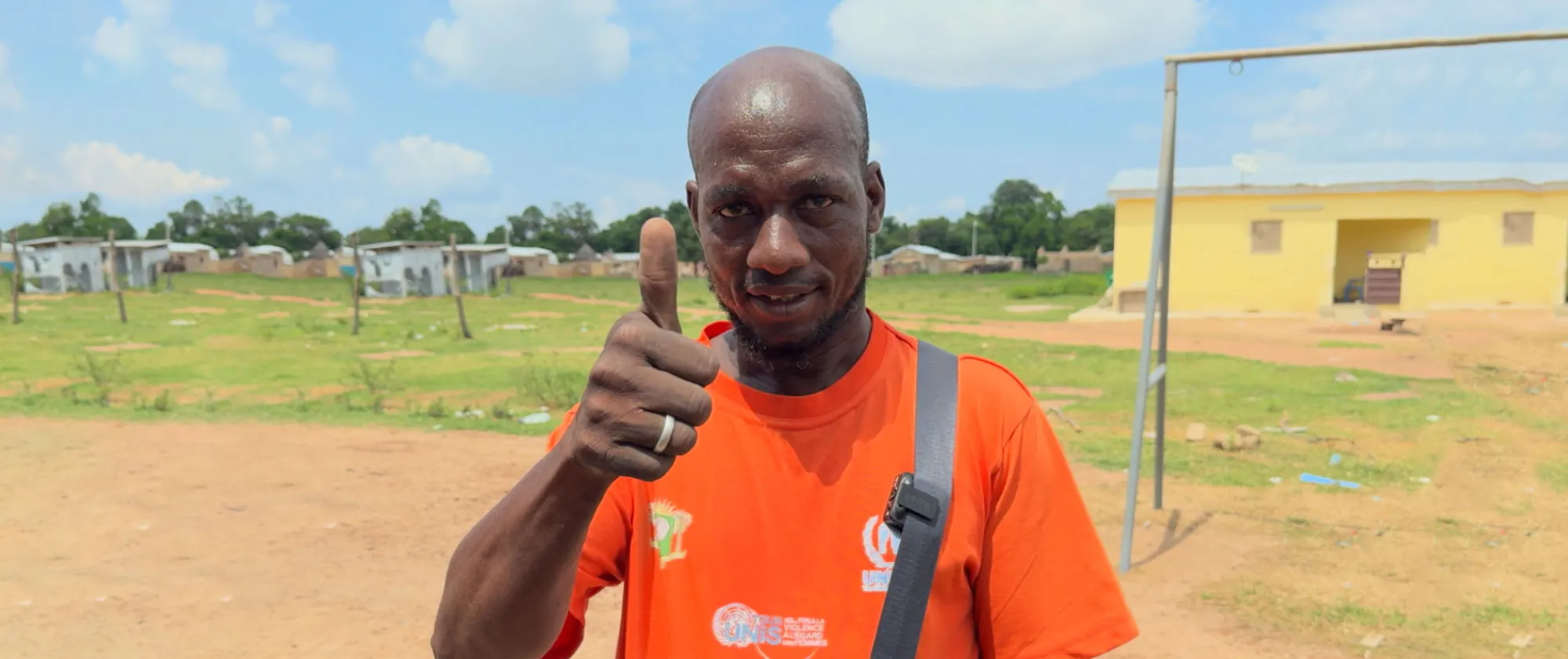
Turning Challenges into Opportunities: The Impact of Biochar in Côte d’Ivoire
Women, youth, and refugees are working together to build a greener future with biochar. Backed by the Government of Japan, this project brings lasting solutions: more food, more income, and more hope for local communities.
2 October 2025
ABIDJAN (ILO NEWS) - In northern Côte d’Ivoire, refugees from Burkina Faso and host communities are working together to build resilience through innovation. One of the most promising solutions is biochar, an eco-friendly technique that turns agricultural waste into a powerful tool for healthier soils and better harvests.
With support from the Government of Japan, the International Labour Organization's Biochar Côte d’Ivoire project is training farmers, many of them women and young refugees, in biochar production and use.
“This project provides a response to the situation of asylum seekers here, but also contributes to the community’s resilience,” says Roland Bissie, the project’s national coordinator.
Biochar is produced from farm by-products that would otherwise be discarded. When applied to fields, it improves soil fertility, boosts productivity, and reduces the need for costly chemical fertilisers.
“The special feature of biochar is that it is a purely organic product. It helps regenerate the soil while reducing expenses for farmers,” explains Aka Florent de Simo Wantchi, one of the engineers and trainers with the project.
Women have been particularly active participants in the project, despite the demands of household responsibilities.
“Women come more often, despite having many responsibilities at home. They want to learn how biochar is made,” notes Dyarkaridja Yea, Agricultural Advisor at Olam Agri Côte d’Ivoire.
For women and youth, including many refugees, biochar offers not only stronger harvests but also an opportunity to generate income through sales.
For asylum seekers like Diallo Koundja, the project has brought immediate benefits.
“Before, we had to buy ten bags of fertiliser. Now, we need fewer, so we have more money for food and school. Our children can attend, and our hearts are happy,” he says.
Beyond boosting livelihoods, the project is also strengthening social cohesion. Refugees and host communities now work side by side, sharing meals, knowledge, and hope.
With Japanese support, biochar is helping communities in northern Côte d’Ivoire grow stronger, greener, and more united. As Koundja sums it up: “We do everything together. We eat together, we drink together, and there is peace.”
Related content
Green Jobs for Youth to Respond to the Refugee Crisis in Northern Côte d’Ivoire
Partnering for development
Japan – ILO Partnership
Relevant projects
Green Jobs for Youth to Respond to the Refugee Crisis in Northern Côte d’Ivoire