

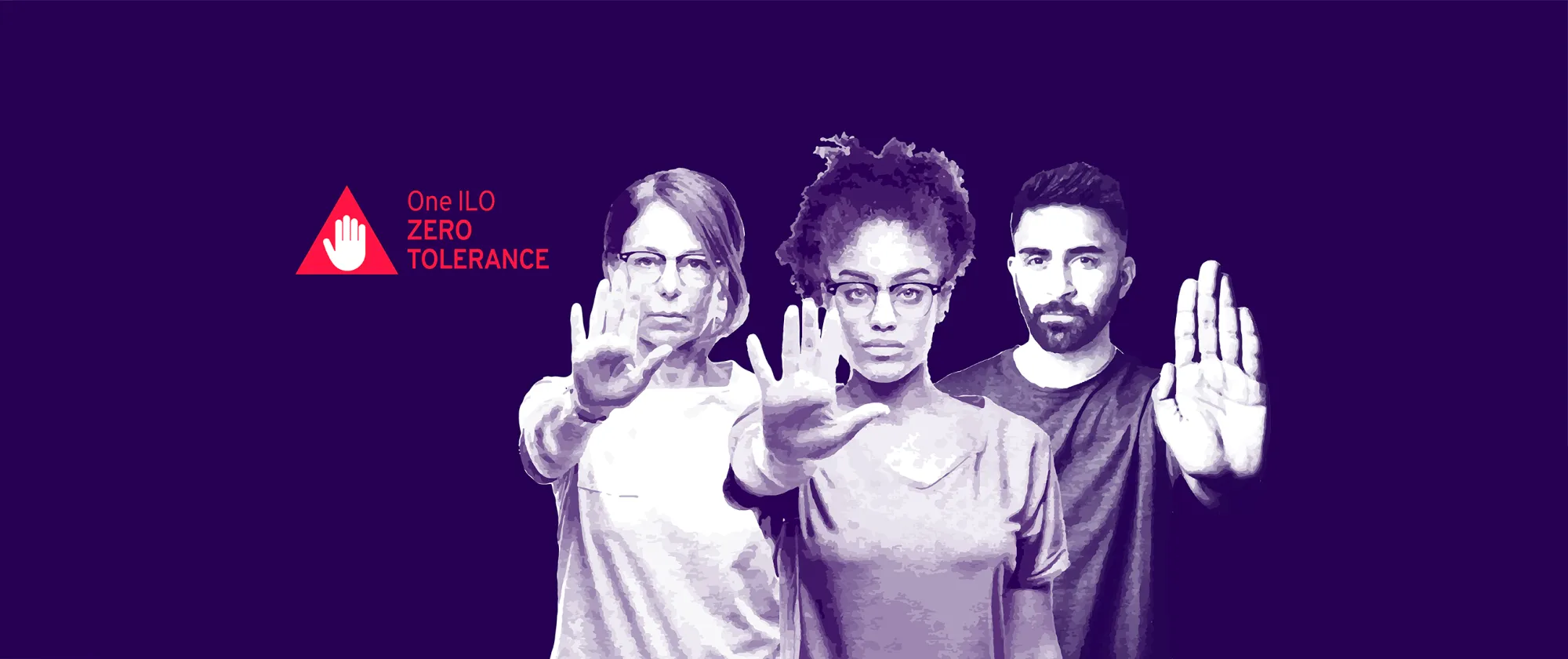
Prevention and response to sexual exploitation and abuse at the ILO
The ILO has a zero tolerance stance towards any form of sexual exploitation and abuse (SEA) and is strongly committed to upholding the highest ethical values at all times. Zero tolerance applies at all times and in all places. Together as One ILO, we can make a difference.
2 February 2024
What is sexual exploitation and abuse?
The ILO policy on Prevention and response to sexual exploitation and abuse considers SEA prohibited conduct and defines it as follows:
- Sexual exploitation: any actual or attempted abuse of a position of vulnerability, differential power, or trust, for sexual purposes, including, but not limited to, profiting monetarily, socially or politically from the sexual exploitation of another.
- Sexual abuse: the actual or threatened physical intrusion of a sexual nature, whether by force or under unequal or coercive conditions.
- Sexual activity with children (persons under the age of 18) regardless of the age of majority or age of consent locally. Mistaken belief in the age of a child is not an excuse.
- Exchange of money, employment, assistance, goods or services for sex, including sexual favours or other forms of humiliating, degrading or exploitative behaviour [regardless of the legality of transactional sex in country].
Examples of sexual exploitation and abuse include attempted rape, rape, sexual slavery, forced nudity, the use (or threat thereof) of electronic images or videos of a sexual nature as means of fear, abuse of power or coercion.
At the ILO, incidents of SEA are to be reported to the ILO Office of Internal Audit and Oversight (IAO) at [email protected] or through the ILO Integrity Hotline. All information will be treated confidentially. Reports can also be made anonymously.
How does the ILO prevent and respond to sexual exploitation and abuse?
The ILO is committed to ensuring the highest standards of ethical conduct and preventing and responding to sexual exploitation and abuse. The ILO implements various measures, including:
- Raising awareness through information, training, briefings and other tools to equip staff members with the knowledge and skills necessary to understand and respond to SEA.
- Engaging in discussions on priorities and cross-cutting challenges, while advancing the implementation of the ILO action plan with the ILO PSEA Working Group.
- Exercising due diligence in recruitment processes (e.g. through the UN ClearCheck) to prevent the hiring or rehiring of former of current individuals against whom allegations of sexual exploitation, abuse or harassment, while in service of a UN entity were substantiated following an investigation and a disciplinary process, or who were the subject of a pending investigation and/or disciplinary process for the above mentioned allegations.
- Ensuring that, if an allegation of SEA is reported or an incident discovered, it undergoes a prompt and thorough investigation.
- Taking appropriate administrative and/or disciplinary action in all cases within the ILO’s scope of authority, reporting on such cases and, where appropriate, pursuing legal action. This may include waiving of immunity to permit civil action and/or criminal prosecution.
- Participating in inter-agency working groups, discussions, and activities focused on PSEA.
What should you do when you become aware of possible sexual exploitation or abuse?
- Promptly report any observed or suspected cases of SEA to the Office of Internal Audit and Oversight at [email protected] or through the ILO Integrity Hotline. You do not need proof before reporting but all reports must be made in good faith. Early reporting is critical to the success of any investigation and may significantly contribute to the ILO’s ability to address abuses.
- Treat the victim or survivor of SEA with empathy, respect and understanding. Be sensitive to the needs and wishes of those affected by SEA.
Related content

Office directive
Prevention and response to sexual exploitation and abuse at the ILO
Office directive on reporting misconduct and protection from retaliation (Version 2)

ILO Code of conduct: Working together for a culture of respect