

Trade unions strengthen action for gender equality and safe workplaces in India
ILO-supported training marks the anniversary of the Violence and Harassment Convention, 2019 (No. 190) and supports the development of Indian National Trade Union Congress’s National Gender Policy and Action Plan.
26 June 2026
NEW DELHI (ILO News) - Workers and trade union leaders in India have strengthened their knowledge of building safer, more inclusive and women-friendly workplaces during a workshop supported by the International Labour Organization (ILO).
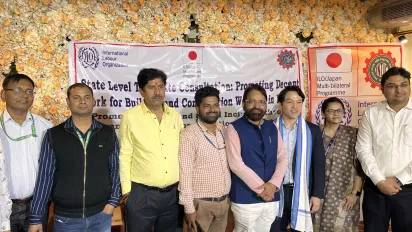
To mark the anniversary of the Violence and Harassment Convention, 2019 (No. 190), adopted in June 2019, ILO, in collaboration with the Indian National Trade Union Congress (INTUC), organized a Gender Equality Training and Consultation Workshop on Building Safe and Women-Friendly Workplaces in Siliguri, North Bengal, on 22 June 2026.
The workshop brought together workers and trade union leaders to strengthen their understanding of labour rights, gender equality, and the prevention of gender-based discrimination, violence and harassment. The programme also highlighted international labour standards, national legislation and the important role of trade unions in promoting safe and inclusive workplaces.

Highlighting the particular challenges faced by workers in the informal economy, Baishali Lahiri, National Project Coordinator of the ILO's Promoting Rights and Social Inclusion through Organization and Formalization (PRS) – Phase 2 project, emphasized the critical role of trade unions in ensuring that all workers can exercise their rights:
"Workers in the informal economy often lack access to effective grievance redress mechanisms because of the nature of their employment. Yet they have the same fundamental rights at work as all other workers”.

Sudipta Bhadra, the ILO’s Senior Programme Officer, explained the concepts of violence and harassment in the workplace and highlighted the lack of effective workplace redressal mechanisms, which often leave workers without adequate support or avenues for reporting grievances. She emphasised, “Trade unions have a vital role to play in bridging this gap by raising awareness, strengthening workers' representation, and advocating for safer, more inclusive workplaces."
Shahnaz Rafique, Secretary of the Indian National Trade Union Congress (INTUC), reinforced the importance of gender equality and preventing violence and harassment at work. She discussed India's legal framework for addressing workplace sexual harassment, including the Sexual Harassment of Women at Workplace (Prevention, Prohibition and Redressal) Act, 2013 (POSH Act).

The workshop also served as a consultation platform for the development of INTUC's National Gender Policy and Action Plan. Participants shared their experiences, challenges and recommendations on workplace safety, gender equality and women's leadership. Their contributions will help shape the policy and strengthen gender-responsive practices within the organization.
With financial support from the Government of Japan, the ILO’s PRS project contributes to the reduction of decent work deficits and gender inequalities in the informal economy and promote the transition to the formal economy in India.
Related content
Promoting rights and social inclusion through organization and formalization (PRS) – Phase 2: India Component
Relevant projects
Promoting rights and social inclusion through organization and formalization (PRS) – Phase 2: India Component

Promoting rights and social inclusion through organization and formalization (PRS) – Phase 2: Nepal Component

Development cooperation project
Promoting rights and social inclusion through organization and formalization (PRS) – Phase 2

Informal economy
Promoting rights and social inclusion through organization and formalization (PRS) – Phase 2: Pakistan Component