


Development cooperation project
Promoting rights and social inclusion through organization and formalization (PRS) – Phase 2
The project contributes to the reduction of decent work deficits and gender inequalities in the informal economy and promote the transition to the formal economy in Nepal, India and Pakistan.
Duration
1 December 2022 - 31 October 2026
Development partner(s)
ILO/Japan Multi-bilateral Programme
Reference
RAS/22/12/JPN
Location
India, Nepal, Pakistan
Contact
Heejin Ahn, Project Technical Officer/Coordinator
Background
The informal economy in India, Nepal, and Pakistan employs an estimated 70–90% of the working population. While it provides critical jobs and livelihoods, it is marked by significant decent work deficits. Informal economy workers often face low wages, insecure employment, limited access to social protection and benefits, and minimal representation or voice. They are also exposed to occupational safety and health (OSH) risks due to hazardous working conditions, poor awareness and enforcement of OSH regulations, and limited access to safety equipment.
These conditions reinforce inequalities compared to formal workers and leave informal workers highly vulnerable to economic shocks and crises. Women in the informal economy are particularly affected, often earning lower wages, facing greater job insecurity, and being more exposed to exploitation.
This project adopts a systematic, coordinated, and gender-responsive approach to addressing the root causes of informality. It seeks to ensure that informal workers and economic units are formally recognized, regulated, and protected—paving the way for workers to achieve dignity, security, and empowerment.
Objectives
- Strengthen the capacity of employers’ and workers’ organizations to implement strategies promoting formalization and gender equality;
- Enhance partnerships and coordination among tripartite constituents and other stakeholders to identify and implement policies that support formalization and gender equality;
- Increase awareness and support from broader stakeholders, including the public, on the challenges faced by informal economy workers and economic units.
The project is grounded in gender equality, non-discrimination and the Fundamental Principles and Rights at Work, with a strong focus on policy and social dialogue.
Target sectors: Domestic work, construction, and sanitation – sectors with high informality rates and significant decent work deficits.
Stakeholders and beneficiaries
Direct beneficiaries: Tripartite constituents, including Ministries of Labour, employers’ organizations, and workers’ organizations, as well as other key partners in the three countries.
Final beneficiaries: Workers in the targeted sectors (domestic work, sanitation, and construction) and informal economic units, with particular focus on women due to their high representation and vulnerability within the informal economy.
Related content
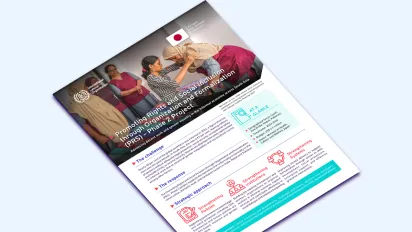
Factsheet
Promoting Rights and Social Inclusion through Organization and Formalization (PRS) – Phase 2 Project - Advancing decent work and gender...