

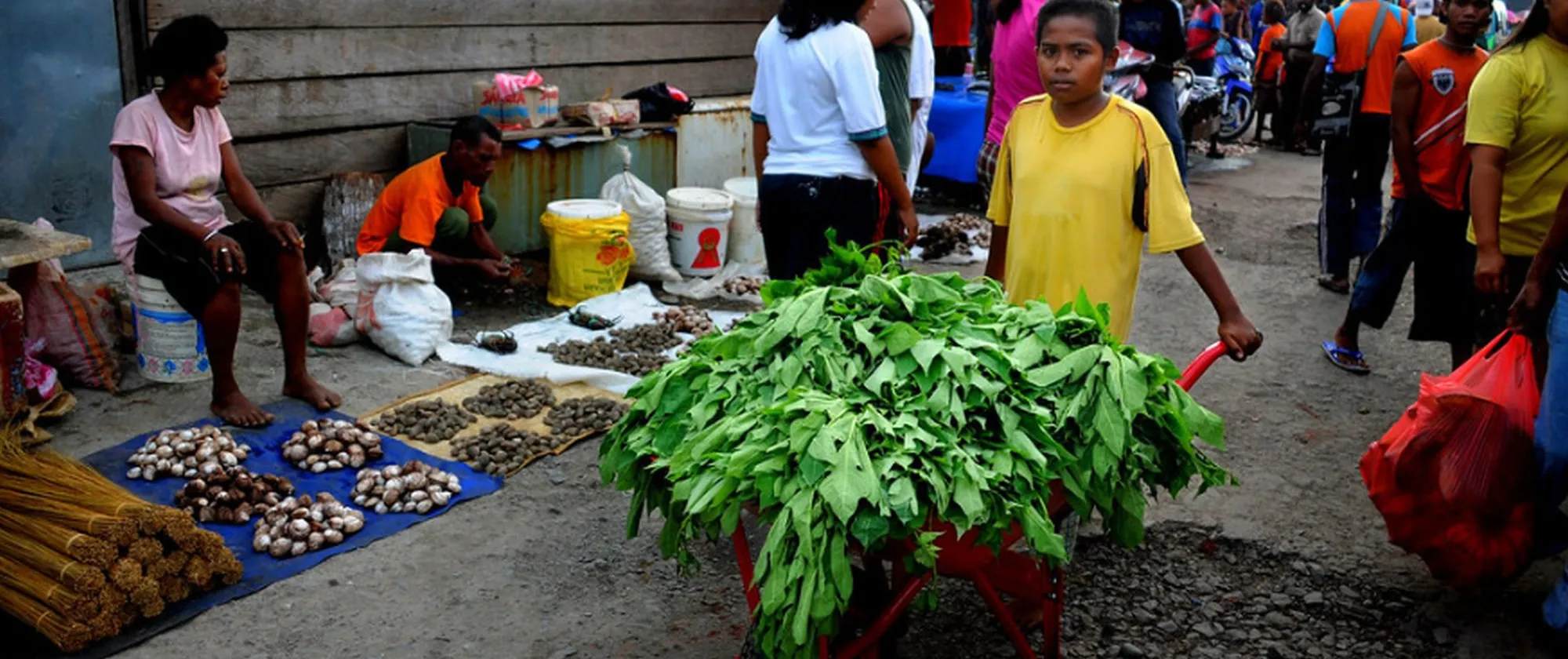
Child labour
Towards 2045: Indonesia expands efforts to safeguard children from labour exploitation
The ILO and its social partners continue to support the implementation and acceleration of Indonesia’s Child Labour‑Free Advanced Roadmap 2045.
2 December 2025
JAKARTA, Indonesia (ILO News) - Good practices, challenges and recommendations across three key areas – child labour and education and skill, child labour monitoring systems and business and child rights – were discussed during the National Consultation Workshop titled “Implementing the Indonesia Child Labour‑Free Advanced Roadmap 2045”. Held in Jakarta on 25 November, the workshop generated a set of recommendations aimed at strengthening coordination, accelerating advanced roadmap implementation and shaping Indonesia’s contributions to the 6th Global Conference on the Elimination of Child Labour, to be held in Morocco in 2026.

The workshop brought together 70 participants representing government institutions, businesses, trade unions, civil society organizations and academia. Their recommendations focused on expanding equitable access to quality education and skill, particularly in underdeveloped regions and among marginalized groups; developing a village‑level child labour database platform; establishing a referral system for child labour remediation; and enhancing coordination and advocacy at regional and village levels. Additional proposals included creating business processes and procedures for Human Rights Compliance Assessments and establishing regular forums on business and human rights.
The workshop was supported by the ILO’s Realizing Trade Gains Free from Gender Discrimination and Child Labour (RealGains) Project, funded by Government of Canada, in collaboration with the Ministry of Manpower and the Partnership for Action Against Child Labour in Agriculture (PAACLA) – a platform established by the National Development Planning Agency (Bappenas) to align national efforts to eliminate child labour in agriculture, particularly in rural communities.
Indonesia is playing an important role in eliminating child labour and has already demonstrated strong commitment through the establishment of its Indonesia Child Labour‑Free Advanced Roadmap 2045.
Bharati Pflug, ILO Senior Specialist on Fundamental Principles and Rights at Work
Bharati Pflug, ILO Senior Specialist on Fundamental Principles and Rights at Work, opened her keynote by outlining the current situation and strategic challenges of eliminating child labour in the Asia‑Pacific region. She noted that most child labour occurs in agriculture, though its share decreases as children grow older, while hazardous work continues to affect children across all age groups.
She also urged Indonesia to voluntarily join Alliance 8.7, a global partnership committed to eradicating forced labour, modern slavery, human trafficking, and child labour. “Indonesia is playing an important role in eliminating child labour and has already demonstrated strong commitment through the establishment of its Indonesia Child Labour‑Free Advanced Roadmap 2045, which focuses on policy alignment, social protection, education and business responsibility,” she emphasized.

In the interactive discussion session, Weni Lidya Sukma, a statistician from Statistics Indonesia, shared an overview of the national child labour situation. She reported that more than one million children aged 5-17 are engaged in child labour, with 40 per cent involved in hazardous work. The prevalence is higher among boys than girls and significantly greater in rural areas compared to urban settings. Unlike regional and global trends, Indonesia’s child labour is most concentrated in the services sector, followed by agriculture and manufacturing.
“What we also need to pay attention to is child labour in digital work,” she noted. “Children aged 12-14 are the most vulnerable. Although digital tasks may appear light, they often conceal new forms of exploitation, such as excessively long working hours. Children from low‑income families are particularly at risk, as they may feel compelled to take on paid digital work to support their family’s economy.”
Rinaldi Umar, Director of Labour Standards Inspection at the Ministry of Manpower, highlighted the Ministry’s role in providing guidance, conducting inspections, enforcing child labour standards and strengthening coordination across ministries and organizations, particularly with employers and workers. “Most importantly, we actively involve children’s forums and have developed a reporting platform on child labour that is integrated with the labour dispute resolution mechanism,” he explained.
Echoing the call for stronger collaboration, representatives from employers’ and workers’ organizations also shared their perspectives. Myra Hanartani, Head of the Regulatory Committee of the Indonesian Employers Association (Apindo), stressed the importance of strengthening bipartite relations and dialogue. Meanwhile, Nursanna Marpaung, Executive Secretary of the Trade Union Network for Palm Oil (JAPBUSI), a coalition of 11 federations representing more than 100,000 workers, emphasized the need to mobilize campaigns through bipartite relations and gender committees.
Most importantly, we actively involve children’s forums and have developed a reporting platform on child labour that is integrated with the labour dispute resolution mechanism.
Rinaldi Umar, Director of Labour Standards Inspection at the Ministry of Manpower
Related content

Project
Realizing trade gains free from gender discrimination and child labour (RealGains)

National Consultation Workshop
Implementing the Indonesia Child Labour-Free Roadmap 2045
Relevant projects
Project
Realizing trade gains free from gender discrimination and child labour (RealGains)