

Training course
Strengthening negotiation skills for effective collective bargaining
Employers’ and workers’ representatives and industrial relations practitioners strengthened their capacity to negotiate effective collective agreements during a multilingual ITCILO course in Turin, supported by the Government of Canada.
3 July 2026
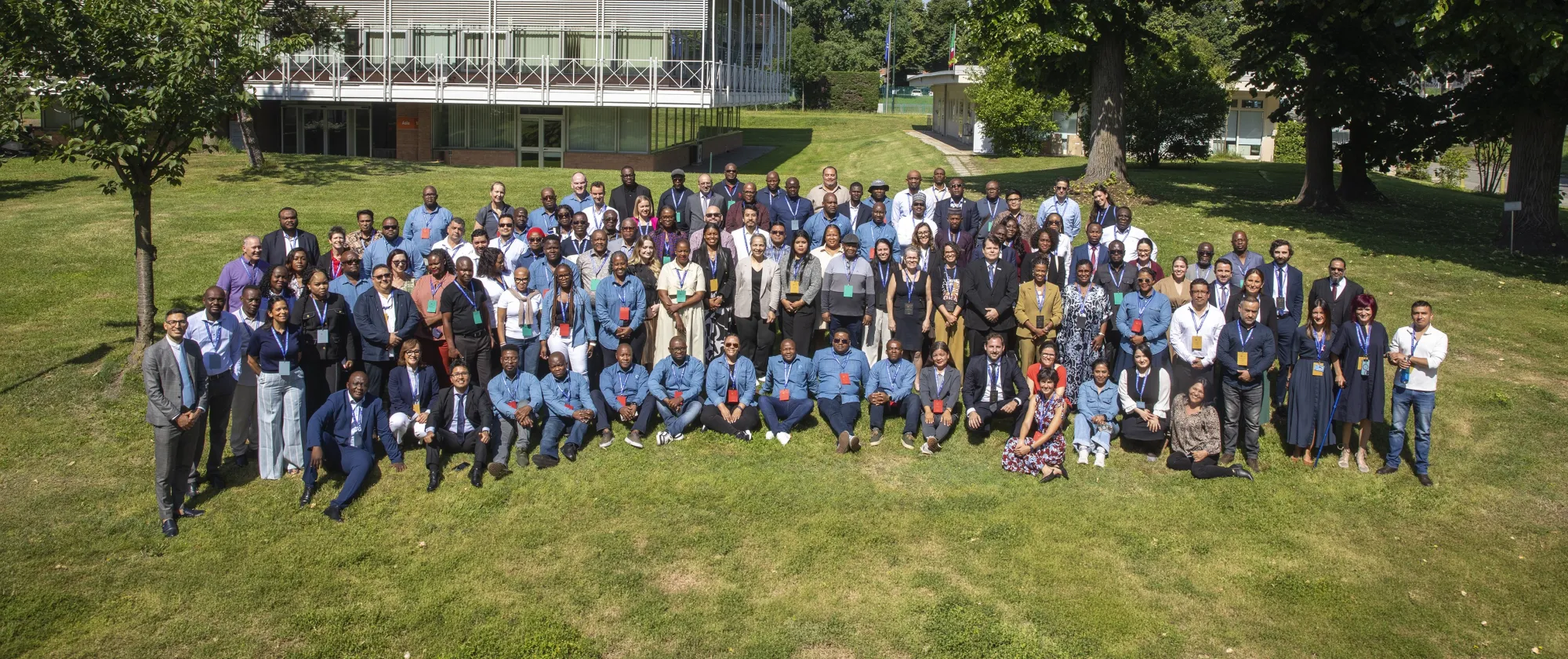
TURIN (ILO News) – From 25 to 29 May 2026, the International Training Centre of the ILO (ITCILO) in Turin hosted the course Negotiation Skills for Effective Collective Bargaining. Delivered in English, French, Spanish and Portuguese, the programme brought together 102 participants from diverse linguistic, institutional and labour relations contexts.
Collective bargaining is a fundamental pillar of social dialogue and plays an important role in building equitable, productive and stable employment relations. Yet even where legal and institutional frameworks are in place, negotiations can become difficult when parties lack the preparation, trust or skills needed to engage constructively.
The course was designed to help participants move beyond adversarial and positional bargaining towards more collaborative, needs-based and consensus-building approaches. Through expert inputs, group work, case studies, simulations and role-plays, participants explored how negotiations are prepared, conducted and concluded, and how parties can work towards agreements that are realistic, sustainable and responsive to the concerns of both employers and workers.
A strong emphasis was placed on “learning by doing”. Participants worked through collective bargaining scenarios and workplace dispute exercises, allowing them to test different negotiation strategies and reflect on how specific choices can either escalate conflict or open space for agreement.
The programme also focused on the human side of negotiation. Participants examined how trust, communication, active listening, emotional awareness and relationships shape what happens at the bargaining table. Exercises on listening, reframing, rapport-building and managing emotions encouraged participants to consider not only what is negotiated, but also how parties engage with one another.
Preparation for collective bargaining was another central theme. Participants explored how to analyse interests, assess alternatives to agreement, understand the bargaining range, prepare mandates, evaluate risks and consider the needs and constraints of the other party. These skills are essential for negotiators seeking agreements that are durable, implementable and responsive to the concerns of both employers and workers.
Through practical exercises, peer exchange and reflection on real-world bargaining challenges, the course helped participants sharpen the skills needed to build trust, address underlying interests and contribute to sound labour relations.
Related content

Topic portal
Social dialogue and tripartism

Topic portal
Collective bargaining and labour relations

Topic portal
Labour dispute prevention and resolution

Training course
ITCILO launches summer school on social dialogue and living wages