

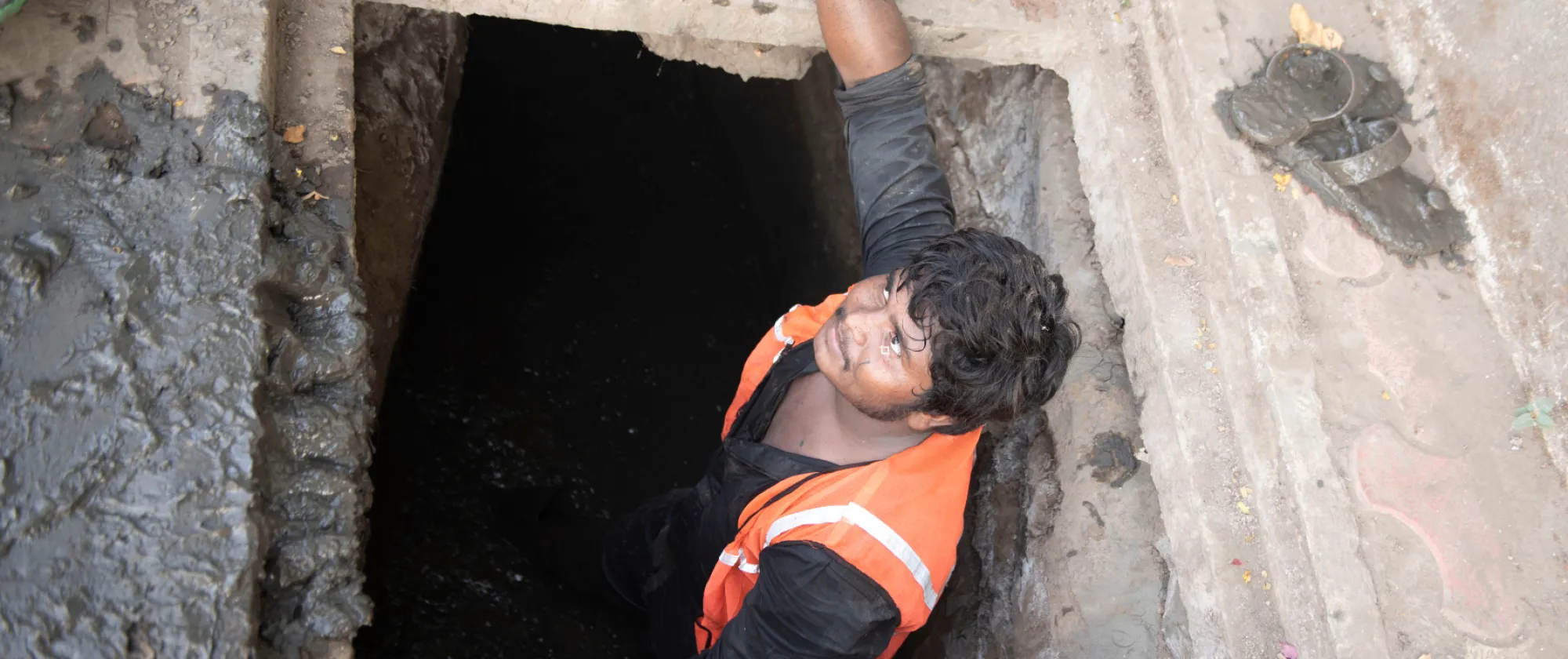
National dialogue calls for stronger protections and zero fatalities in sanitation work in India
Government representatives, trade unions, civil society organisations, international agencies and researchers came together for a national dialogue to advance efforts towards safer and more dignified working conditions for sanitation workers in India.
14 May 2026
NEW DELHI (ILO News) - Organized by the Urban Management Centre on 14 May 2026, the National Dialogue Towards Zero Fatalities in Sanitation Work focused on advancing zero fatalities in sanitation work while strengthening dignity, occupational safety and health, and social protection for workers engaged in sanitation services in India.
The International Labour Organization (ILO), through its Promoting Rights and Social Inclusion through Organization and Formalization (PRS) project, participated in the dialogue and contributed to discussions on formalization, worker welfare and inclusive social protection systems.
Participants highlighted ongoing efforts by national and state governments to institutionalize safety protocols, promote mechanization through financial support, strengthen welfare systems, and formalize sanitation labour associated with handling human waste.
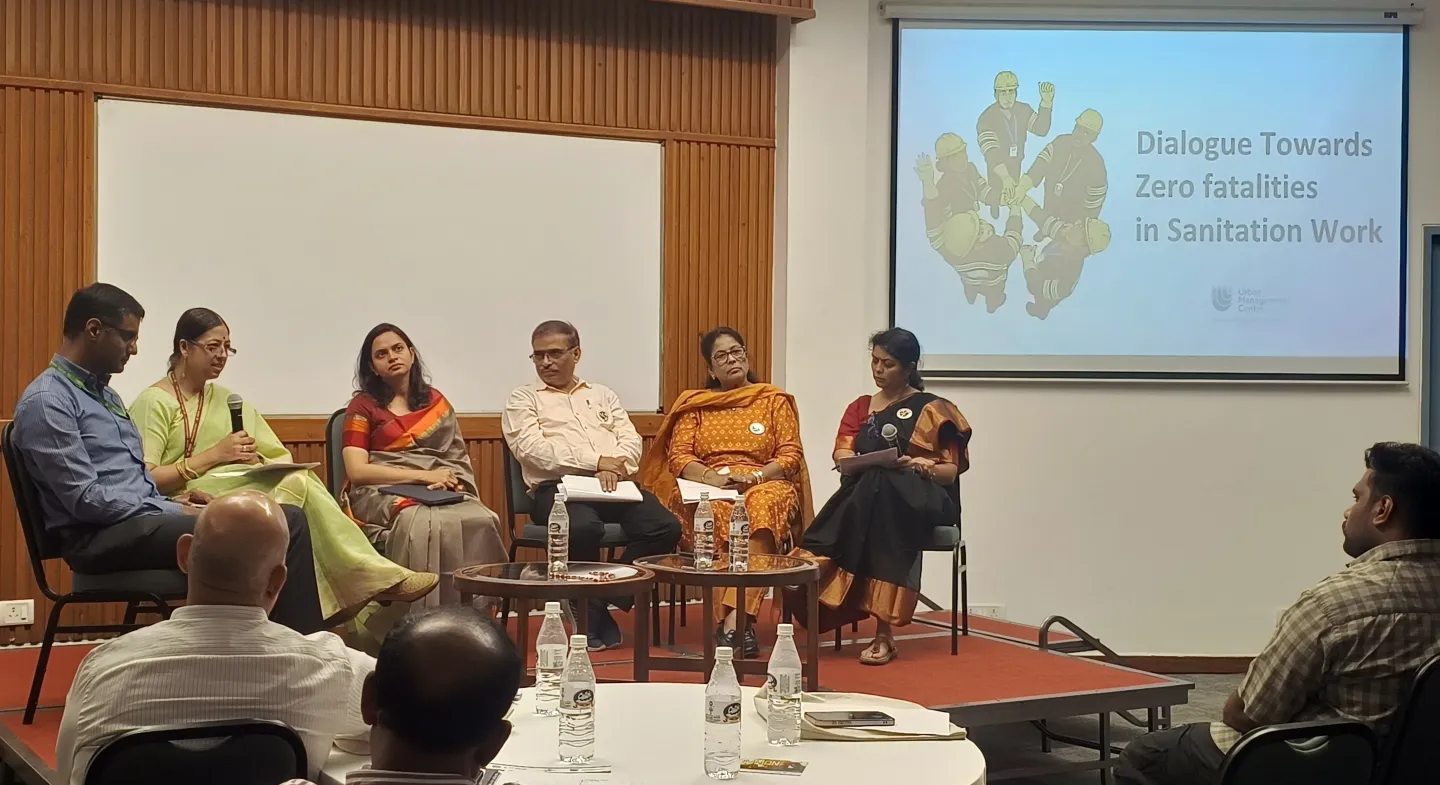
Speaking during the dialogue, Baishali Lahiri, National Project Coordinator of the ILO’s PRS Project, underscored the importance of reliable worker enumeration, dynamic databases and inter-ministerial convergence to ensure that both formal and informal sanitation workers are included in welfare schemes and insurance coverage.
“The inclusion of all sanitation workers in social protection systems requires accurate data, coordinated institutional action and sustained efforts to reach workers in informal arrangements,” she noted.
The discussions also emphasized the need to address the heightened vulnerabilities faced by marginalized communities engaged in sanitation work, particularly women and transgender persons.
Participants further called for the creation of alternative livelihood pathways and educational opportunities for the children of sanitation workers to break intergenerational occupational vulnerability.
The dialogue reinforced the importance of collaborative action among governments, workers’ organizations, civil society and development partners to eliminate hazardous sanitation work practices and ensure safer, more inclusive and dignified livelihoods for sanitation workers across India.
Related content
Promoting rights and social inclusion through organization and formalization (PRS) – Phase 2: India Component
Relevant projects
Promoting rights and social inclusion through organization and formalization (PRS) – Phase 2: India Component
Promoting rights and social inclusion through organization and formalization (PRS) – Phase 2: Nepal Component

Development cooperation project
Promoting rights and social inclusion through organization and formalization (PRS) – Phase 2

Informal economy
Promoting rights and social inclusion through organization and formalization (PRS) – Phase 2: Pakistan Component