

Formalization of the Informal Economy Project (Phase II)
ILO shares international experience to reform the law on supporting small and medium enterprises in Mongolia
To support the reform of Mongolia's Law on Supporting Small and Medium Enterprises and Services, an ILO national consultant presented recommendations on simplifying tax and social security systems to the government working group and the Mongolian National Chamber of Commerce and Industry (MNCCI), supporting key stakeholders to advocate for integrating these global practices into the draft legislation.
5 May 2026
MONGOLIA (ILO News) The ILO national consultant presented the results of a survey to the working group for revising the Law on Supporting Small and Medium Enterprises Services during a virtual meeting on 16 February 2026. Subsequently, it was also shared with the employees of the MNCCI on 20 March 2026.
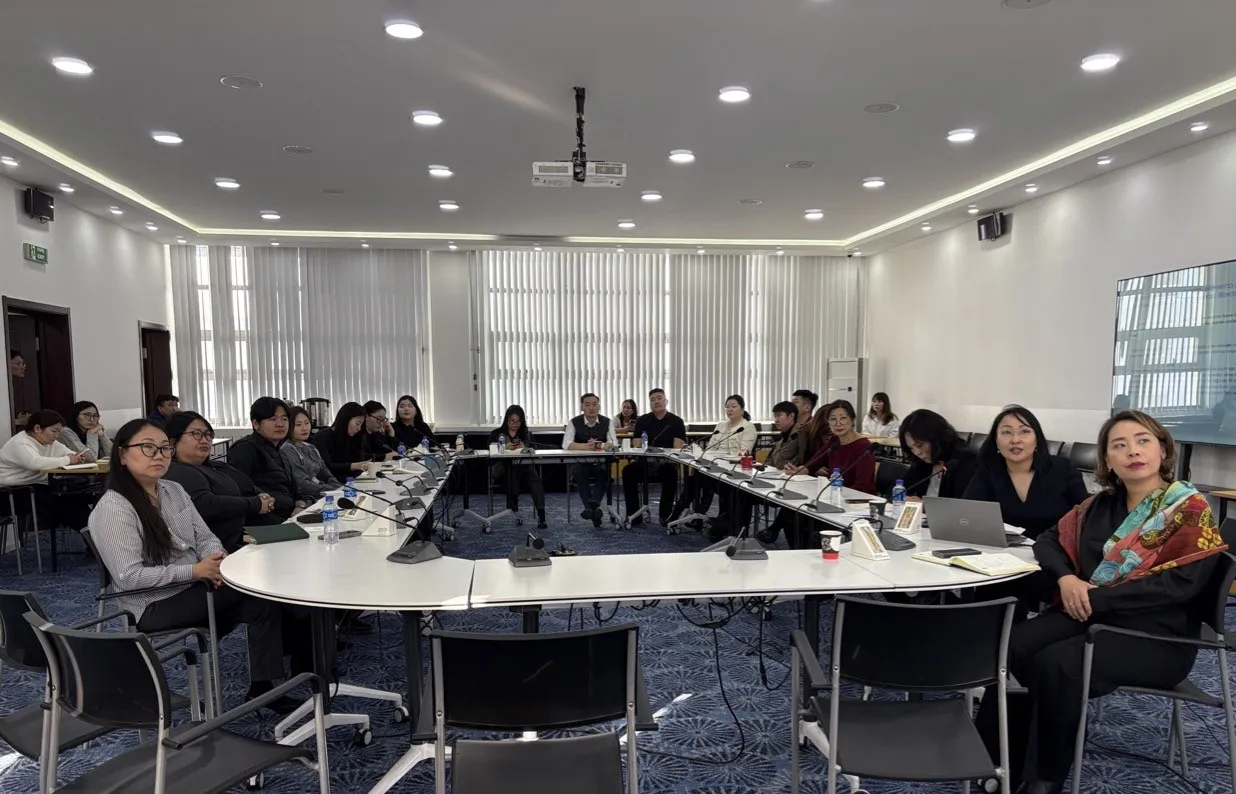
In Mongolia, tax and social security contributions remain key obstacles for self-employed workers and micro, small, and medium enterprises (MSMEs) in transitioning to the formal economy. The Government of Mongolia is planning to amend the Law on Supporting Small and Medium Enterprises and Services, with a focus on exploring new ways to support MSMEs through tax and social security policies.
To this end, the national consultant reviewed international experiences-including social insurance contribution, tax concessions, exemptions, and simplified schemes-and provided recommendations based on lessons learned.
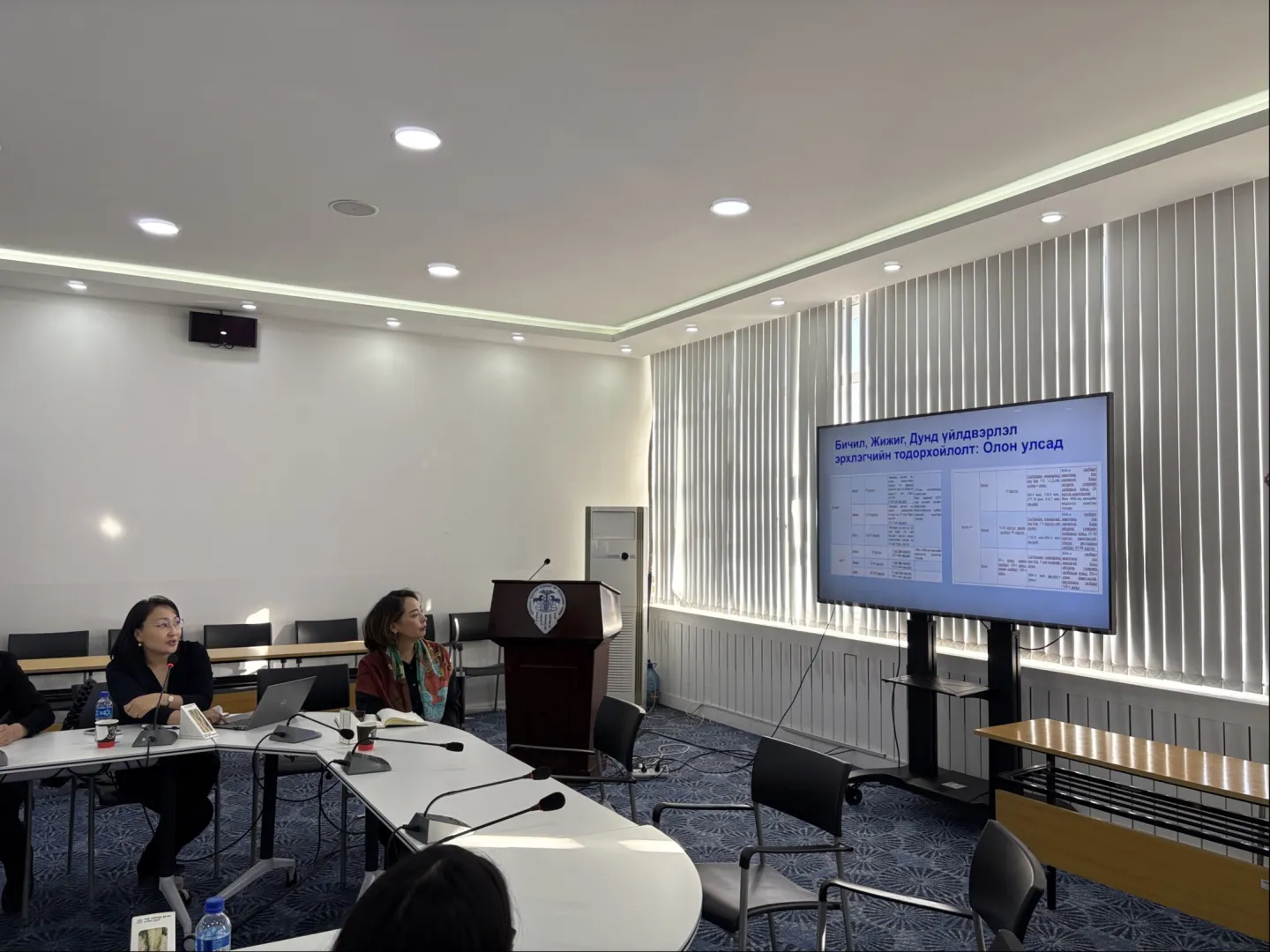
During the virtual meeting, Gerelzaya, Director of the Policy Coordination Department, highlighted Kazakhstan’s use of the MCI index to define MSMEs status as an interesting example for possible inclusion in the law. She also noted the relevance of the South Korean approach, where the number of employees does not determine MSME status.
Munkhbayar, a working group member, noted the importance of prioritizing development directions while proposing a mono-tax approach for targeted sectors.
At the MNCCI meeting, Saruul, General Secretary of the MNCCI, emphasized the survey’s value, particularly expanding social security coverage. She also emphasized that the MNCCI, as the employers’ representative, would advocate for this key recommendation during discussions on the draft law supporting SMEs.
Related content

Formalization of the Informal Economy Project II
Fostering the transition to Formality of Informal workers and economic units in Mongolia - Phase II
Formalization of the Informal Economy Project (Phase II)
Training of trainers for improving occupational safety and health (OSH) in small and medium-sized enterprises

Formalization of the Informal Economy Project (Phase II)
The ILO provides support to the development of a new e-business.mn platform in Mongolia

Formalization of the Informal Economy Project (Phase II)
ILO supports the government in simplifying administrative processes for MSMEs in Mongolia
Improving occupational safety and health in small and medium-sized enterprises – Training module

Formalization of the Informal Economy Project (Phase II)
Mongolian civil servants address the complexity of the E-Business platform to develop a more advanced version

WIND Training Manual: Work Improvement in Neighbourhood Development
Formalization of the Informal Economy Project (Phase II)
ILO conducts a Digital Employment Diagnostic in Mongolia