


From skills to opportunity: How hands-on training is helping youth in Jordan access decent work
The ILO, through the PROSPECTS partnership, is providing young Jordanians and Syrian refugees with practical experience that links to real jobs in a changing labour market and expands opportunities for individuals choosing to return their home country.
26 May 2026
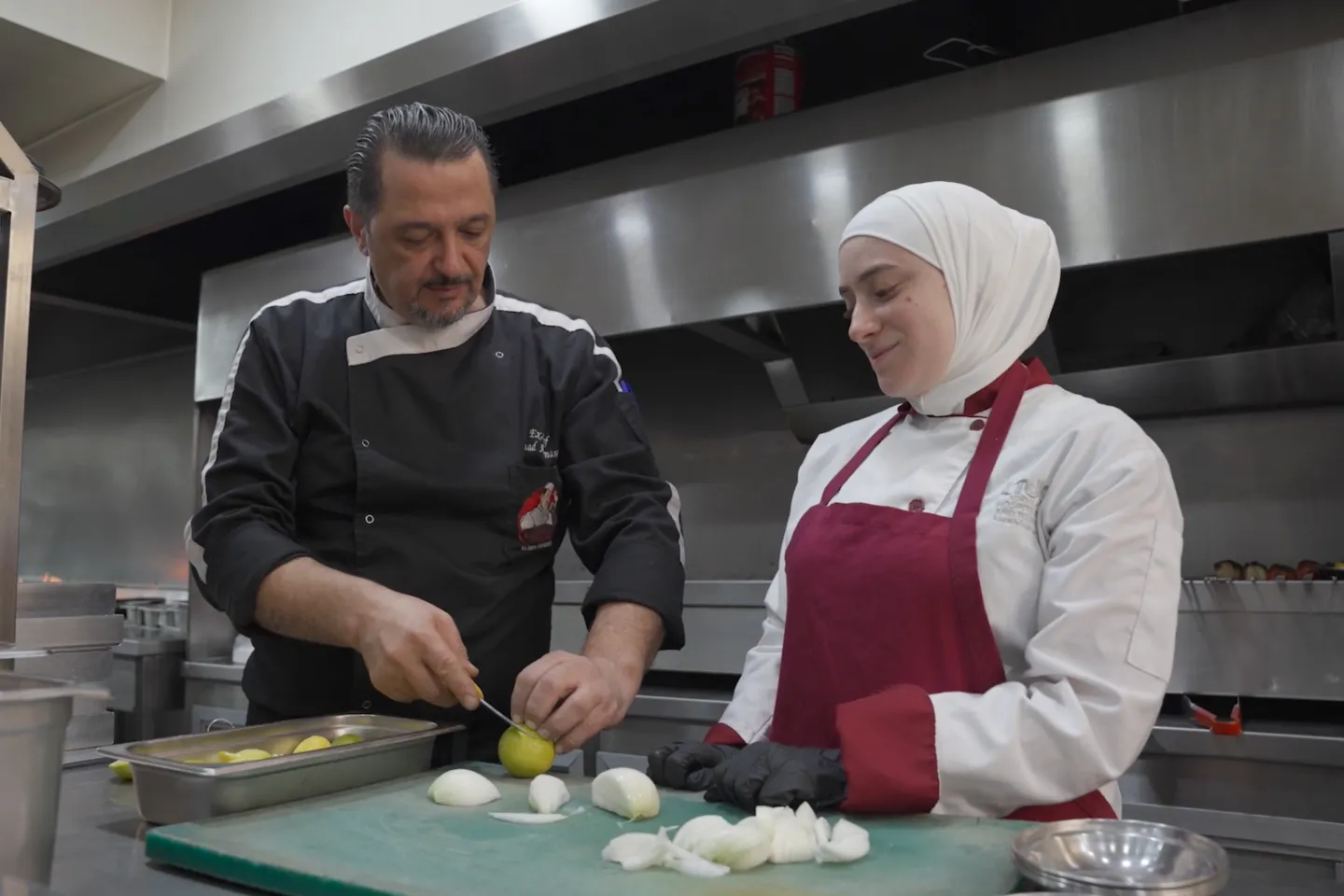
AMMAN (ILO News) — An ambitious budding chef, Bassam Shquntana is turning a long-standing passion for cooking into a pathway towards employment, thanks to a culinary course he enrolled in, in Amman, the city where he lives.
“What attracted me to this course is that I’ve always loved cooking,” Bassam said. “Courses like Eastern cooking are highly in demand, and hopefully this will lead to a job. After finishing the course, my dream is to have my own restaurant.”
My dream is to have my own restaurant.
Bassam Shquntana, trainee

Bassam is among hundreds of young people in Jordan who have taken part in an ILO skills training programme under PROSPECTS, a multi-agency partnership funded by the Netherlands.
The programme equips young Jordanians and Syrian refugees with practical skills and work-based learning opportunities, helping to bridge the gap between training and employment in an increasingly complex labour market.
“The ILO believes that the future of work depends on continuous learning and skills development aligned with labour market needs,” said Shatha Eisouh, ILO PROSPECTS Regional Skills and Employment Technical Officer. “We support Jordanian youth and Syrian refugees through vocational training and work-based learning, while taking into account changing conditions and strengthening partnerships between the public and private sectors.”
The future of work depends on continuous learning and skills development aligned with labour market needs.
Shatha Eisouh, ILO
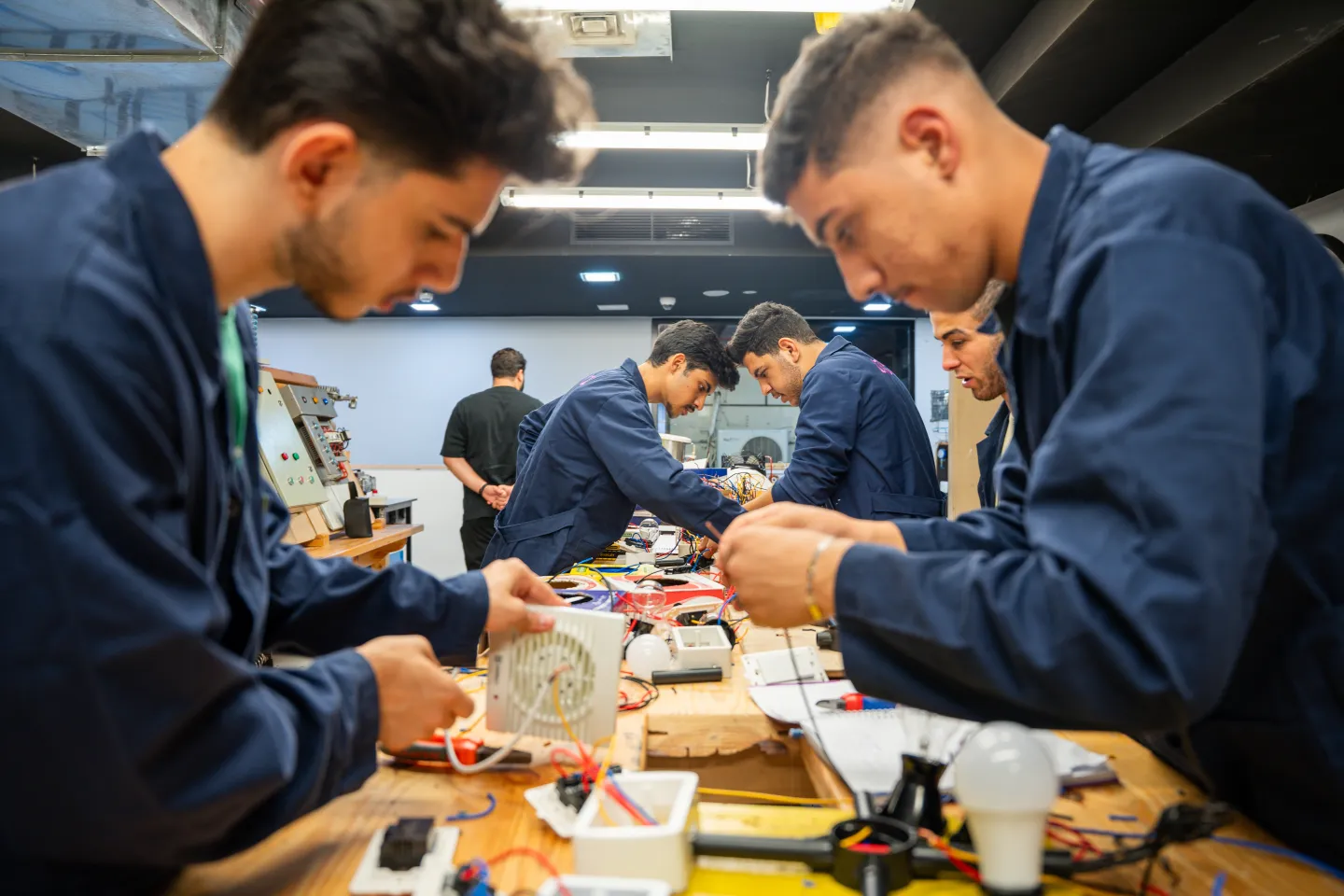
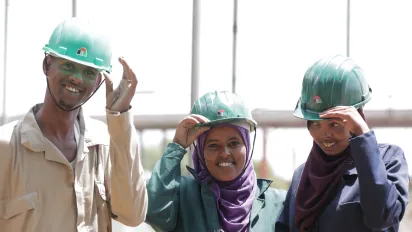
A total of 464 young people, half of them women, took part in the PROSPECTS vocational training and work-based learning initiative across a range of sectors, from engineering and hospitality to beauty and garment production. Each trainee completed a two-month work-based learning placement, combining classroom instruction with hands-on experience in real work environments.
Learning in real workplaces
Implemented with the Jordanian vocational training provider Luminus Technical University, the programme provided many participants with a first concrete step toward building a career.
Training quickly moved beyond the classroom into a work-based learning placement, where participants built both technical skills required by the job market and confidence operating in a professional environment.
“I’m currently in the second phase of training, completing my practical training in a restaurant kitchen,” said culinary student Sara Al-Tamimi. “I am also learning new things in the restaurant. It teaches me how to work under pressure.”
I’m learning new things in the restaurant. It teaches me how to work under pressure.
Sara Al-Tamimi, trainee
Responding to labour market challenges
The transition into decent work is becoming increasingly complex for young people in Jordan, where youth unemployment rates remain among the highest in the region, at nearly 46 per cent according to ILO modelled estimates.
“In today’s world, due to economic, technological and demographic changes, accessing decent work or transitioning into it has become more complex than before,” explained the ILO’s Eisouh. “This is especially true for Jordan, a country that is already facing many challenges, like slow economic growth and high youth unemployment that call for practical, sustainable and rapid solutions.”
Transitioning into decent work has become more complex than before
Shaza Eisouh, ILO PROSPECTS Regional Skills and Employment Technical Officer

Training for immediate employment
The initiative acts as a training to employment pipeline by incorporating hands-on experience.
“The skills students learn are applied in our workshops, with the aim of simulating a real work environment,” said Naji Atia, a sewing and fashion instructor at Luminus. “This helps ensure that students can enter the labour market directly and secure proper job opportunities.”
For many of the industrial sewing trainees, the transition into the workplace was immediate, with employers providing jobs to the successful graduates upon completion of their training.
Students can enter the labour market directly and secure proper job opportunities.
Naji Atia, instructor

Expanding opportunities for refugees
For Syrian refugees, access to training and employment can be especially limited, making opportunities like this particularly significant.
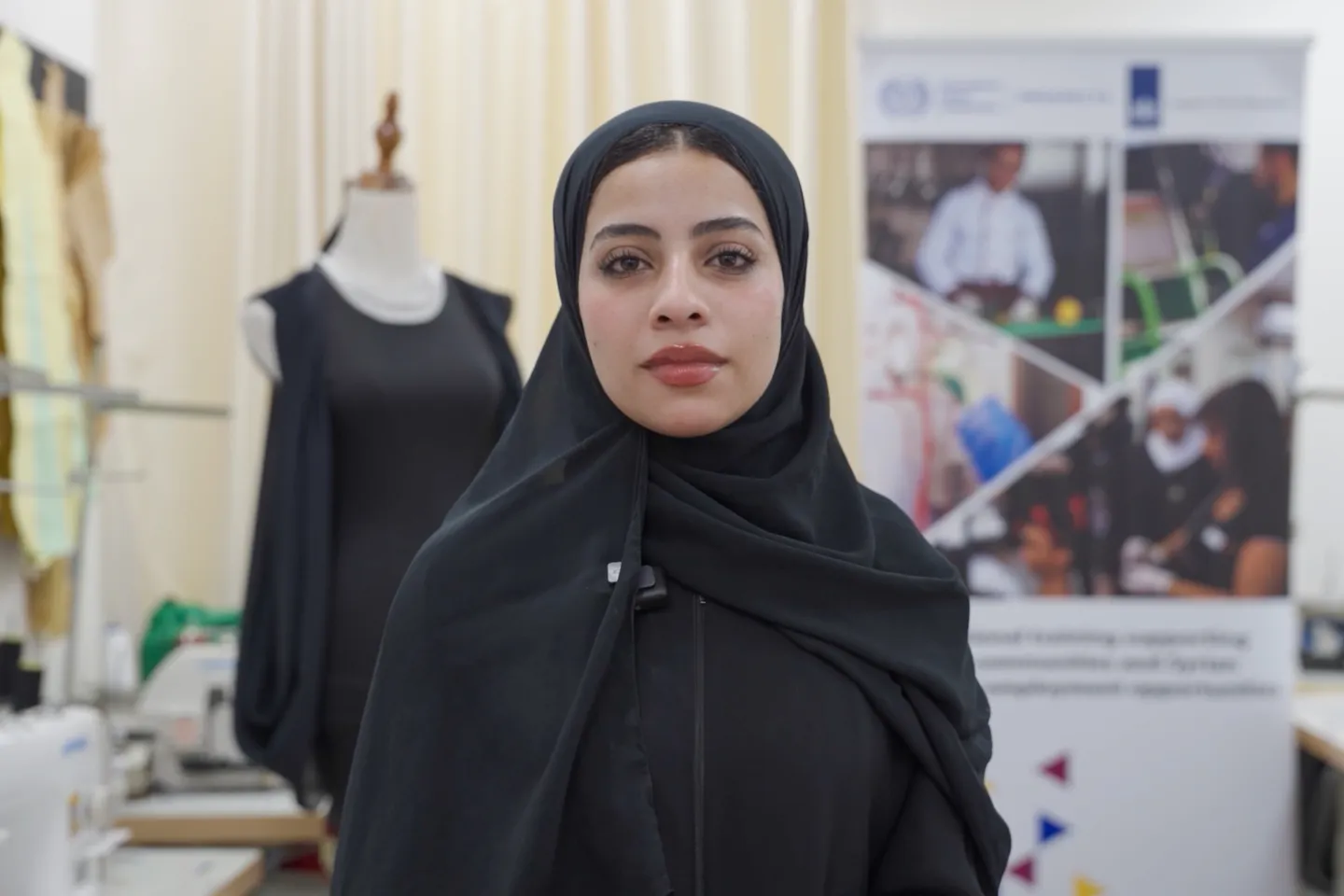
“I am a student from Syria, and as a refugee it is a bit difficult for me to find job opportunities or generate income,” said fashion student Rola Ismail. “When I saw the scholarship opportunity, I felt it was a chance to earn an income or support myself and my family.”
It was a chance for me to support myself and my family.
Rola Ismail, trainee
Just under 400,000 Syrian refugees registered with the United Nations Refugee Agency (UNHCR) remain in Jordan, even as returns to Syria continue, with at least 190,000 registered refugees having returned from Jordan since the political change in Syria in December 2024, according to UNHCR. As more Syrian refugees consider returning, skills gained through the programme offer additional long-term value.
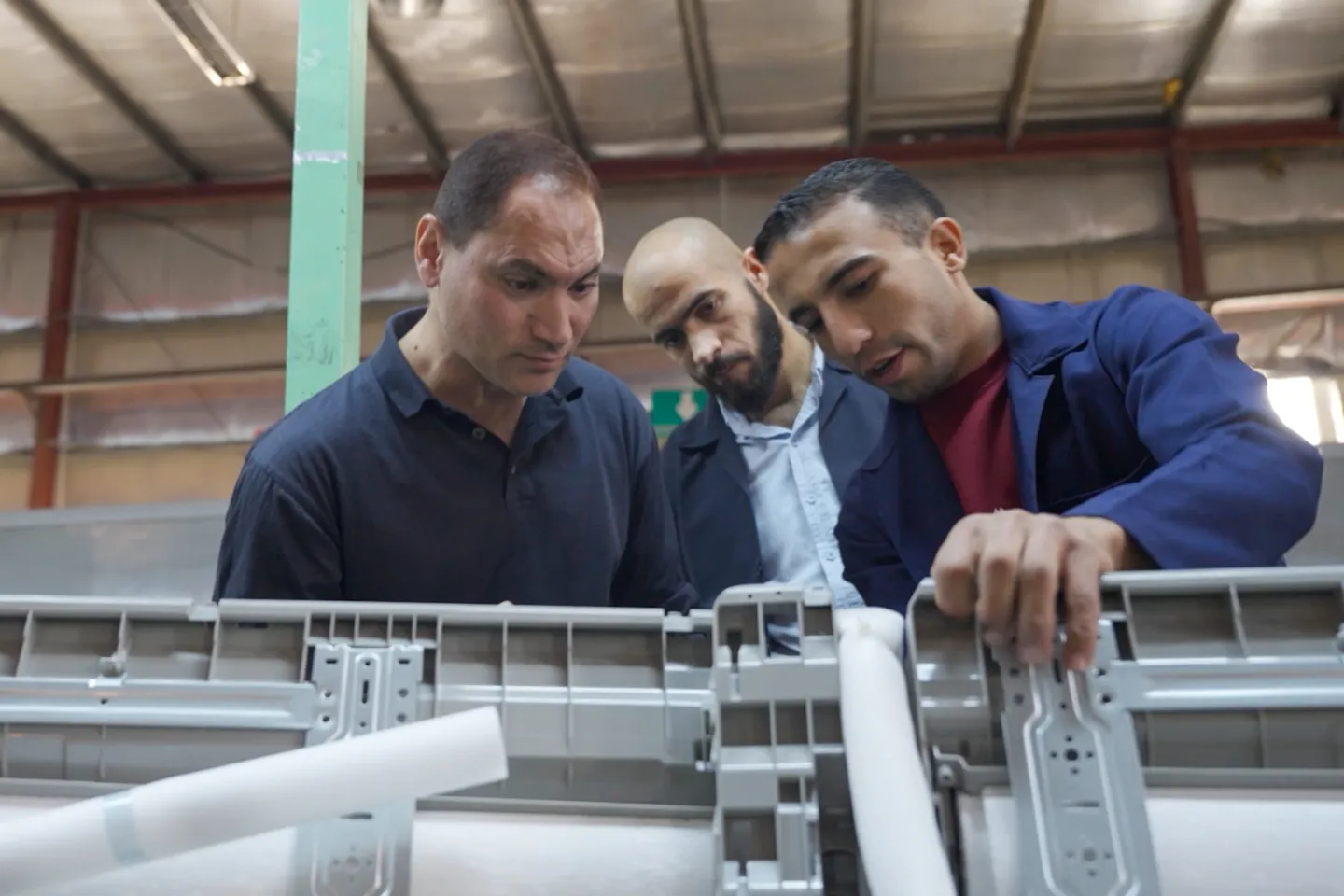
“If we are not able to work here, we hope to return to Syria and rebuild our country, develop it, and work in this field there as well,” said Mohamed Moad, a trainee in refrigeration and appliance repair.
We hope to return to Syria and rebuild our country.
Mohamed Moad, trainee
A pathway to decent work
The PROSPECTS initiative linked skills development with real-world experience and employer demand, offering young people in countries like Jordan a practical pathway into employment.
PROSPECTS is a global partnership that aims to improve the access of host communities and forcibly displaced people to education, social protection and decent work. Spearheaded by the Government of the Netherlands, it brings together the International Finance Corporation (IFC), the International Labour Organization (ILO), the UN Refugee Agency (UNHCR), the UN Children's Fund (UNICEF) and the World Bank to help transform the way in which governments and other stakeholders, including the private sector, respond to forced displacement crises.
Relevant projects

ILO-Netherlands Partnership
Partnership for improving prospects for forcibly displaced persons and host communities (PROSPECTS) in Jordan
Programme
Partnership for improving prospects for forcibly displaced persons and host communities (PROSPECTS)