

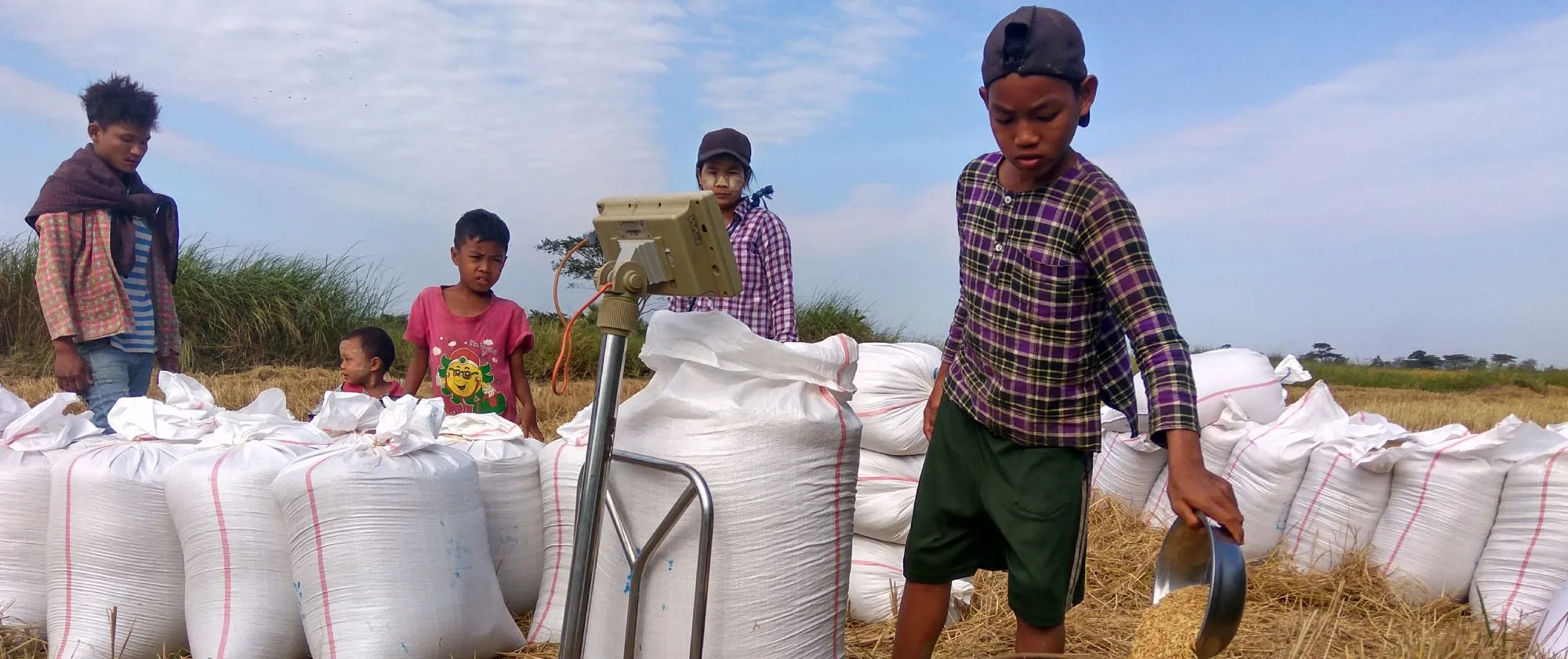
Poverty and barriers to education driving child labour in rural Myanmar, new ILO study finds
New research points to an urgent need for stronger livelihoods, safer access to education and better protection for children at risk.
10 September 2026
YANGON (ILO News) – Poverty, economic vulnerability and limited access to education are driving child labour – including hazardous work and the worst forms of child labour – in agricultural and rural communities across Myanmar, according to a new International Labour Organization (ILO) study.
The Situation analysis of the worst forms of child labour and education status in agricultural and other rural areas of Myanmar examined conditions in 17 villages across five townships in Sagaing and Mandalay regions in central Myanmar, Shan State in the east and Mon State in the south-east. The qualitative study involved children, parents, young people, teachers, employers, civil society organizations and community representatives.
Participants reported child labour, including hazardous child labour, across agriculture, construction, services and other trades, with adolescents aged 12–17 particularly affected. Hazardous work included spraying pesticides without protective equipment, carrying heavy loads, working at heights and operating dangerous machinery. The study also documented reports of children involved in activities constituting the other worst forms of child labour under ILO Convention No. 182, including involvement in armed conflict, illicit activities and commercial sexual exploitation.
Economic hardship was the major driver of child labour. Families facing unstable incomes, debt, displacement and the loss of livelihoods were reported to increasingly rely on children’s work as a coping strategy with conflict, insecurity and the March 2025 earthquake compounding these pressures.
The study identified significant barriers to children remaining in school. These include indirect schooling costs, damaged and unsafe infrastructure, teacher shortages, documentation requirements, long distances to secondary schools and disruption caused by conflict and natural disasters.
“These findings show that child labour cannot be addressed in isolation. Families need decent work and sustainable livelihoods, children need access to safe and quality education and communities need stronger systems to identify and protect children at risk,” said Yutong Liu, ILO Liaison Officer/Representative in Myanmar.
The report calls for integrated action to improve education access and retention, strengthen household livelihoods and social protection, prevent hazardous and other worst forms of child labour, and strengthen monitoring, referral and institutional coordination.
The study was undertaken through the ILO’s Achieving Reduction of Child Labour in Support of Education (ARISE) Project, funded by the Government of Japan.
Related content
Report
Situation analysis study on the worst forms of child labour and education status in agriculture and rural areas of Myanmar

Country portal
Myanmar
Relevant projects

Reduction of child labour in Myanmar
Achieving Reduction of Child Labour in Support of Education (ARISE): Programme to reduce the worst forms of child labour in agriculture

Child labour
Achieving reduction of child labour in support of education