

Youth employment
Finding a place in tech: A young woman’s story of learning, participation, and inclusion in Viet Nam
A story of Nguyen Phuong Thao, a young Vietnamese woman who turned self-doubt into confidence and became an advocate for gender equity in science, technology, engineering and mathematics (STEM) and green jobs.
23 April 2026
HA NOI (ILO News) - At 22, Nguyen Phuong Thao joined a computational research lab focused on sustainability science as a communication officer, with limited prior exposure to STEM fields. Surrounded by colleagues immersed in technical disciplines, she felt as though she had entered an unfamiliar world.
Around her, male colleagues exchanged animated discussions about machine‑learning models, agent‑based simulations, and virtual‑reality applications. At the beginning, she struggled to grasp the technical terminology, coding concepts, and the processes in assessing of the reliability of AI‑generated data.
Yet the pressure she felt did not come from the technical work alone. As a woman, she carried a weight shaped by long‑standing social norms that technology is a space for men, that women are not “meant” for technical fields. No one had to say these things out loud; the doubts had been internalised long before.
Over time, however, her work encouraged her to question those assumptions. As the team’s projects increasingly centred on social impact and community development, a question emerged that she could no longer ignore: “If technology-driven projects seek to promote social impact, sustainable development, and community participation, what happens when the perspectives of half the world – women – are not reflected?’”
If technology-driven projects seek to promote social impact, sustainable development, and community participation, what happens when the perspectives of half the world – women – are not reflected?
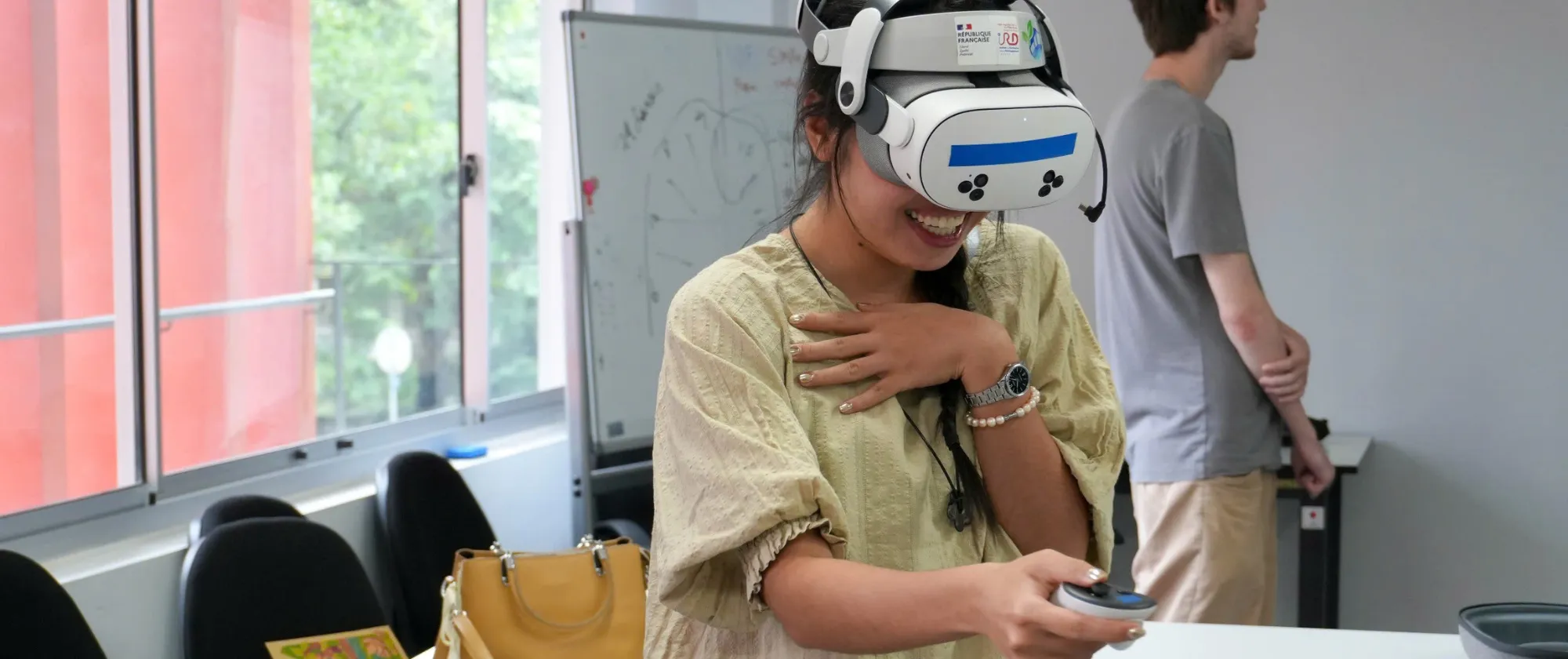
This reflection gradually reshaped how Thao participated in the lab. No longer a young woman trying to prove she belonged, she became someone who voiced her ideas, contributed actively, and shared her perspectives with confidence. During lunch breaks, instead of sitting alone, she joined her colleagues developing instructional materials for teachers and students on using virtual‑reality headsets in the classroom. These collaborative sessions were both learning opportunities and moments of creative exchange, free from judgment or hierarchy.
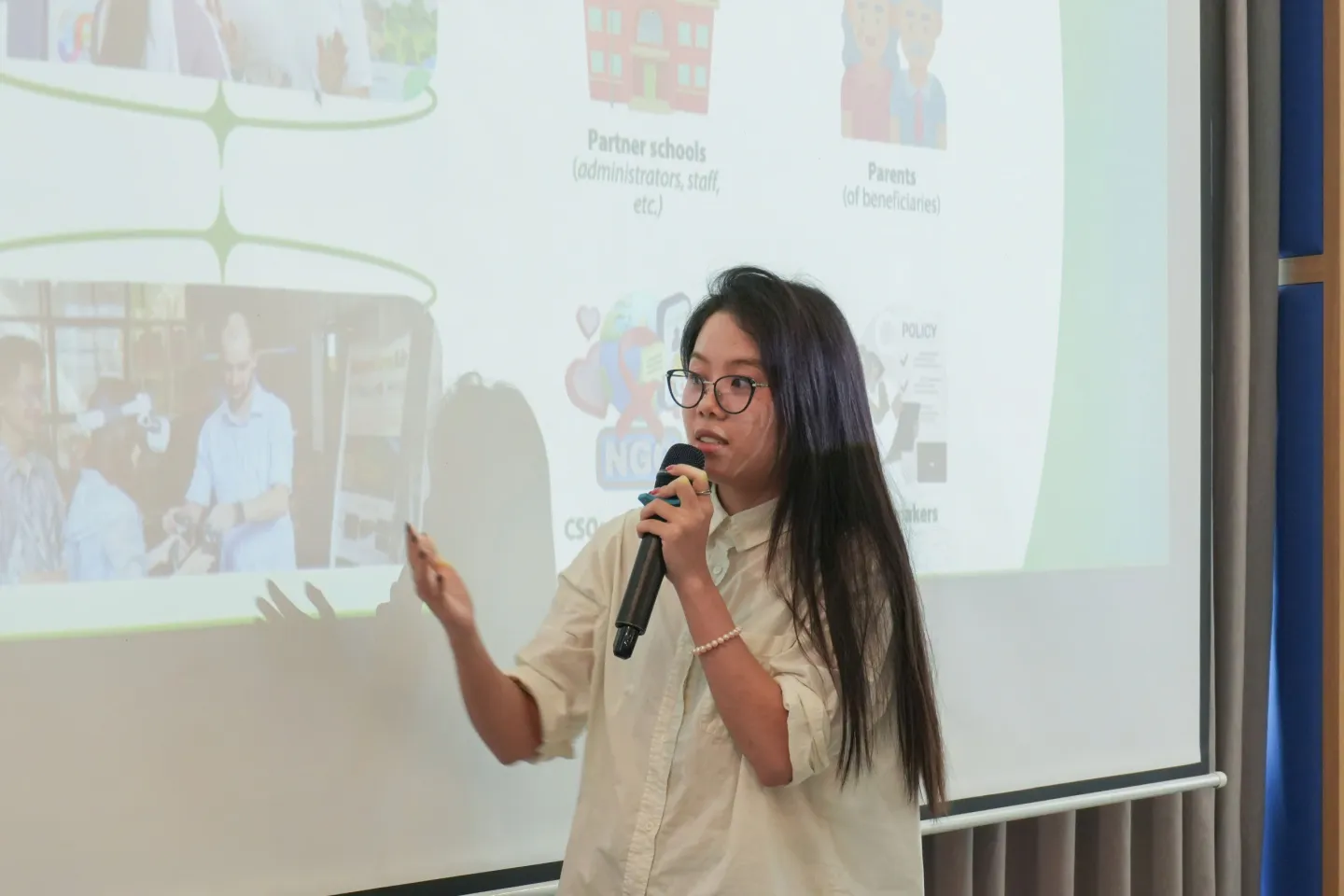
By joining the Youth Network for Green Jobs, Decent Work, and Career Development support under the ILO–Korea Partnership Programme, Thao stepped into the role of an advisory-research team leader and found a broader purpose: inspiring other young people, especially young women, to pursue what they are passionate about. Together with other network members, she consistently works to improve research capacity among young people, while advocating for the voices and perspectives of youth, especially young women, into research activities, training programmes, and youth-related initiatives. Only then can young people, especially girls, gain equitable access to education and career opportunities in technology and engineering related fields.

In a context where Vietnamese students increasingly select social sciences for their studies and examinations, and women remain underrepresented in STEM with only approximately 37 per cent of tertiary graduates in these fields, despite STEM being a critical foundation for digital and green jobs, Thảo’s journey represents a meaningful contribution to addressing the systemic challenges facing women in the country’s digital and green transitions. What matters is not all barriers have been overcome, but that she chose to remain – to keep learning, developing, and speaking up.
Choices like hers, when expanded, can contribute to advancing gender equality in science, technology, and innovation, and green transitions. But individual effort alone is not enough. Training programmes need to be designed with gender considerations at their core, ensuring women and girls have equitable access to digital skills and future‑oriented competencies. Career‑guidance services, scholarships, internships, apprenticeships, and job opportunities in STEM should be expanded, alongside concrete support mechanisms to remove the structural barriers women encounter throughout their education and working lives. At the same time, enterprises have an important role to playing in fostering diverse, safe, and gender‑inclusive workplaces that enable women to participate fully and advance professionally.
When coherent, integrated and gender‑responsive policy, training and employment measures are in place, women can access greater opportunities in technology and engineering, and make the essential contributions that support Viet Nam’s sustainable and inclusive development.
Related content
Country portal
Viet Nam

Youth Employment
Promoting Integrated Youth Employment Programme in Viet Nam
Youth Employment
Supporting career pathways for young people in Viet Nam’s green economy

International Youth Day 2025
Film screening sparks youth dialogue on green jobs and decent work

Global Employment Trends for Youth 2024
Number of youth not in employment, education, or training (NEET) a cause for concern, despite falling jobless rate
Youth Employment
From education to decent jobs: Why career development support matters for Viet Nam’s youth?
Youth employment
How young people in Viet Nam are building pathways to decent work