

Story of change
Fear disappears when we are not alone: Komal Devi’s journey of empowerment
Supported by the ILO and the Government of Japan, domestic workers in India’s Bihar State are organizing to strengthen their rights, representation and social protection.
9 June 2026
NEW DELHI (ILO News) - After years of insecurity and isolation, Komal Devi, a domestic worker and community mobilizer has found dignity, protection and leadership through collective action and trade union membership.

“Before I joined a union for domestic workers in Bihar, my life as a domestic worker was full of fear and uncertainty. Every morning, I went to work in different homes to cook, clean, and wash. But I had no security, no fixed rules, and no respect. If I took a day off to care for my sick child, my wages were cut. If I asked for fair pay, I was often told that many others were ready to take my place. I worked in silence, always worried about losing my job. I felt invisible,” Ms Devi explains.
“Change began when I met organisers from the Gharelu Kamgar Congress (GKC), an affiliate of Domestic Workers’ Union (INTUC), Patna, Bihar. For the first time, someone listened to my struggles and told me that my work has value and that I have rights. When I joined the union and received my identity card, I felt protected and respected. I was no longer alone,” she added.
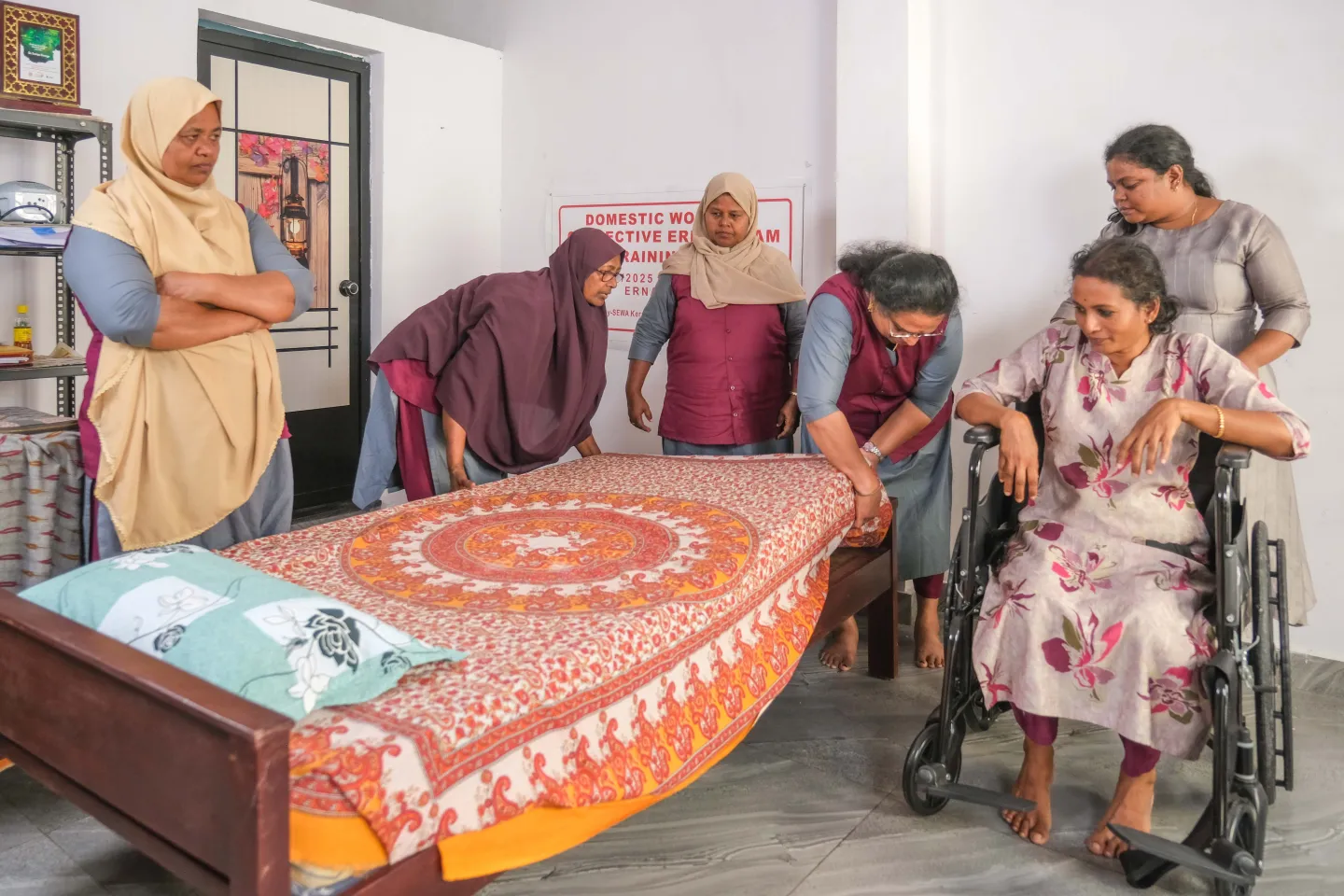
Komal Devi's journey reflects broader efforts underway in Bihar to strengthen the rights, representation and social inclusion of domestic workers. Through the ILO's Promoting Rights and Social Justice (PRS) Project, funded by the Government of Japan, domestic workers have been supported to organize within the Indian National Trade Union Congress (INTUC), creating a platform for workers to come together, raise common concerns, and engage in dialogue on issues affecting their livelihoods, working conditions and rights.
“As part of the union, I learned to speak up for fair wages and proper working hours. I now have a weekly day off and fixed timings, things I once thought were impossible. My confidence grew, and people around me began to treat me with more respect. I also learned that our problems are not individual but shared by many workers like me,” she said.
As the union became more active, the project worked with government officials, worker representatives, and other stakeholders to promote social dialogue on the challenges faced by domestic workers in Bihar. These discussions highlighted the low wages received by domestic workers compared to other groups of unorganized workers, as well as the social inequalities that influence wages and working conditions within the sector. As a result, domestic work has begun to receive greater attention in government’s discussions on labour rights and social protection.
The project is also supporting the development of longer-term initiatives including a care cooperative model to promote decent work, improve access to social protection, strengthen workers’ collective voice and increase recognition of care and domestic work as skilled work.
“Becoming an active union organiser changed my life,” Komal Devi adds. “I understood that unity gives strength. When we stand together, we can demand dignity and justice. Fear disappears when we are not alone.”
Related content
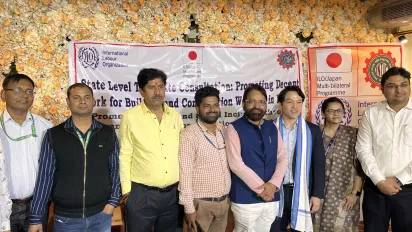
Promoting rights and social inclusion through organization and formalization (PRS) – Phase 2: India Component
Relevant projects
Promoting rights and social inclusion through organization and formalization (PRS) – Phase 2: India Component
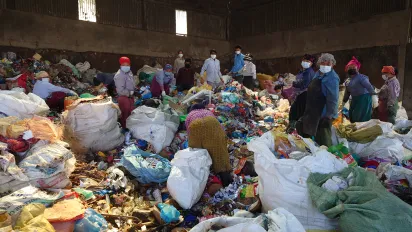
Promoting rights and social inclusion through organization and formalization (PRS) – Phase 2: Nepal Component

Development cooperation project
Promoting rights and social inclusion through organization and formalization (PRS) – Phase 2

Informal economy
Promoting rights and social inclusion through organization and formalization (PRS) – Phase 2: Pakistan Component