

A collaborative approach to unlocking growth drivers for sustainable productivity in Viet Nam
Policymakers, businesses, and international partners unite at the National Forum on Unlocking Drivers for Labour Productivity, to address key constraints and seize new opportunities for inclusive, sustainable economic growth.
25 February 2025
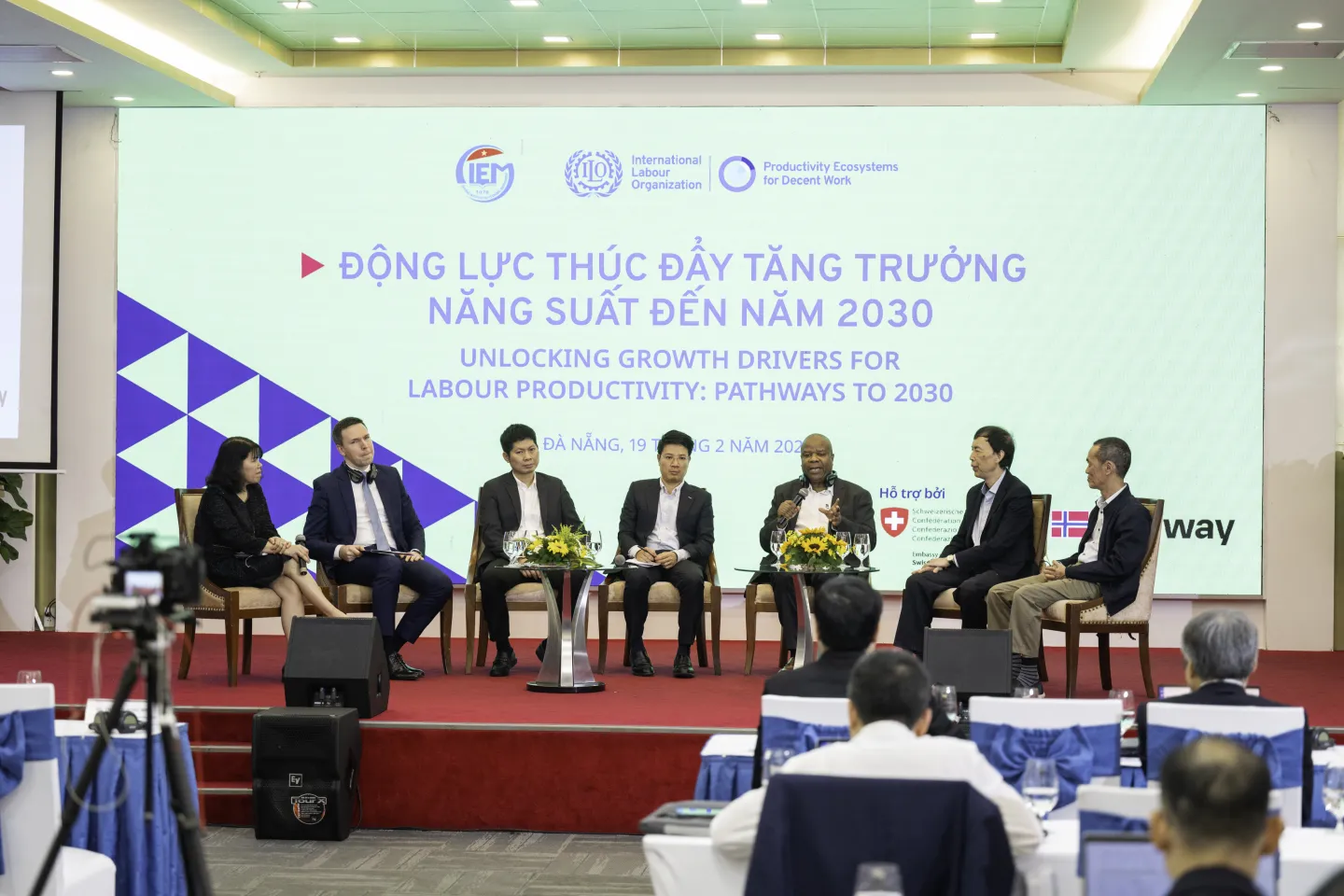
DA NANG, Viet Nam (ILO News) — On 19 February 2025, policymakers, enterprise leaders, international experts, and scholars gathered in Da Nang for the National Forum on Unlocking Growth Drivers for Labour Productivity, organized by the Central Institute for Economic Management (CIEM) in collaboration with the ILO’s Productivity Ecosystems for Decent Work project.
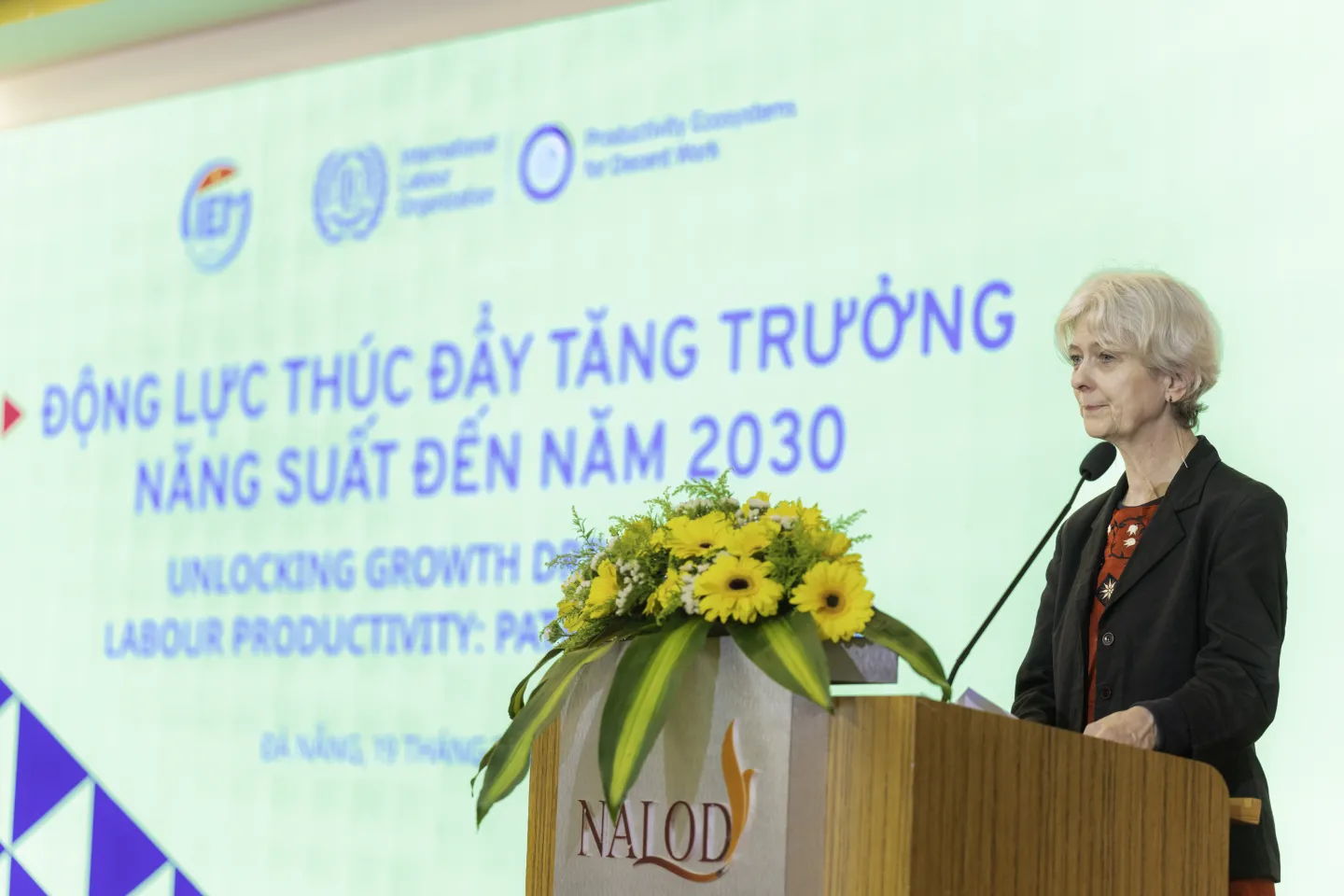
"Sustained, inclusive and sustainable economic growth, full and productive employment, and decent work for all are part of ambitions we have for the world today, as expressed through SDG 8," said Ingrid Christensen, ILO Viet Nam Country Director, in her opening speech. "Viet Nam’s government has made productivity growth a high priority and set ambitious targets in the new National Programme for Improvement of Labour Productivity 2023-2030 to make breakthroughs in productivity, quality, efficiency, and competitiveness of the economy. The country aims at 6.5 per cent annual labour productivity growth by 2030."
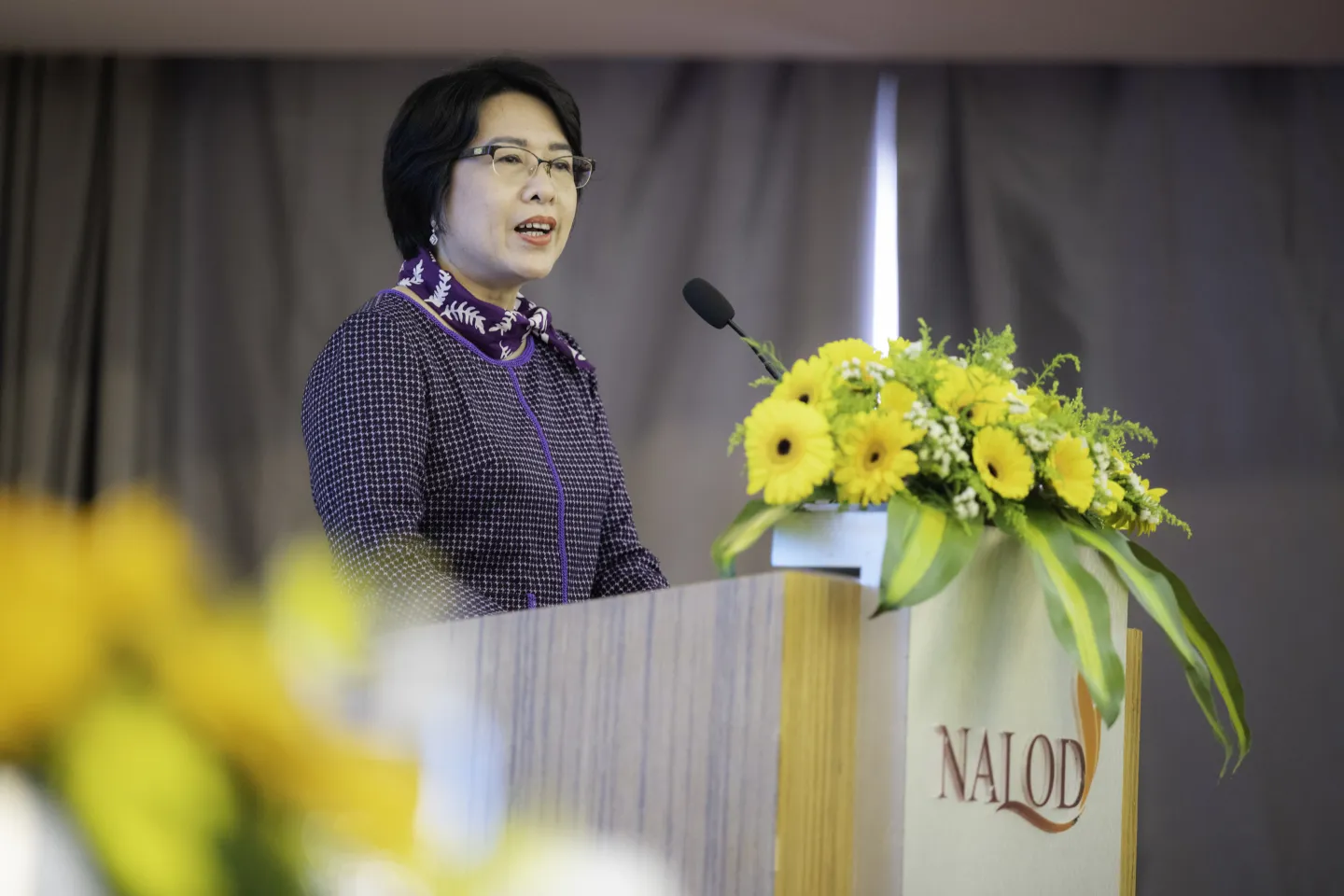
Enhancing labour productivity will be considered a key factor in sustaining sustainable economic growth, avoiding the middle-income trap, and realizing Vietnam's long-term development goals in the coming decades.
Tran Thi Hong Minh, President of CIEM
The forum discussions highlighted that despite recent reforms, Viet Nam’s productivity levels remain lower than many regional counterparts. "Even though our growth rate has improved in recent years, if we look at absolute labour productivity values, they are still low," said Đặng Đức Anh, Vice President of CIEM. "This forum is an opportunity to reassess our approach and define the policies needed for a breakthrough."
A core focus was the productivity ecosystem approach, which involves coordination between government, industry, and enterprises at policy, institutional and enterprise level. "We believe that productivity enhancement should be approached as a productivity ecosystem," Dang Duc Anh explained. "The government must create an enabling environment, while businesses must innovate and upgrade their workforce."
Challenges for productivity growth
Viet Nam’s industries, particularly supporting industries, continue to face multiple challenges that hinder productivity growth. "One major issue is that businesses still rely heavily on imported raw materials and technology, making it difficult to control costs, productivity, and lead times," said Pham Minh Thang, Deputy President of the Viet Nam Association of Supporting Industries (VASI). "Access to finance is another big problem, with Vietnamese businesses facing higher capital costs than competitors in neighbouring countries."
In addition to financial constraints, the skills and quality of human resources have always been a continuing concern. "The quality of human resources is one of the major challenges to improving labour productivity," said Ngo Xuan Lieu, Director of National Center for Public Employment Services.
Recognising these challenges, forum participants stressed the need for a coordinated approach to improving productivity, particularly through technology adoption, workforce development, enhanced labour market institutions, and institutional reforms.
Solutions and opportunities
The ILO’s Productivity Ecosystems for Decent Work project is addressing some of these constraints by fostering collaboration between stakeholders. "We need to improve public-private dialogue and sectoral coordination," said Stephan Ulrich, global coordinator for the project. "This includes strengthening digitalisation efforts and supporting the green transformation of industries."
Digital transformation was a recurring theme at the forum.
We often hear concerns about AI replacing workers, but today’s discussions clarified that digital transformation, when implemented correctly, can enhance productivity and create better jobs.
Nguyen Tung Lam, Director of Viet Nam Productivity Institute
Dang Thi Thu Hoai, CIEM Head of Sectoral and Field Research Department, who moderated the discussions, emphasized a recurring theme: the importance of workforce quality and technology adoption. "All the speakers agreed that human resources and technology are crucial factors for productivity growth. We need to ensure that labour market policies support businesses in their transition to more efficient and innovative production models."
International partners such as Switzerland and Norway, who financially support the Productivity Ecosystems for Decent Work project, emphasized the need for a holistic approach to productivity growth. "Our collaboration with Viet Nam is focused on advancing sustainable economic growth by integrating circular economy models and responsible resource management," said Erlend Skutlaberg from the Norwegian Embassy. "Viet Nam has strong potential to enhance productivity while fostering long-term sustainability, and we are committed to supporting this journey."
Andri Meier from the Swiss Embassy echoed this sentiment, stressing the importance of collaboration. "Creating an environment where SMEs can thrive, while ensuring fair wages and decent working conditions, is crucial. Public-private dialogue is essential to making policies both effective and responsive to business needs."
A focus on gender inclusion was also highlighted as a crucial aspect of productivity growth. "Viet Nam has a high rate of female labour force participation, but women remain underrepresented in management roles," noted Stephan Ulrich. "Tapping into this talent pool will be essential as the economy faces skills shortages in the future."
The way forward
The discussions at the forum made it clear that unlocking Viet Nam’s productivity drivers will require strong coordination across policies, industries, and enterprises, all of which are essential elements of the productivity ecosystems approach. Key steps include:
- strengthening the digital and green transformation of industries;
- enhancing labour market institutions and active labour market programmes;
- improving access to finance;
- investing in skills development and human resource quality; and
- reducing regulatory bottlenecks.
The ILO’s Productivity Ecosystems for Decent Work project has already begun making an impact by building capacity within business support organisations and improving coordination among key actors. "We appreciate the ILO’s approach, which ensures that productivity growth is not just about business performance but also about creating decent work," said VASI's Pham Minh Thang. "This balance is essential for sustainable development."
As Viet Nam moves forward with its national productivity agenda, the lessons from this forum will help shape policies and initiatives that drive inclusive and sustainable productivity growth. Continued collaboration between government, businesses, and international partners will be essential in meeting the ambitious targets set for the coming decade.
The forum was made possible through the financial support of the Swiss State Secretariat for Economic Affairs (SECO) and the Norwegian Agency for Development Cooperation (NORAD), as part of their broader commitment to enhancing productivity and sustainable economic growth in Viet Nam.



You may also be interested

Productivity Ecosystems for Decent Work Programme Viet Nam

Country portal
Viet Nam
Relevant projects
Productivity
Productivity Ecosystems for Decent Work Project

Productivity Ecosystems for Decent Work
Productivity Ecosystems for Decent Work Programme Ghana