

Action toward shared prosperity through dialogue, skills, and inclusion
Trade Unions in South Africa lead the way for fairer productivity gains
22 October 2025
Johannesburg, South Africa (ILO News) - South Africa’s trade unions are shaping a more inclusive and sustainable productivity agenda, one that places workers at the heart of economic transformation.
Through the ILO’s Productivity Ecosystems for Decent Work programme, the ILO has supported South Africa’s labour movement in strengthening its institutional voice and strategic capacity. This collaboration has evolved from training and analysis to structured engagement and national implementation.
Three of the country’s four major union federations now sit on the Project Advisory Committee (PAC), a platform connecting workers’ organisations, employers, government, and productivity institutions. This enables trade unions to bring insights from workplaces and sectors into national policy discussions.
Earlier achievements continue to inform this phase. National Council of Trade Unions (NACTU) ’s Just Transition Framework and Shop Steward Toolkit have become vital tools for negotiators. Congress of South African Trade Unions (COSATU) ’s ongoing ILO-supported project is deepening labour’s role in South Africa’s industrial master plans and the broader “3D” agenda: decarbonization, digitalization, and diversification.
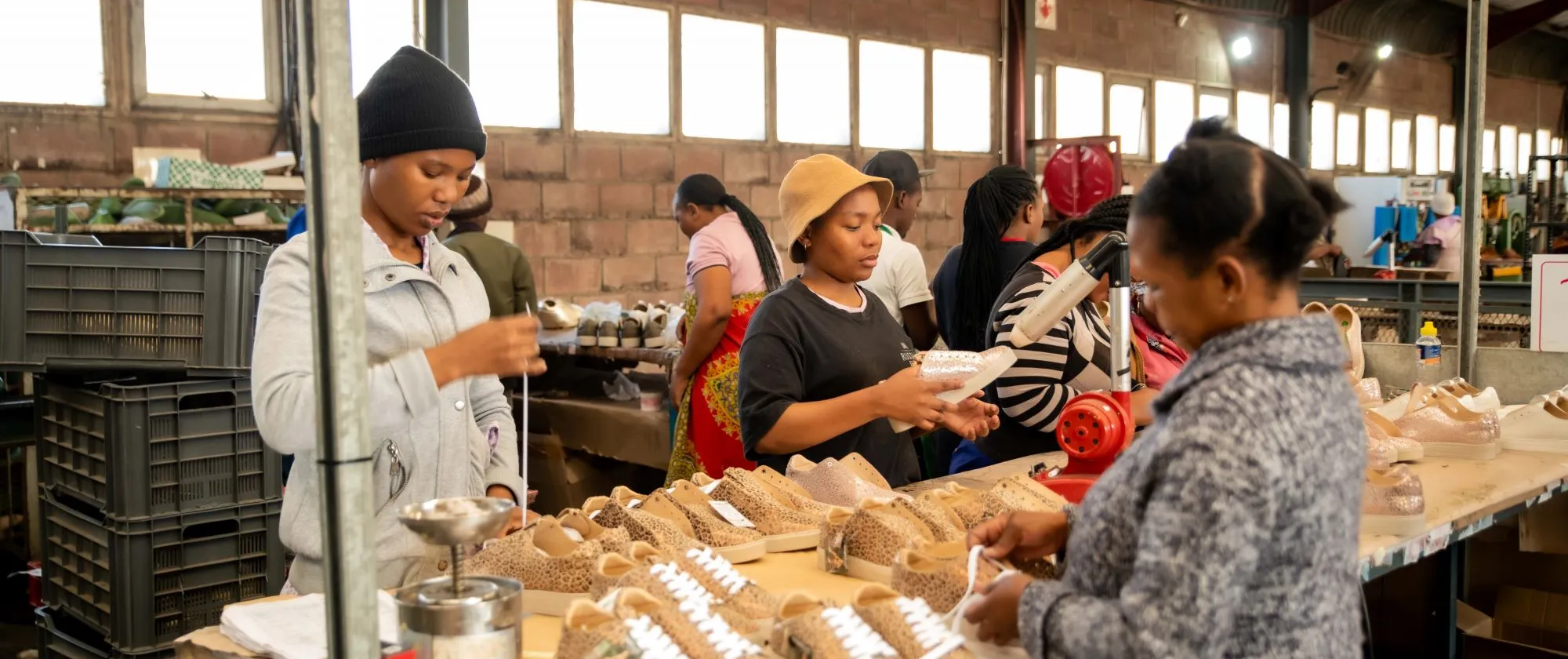
These efforts share a common goal: to ensure productivity drives shared prosperity, not inequality. Too often, productivity is seen only in the context of job cuts or enterprise restructuring. But understanding how productivity is measured — at national and sectoral levels — empowers trade unions to engage in constructive bargaining and advocate for fairer outcomes.
Raising productivity must go hand in hand with fairness and inclusion. Workers must see productivity gains reflected in better wages, stronger social protection, and real improvements in their lives.
Solly Phetoe, COSATU General Secretary
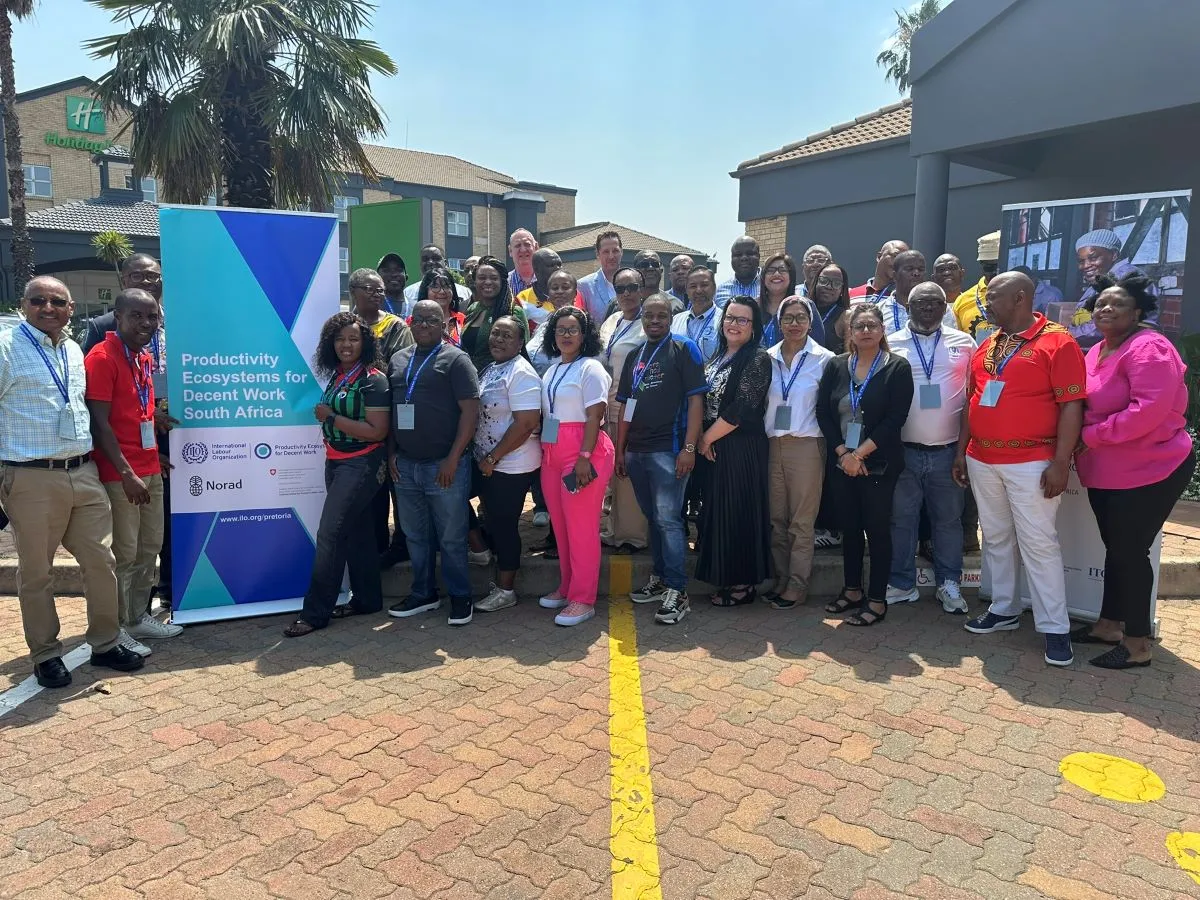
The five-day workshop brought together union representatives, ILO experts, and national partners to explore how productivity can improve livelihoods across South Africa’s diverse economy. Participants developed union-led strategies to link productivity to wage growth, employment, and decent work.
Co-facilitated by the ILO’s Productivity Ecosystems for Decent Work programme, in collaboration with ILO teams in Geneva, Turin, and Eastern and Southern Africa — and with support from Productivity SA and Labour Research Services — the event combined technical insight with practical action. Delegates examined macroeconomic policy, wage-productivity linkages, and sectoral transformation, while also practising negotiation and strategy development.
Global experiences from Ghana and Viet Nam offered comparative lessons on achieving sustainable and inclusive productivity gains. The training also addressed the digital economy, where women workers and entrepreneurs often face barriers to accessing tools, skills, and networks that drive productivity growth.
“Artificial intelligence can enhance efficiency, but only if we are ready to shape it,” one participant noted. The workshop underscored the importance of economic literacy among trade unionists to ensure workers’ voices influence productivity and wage policy debates.
The ILO will continue to support unions in refining strategic engagement plans, particularly in the automotive and leather sectors. These plans include actions to integrate gender equity, promote skills development, and strengthen enterprise-level productivity committees. Proposals also target pro-employment macroeconomic policies and improved sectoral innovation systems.
“A unified trade union voice is crucial for fair wage systems and sustainable productivity,” said David Doorkenoo, ILO Senior Specialist on Workers’ Activities. “Strategic collaboration ensures that productivity gains improve real lives — not just balance sheets.”
With support from Switzerland and Norway, the Productivity Ecosystems for Decent Work programme is fostering national dialogue between government, employers, and workers. It is also reinforcing the role of workers' organisations in shaping just transitions and inclusive growth.
As the partnership deepens, the next phase will focus on translating strategy into measurable impact — from supporting South Africa’s National Employment Policy to embedding fairness in productivity practices across industrial sectors and supply chains.
We must never stop learning, never stop agitating, and always keep elevating those who fight for fairness. Let’s carry this momentum forward in the spirit of solidarity and aluta continua.
Riefdah Ajam, Federation of Unions of South Africa (FEDUSA) General Secretary
Her words reflect a growing movement: South Africa’s trade unions are not just responding to change — they are driving it. By linking learning with action, and productivity with justice, they are helping shape an economy where every gain in productivity becomes a gain for people.
Relevant projects
Productivity
Productivity Ecosystems for Decent Work Project
Productivity ecosystems for decent work
Productivity Ecosystems for Decent Work Programme Ghana