


Global Centre on Digital Wages for Decent Work
Duration
12 November 2020 - 30 November 2027
Development partner(s)
The Gates Foundation
Reference
GLO/20/34/GAT, GLO/24/21/GAT
Contact
Background and purpose
Since its establishment in 2020, the Global Centre on Digital Wages for Decent Work has led efforts to promote the transition from cash to responsible digital wage payments worldwide, positioning itself as a global leader in best practices, policy advocacy, and capacity-building.
It seeks to enable millions of women and men workers around the world to have better control over their wages and benefits. By empowering workers to access digital financial services that respond to their needs, the Global Centre aims to improve their resilience and economic opportunities. With a focus on gender equality, it seeks to enable enterprises in various economic sectors to better respect workers’ rights and formalize employment, to become more productive and to grow.
The Global Centre’s work is structured around three main components:
- Country interventions at macro, meso and micro levels to promote the transition to responsible digital wage payments.
- Research and knowledge management that cover the impact of digital wages on financial inclusion, the productivity of enterprises, and respect of labour rights and a knowledge hub of evidence, technical and policy guidance tools.
- Advocacy to raise the profile of digital wage payments among governments, employers’ and workers’ organizations, as well as experts, financial service providers, global supply chain key actors and development agencies.
The Global Centre engages with:
- Government and regulatory bodies.
- Employers’ and workers’ organizations at national, regional and global levels.
- Financial service providers, including digital payment providers.
- Technical experts, researchers and like-minded organizations at national and international levels, including the UN-based Better Than Cash Alliance.
- Relevant ILO programmes including Better Work.
Phase 1 (2020-2024)
The first phase tested wage digitization initiatives in Cambodia, Indonesia, Peru, and the Philippines. It demonstrated how responsible wage digitization can increase financial inclusion by boosting account ownership, and improve payroll efficiency, and transparency. However, key barriers remain, including low financial service usage among workers, gaps in digital and financial literacy, limitations in digital and financial infrastructure, constraints in financial service offerings, and regulatory challenges.
Phase 2 (2025-2027)
The second phase of the project focuses on overcoming the obstacles identified in the first phase and enhance impact through expanding digital wages and associated financial services for low-income workers while strengthening enterprise capacity to implement a responsible transition.
The second phase will also introduce an additional country to the programme in South Asia or Africa and enhance the dissemination of evidence and tools to drive wage digitization efforts in other countries.
Related content
Digital wages
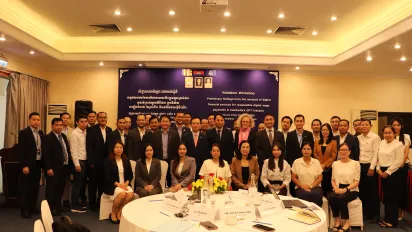
The Global Centre on Digital Wages for Decent Work launches second phase to expand responsible wage digitization efforts
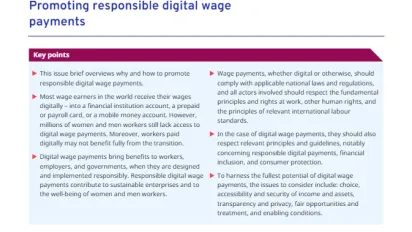
Brief: Promoting responsible digital wage payments

Research and learning agenda on digital wages for decent work
ILO promotes responsible digital wage payments in Indonesia
ILO and Apindo sign a partnership agreement to promote responsible digital wage payments in Indonesia
Digital wages
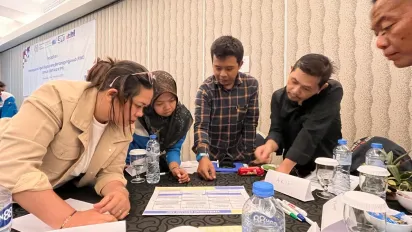
From cash to digital: Social partners drive wage digitization for SMEs in Indonesia