

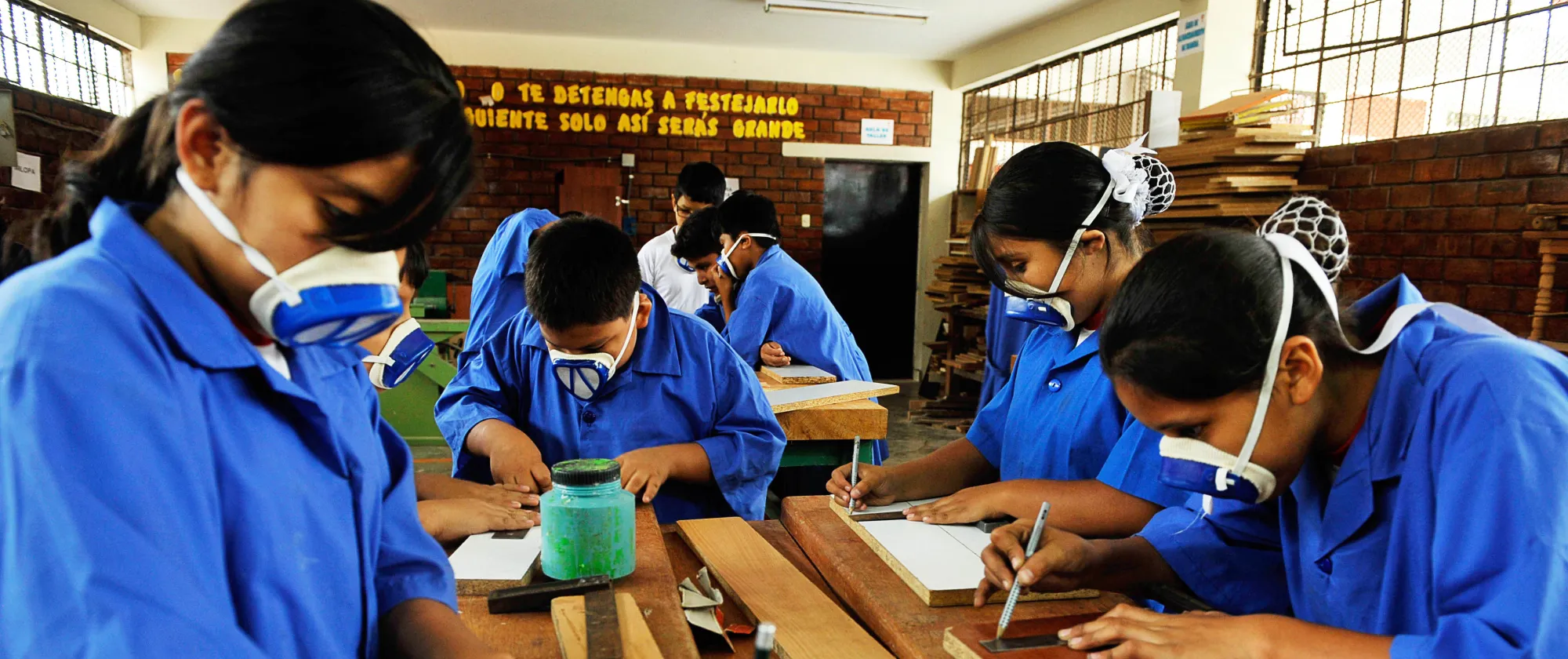
Labour migration
Skills and migration
Designing and implementing sound labour market information systems, including accurate labour market needs assessment and skills anticipation, as well as putting in place processes for skills recognition, are important to address brain waste and deskilling and challenges in labour market integration. Access to skills recognition processes, especially for low- and medium-skilled migrant workers, is often limited, while migrants frequently encounter difficulties in articulating their experiences from destination countries into enhanced human resources development opportunities upon return.
Definitions of “skills” vary across countries and contexts and are often framed in relation to occupational requirements and levels of educational attainment. Similarly, there is no single standardized methodology for assessing skills needs. Experience suggests that combining qualitative approaches (such as case studies and stakeholder consultations) with quantitative tools (including surveys, skills assessments and projections) can provide a more comprehensive basis for analysis. In practice, longer-term skills anticipation is typically undertaken at the national level, while shorter-term assessments are often conducted at regional or local levels, including through Public Employment Services (PES).
In many origin countries, skills forecasting methods are implemented to varying degrees, often influenced by data availability. Moreover, the dynamic nature of labour markets, shaped by economic globalization and the presence of an informal sector, can make skills identification and matching more complex for both potential and return migrants.
The ILO’s approach
At the national level, providing capacity building for data collection and skills needs analysis supports the development of more effective and efficient employment and training policies, in line with a lifelong learning approach as highlighted in ILO Recommendation No. 195 on Human Resources Development (2004).
Efforts to improve skills identification and matching are most effective when combined with broader measures to enhance coherence between employment, skills and migration policies, with the active participation of governments and social partners. Such coordination also supports better information exchange between education systems and labour markets, contributing to more up-to-date skills information and forecasting.
Key resources
The role of social partners in skills development, recognition and matching for migrant workers
How to Facilitate the Recognition of Skills of Migrant Workers: Guide for Employment Services Providers
Guidelines for skills modules in bilateral labour migration agreements
Publications and documents
Seven country cases review
Skills needs intelligence to inform migration policy and governance
Manual
International labour migration in the health sector - A manual for participatory assessment of policy coherence
Occupational Standards
Harmonized minimum occupational standards for poultry farming
Occupational standards
Harmonized minimum occupational standards for assistant masons and masons
News and stories
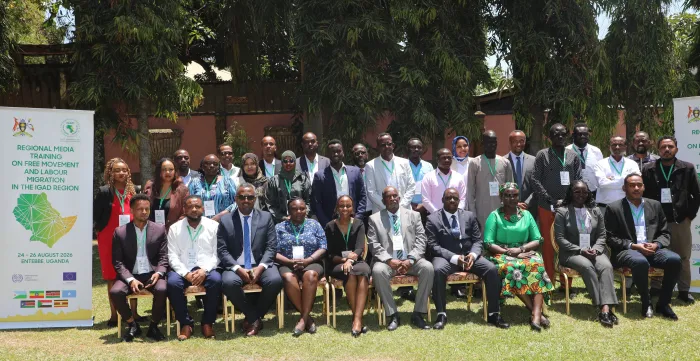
Labour migration and free movement
Beyond the headlines: ILO and IGAD strengthen media professionals’ skills to report on regional integration, free movement of persons and...

Capacity building
The role of employers organizations in EU–North Africa talent partnerships: from labour shortages to shared solutions
Projects

Project: Skills development and labour migration
Supporting a Talent Partnership with Bangladesh
Related content

Topic portal
Labour migration

Topic portal
Skills and lifelong learning

Topic portal
Social protection

Social protection for migrant workers, refugees and their families