


Sector portal
Transport equipment
Employers and workers that build, repair and recycle the vehicles used to transport people and goods around the globe face unique challenges.
The future of work in the automotive industry is increasingly uncertain. Massive investments in skills and lifelong learning are needed as part of broader efforts to ensure a just transition.
Meanwhile, the ILO continues to promote the right to a safe and healthy working environment for shipbuilding, repair and recycling workers through the implementation of the Code of Practice on safety and health in shipbuilding and ship repair and the Guidelines on safety and health in shipbreaking.
Key resources


RECYCLING
Recycling is key to the circular economy, employing at least 6.9 million workers worldwide, many in the informal sector. Expanding recycling could create 7 million more jobs by 2030, but current roles often lack decent work standards.
Technical meeting on challenges and opportunities arising from AI in the manufacturing industry
The meeting will discuss AI’s impact on manufacturing, focusing on opportunities and challenges for decent work, productivity, and a just transition, aiming to adopt conclusions and recommendations.
Data and statistics
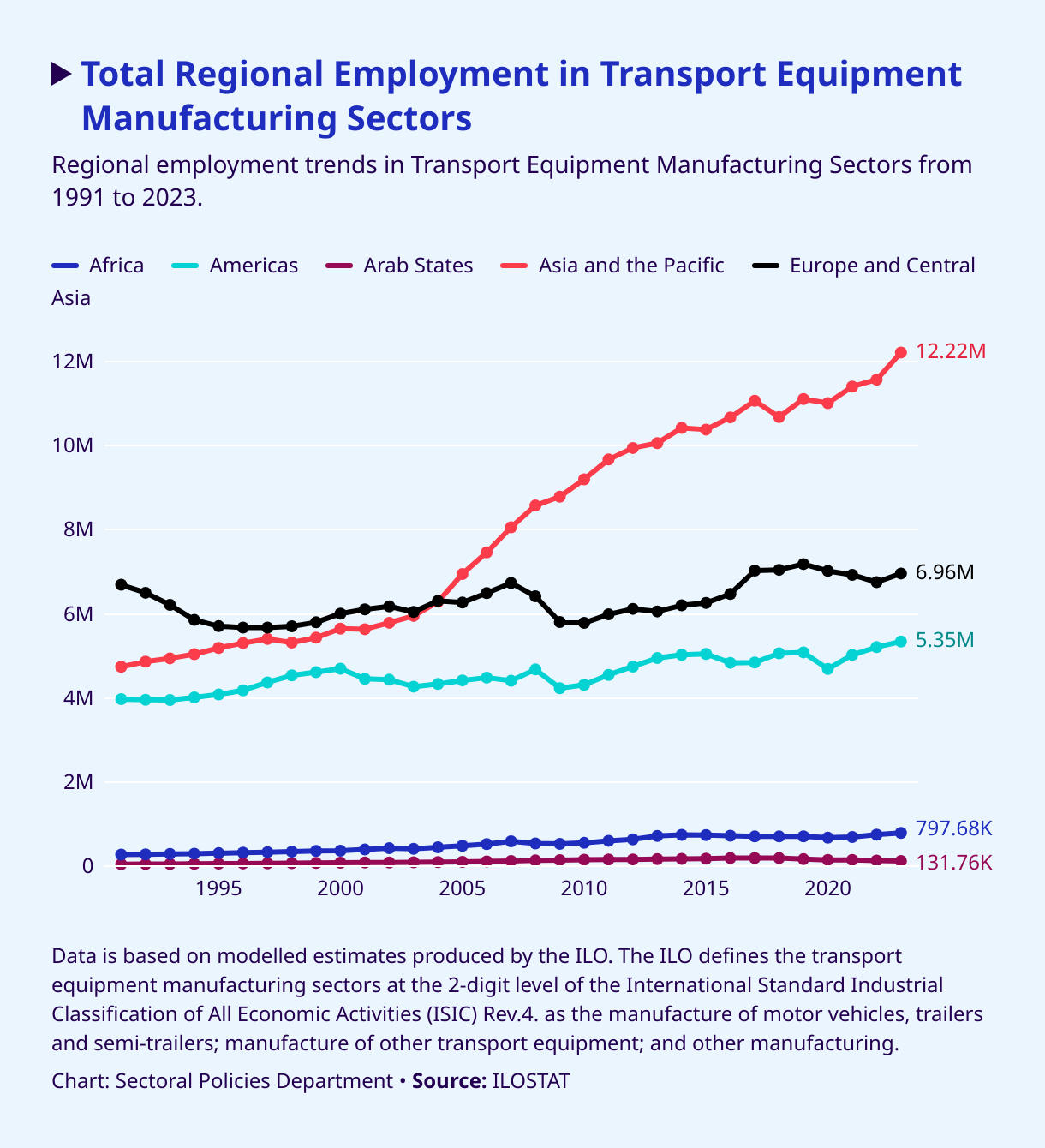
The line graphs show a time series of modelled global and regional employment estimates at the sectoral level. The ILO modelled estimates generally cover 189 countries, offering a comprehensive set of internationally comparable labour statistics. These include both reported data and imputed figures for countries with missing information. The imputations are generated using econometric models developed by the ILO.
For more detailed labour market indicators and country-level data, visit the Sectoral Employment Statistics page of the ILOSTAT database.
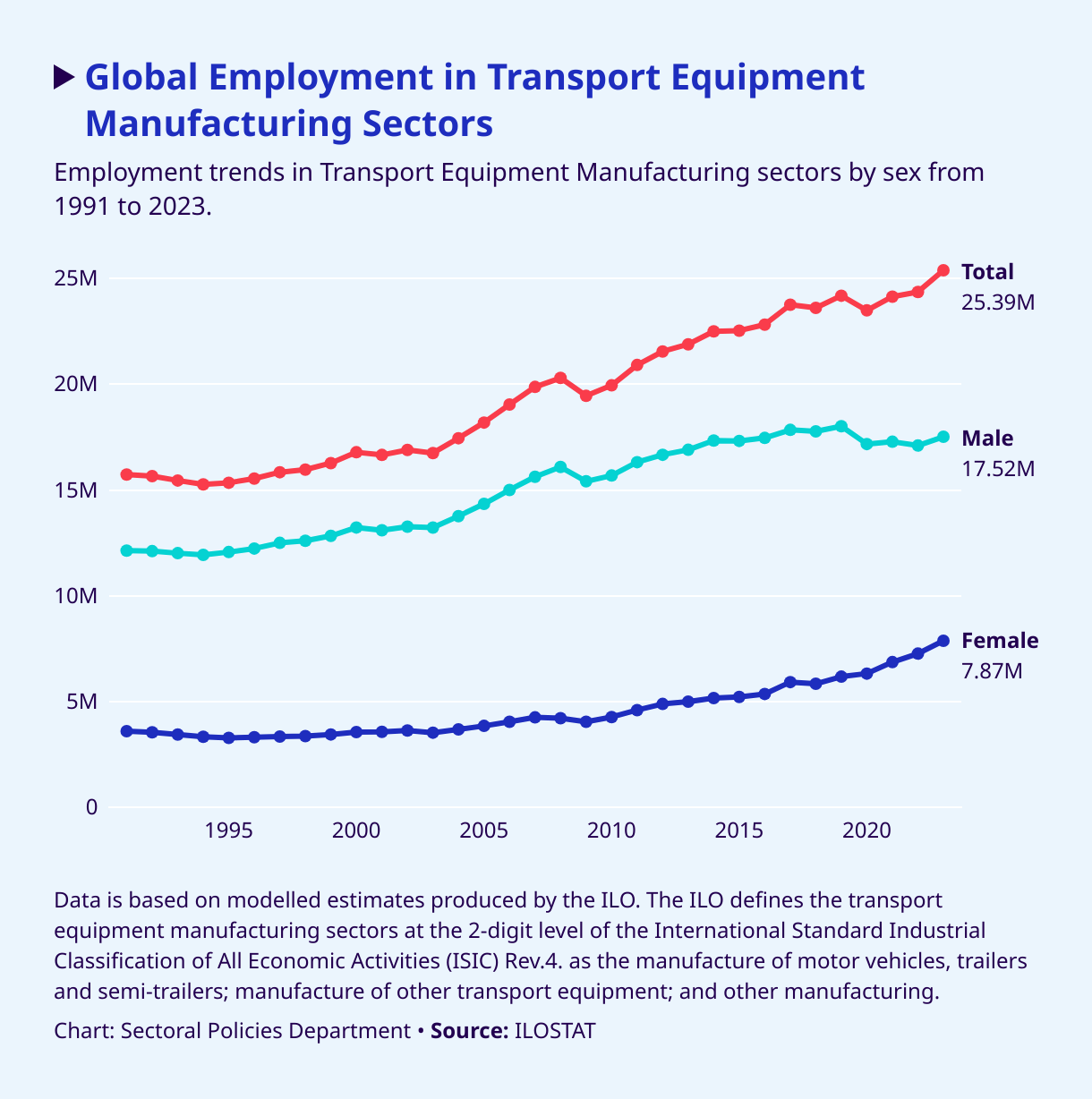
The line graphs show a time series of modelled global and regional employment estimates at the sectoral level. The ILO modelled estimates generally cover 189 countries, offering a comprehensive set of internationally comparable labour statistics. These include both reported data and imputed figures for countries with missing information. The imputations are generated using econometric models developed by the ILO.
For more detailed labour market indicators and country-level data, visit the Sectoral Employment Statistics page of the ILOSTAT database.
News

ILO meeting agrees on action to strengthen safety and health in retail

Maternity protection
Thailand’s manufacturing sector strengthens maternity protection and safer, more inclusive workplaces in Chonburi
Responsible business conduct
Mentorship supports human rights due diligence in Thailand’s automotive and electronics supply chains
Publications and documents
Just transition
Enabling a just transition for Japanese automotive parts SMEs
Factsheet
Advancing Responsible Supply Chains and Decent Work in Asia (RSC)
Technical meeting on challenges and opportunities for promoting decent work, productivity and a just transition arising from artificial...
Projects
Responsible business conduct
Advancing Responsible Supply Chains and Decent Work in Asia (RSC)
Skills development and responsible business conduct
Skills Development and Responsible Business Conduct for Transition
ILO-Japan Partnership
Automotive Supply Chain Programme in Thailand
Contact information
Sectoral Codes of Practice and Guidelines
Sectoral meetings
Conclusions and recommendations of sectoral meetings
Sign up to our newsletter!
Receive ILO news about sectoral work