

Sector portal
Electronics, machinery and electrical equipment
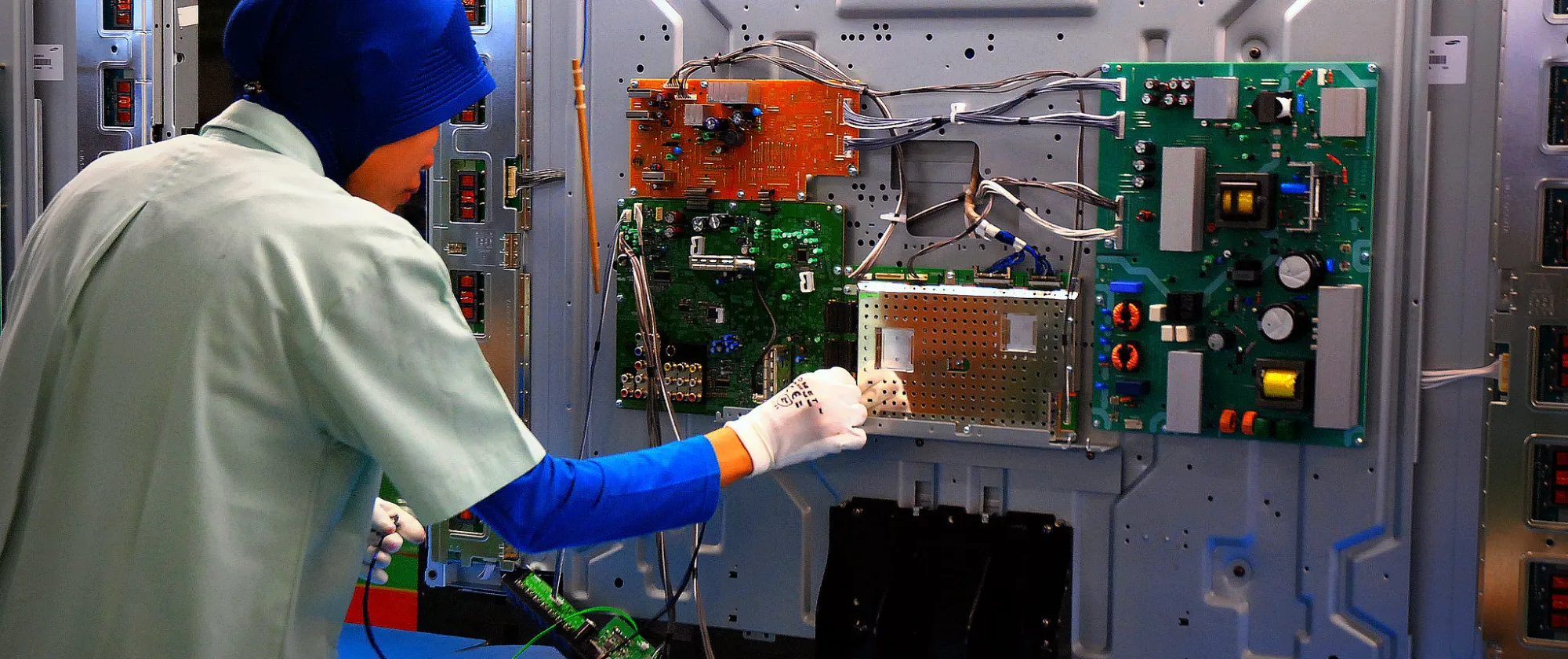
The electronics industry has become one of the largest and fastest-growing manufacturing industries, powering the fourth industrial revolution. More than 26 million women and men work in manufacturing and assembly of electronics hardware alone.
Technological advances, climate change and other megatrends are greatly affecting the number and types of jobs. The ups and downs in the electronics industry furthermore affect working conditions and the use of temporary employment.
As e-waste has become one of fastest growing global waste streams, the ILO is promoting innovative approach to advance decent work in the management of electrical and electronic waste.
Key resources
- Technical meeting on challenges and opportunities for promoting decent work, productivity and a just transition arising from artificial intelligence in the manufacturing industry (April 2026)
- Meeting of experts to adopt policy guidelines for the promotion of decent work in recycling (May 2025)
- Global Dialogue Forum on Decent Work in the Management of Electrical and Electronic Waste (E-waste) (April 2019)
- Global Dialogue Forum on the Adaptability of Companies to Deal with Fluctuating Demands and the Incidence of Temporary and Other Forms of Employment in Electronics (December 2014)
- Tripartite Meeting on the Production of Electronic Components for the IT Industries: Changing Labour Force Requirements in a Global Economy (April 2007)

RECYCLING
Recycling is key to the circular economy, employing at least 6.9 million workers worldwide, many in the informal sector. Expanding recycling could create 7 million more jobs by 2030, but current roles often lack decent work standards.
Technical meeting on challenges and opportunities arising from AI in the manufacturing industry
The meeting will discuss AI’s impact on manufacturing, focusing on opportunities and challenges for decent work, productivity, and a just transition, aiming to adopt conclusions and recommendations.

The future of work in mechanical and electronic engineering
Data and statistics
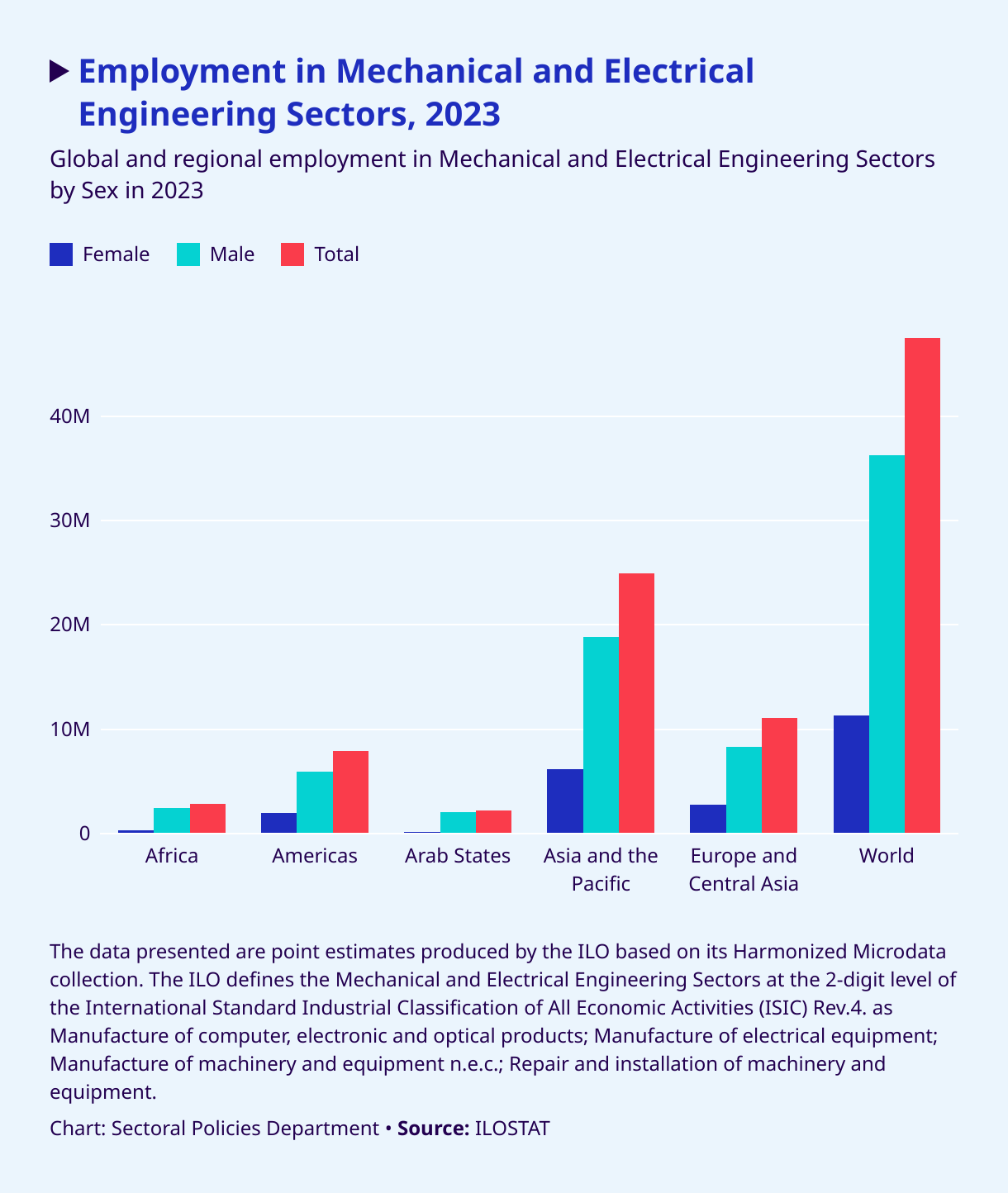
The bar charts show global and regional point estimates at the sectoral level, based on data from the ILO Harmonized Microdata collection. These estimates cannot be directly compared across different periods and may be updated as new information becomes available. The estimates provided and published by the ILO may differ from those produced and released at the national level.
For more detailed labour market indicators and country-level data, visit the Sectoral Employment Statistics page of the ILOSTAT database.
News
Responsible business conduct
Mentorship supports human rights due diligence in Thailand’s automotive and electronics supply chains

Responsible electronics
ILO and Viet Nam's commerce chamber launch initiative to advance responsible business practices in electronics sector
Responsible electronics
ILO launches survey on responsible labour practices in Viet Nam’s electronics sector
Publications and documents
Responsible business conduct (RBC)
From principles to practice: Responsible Business Conduct among Malaysian electrical and electronics and automotive enterprises
Report for the Technical meeting (Geneva, 13–17 April 2026)
AI in manufacturing: Challenges and opportunities for promoting decent work, productivity and a just transition
Report
Employment in the circular economy: Leveraging circularity to create decent work
Projects
ESDC-Funded Project
Expanding Action on Forced Labour and Child Labour to Advance Fundamental Principles and Rights at Work (FPRW) in Malaysia
Employment-intensive investment
Promoting social cohesion through economic inclusion and job creation for refugees and host communities in the moughataa of Bassikounou
Project
Towards a more inclusive economy through immediate job generation and enterprise development for vulnerable refugee and host communities in...
Contact information
Sectoral Codes of Practice and Guidelines
Sectoral meetings
Conclusions and recommendations of sectoral meetings
Sign up to our newsletter!
Receive ILO news about sectoral work