


CAPSA Project's Legacy
Sustaining the Gains of the CAPSA Project
The CAPSA project sustainability strategy is anchored on a six pillars framework that was developed in close consultation with the tripartite partners, specifically the Governments of Kenya and Uganda and in collaboration with the implementing partners. As such, the implementation of the plan will be driven by the Government through the relevant Ministry overseeing Labour and Children protection, Workers Unions and Employers organization, as well as the CSOs that provide services to child labour, forced labour, human trafficking, and violation of labour standards The Six pillars are: 1. Structured Partnership and collaboration 2. Sustained capacity strengthening 3. Multi-stakeholder/sectoral coordination and planning 4. Establishment of Policies and procedures 5. Cross Learning and Documentation of Good Practices 6. Promotion of data use for decision-making.
The CAPSA Project has culminated in a comprehensive Sustainability Plan designed to preserve its achievements in addressing child labor, forced labor, and unacceptable working conditions in Kenya, Uganda, and the broader EAC region. Developed in collaboration with governments, social partners, and implementing agencies, the plan emphasises six critical pillars: structured partnerships, capacity strengthening, coordinated multi-stakeholder engagement, robust policies, cross-learning, and data-driven decision-making.
This strategic framework ensures the continuation of CAPSA’s objectives by embedding its practices within governmental and community structures. With a focus on institutional ownership, resource mobilization, and cross-border collaboration, the plan serves as a blueprint for sustained action in eliminating exploitative labor practices and advancing workers’ rights.
Sustainability: Lessons from ILO CAPSA Project
The conclusion of the CAPSA Project marks a significant milestone in the fight against child labor, forced labor, and violations of acceptable working conditions in Sub-Saharan Africa. This transformative five-year initiative, funded by the U.S. Department of Labor and implemented by the International Labour Organization (ILO), has laid a strong foundation for lasting change across Kenya, Uganda, and the East African Community (EAC) region. As the project ends, its legacy lives on through the Project's Sustainability Plan aimed at embedding the project’s achievements into national and regional frameworks.
A Collaborative Framework for Lasting Change
The Sustainability Plan, developed in collaboration with various stakeholders, ensures the CAPSA Project's impact continues beyond its conclusion. It is built on six pillars: Structured Partnerships, Sustained Capacity Strengthening, Multi-Stakeholder Coordination, Policies and Procedures, Cross-Learning, and Data-Driven Decision Making, all aimed at addressing systemic challenges and promoting sustainable solutions.
Structured partnerships have been central to the project’s success. CAPSA brought together government entities, labor unions, employer associations, community-based organizations, and international agencies to foster collaborative action. By strengthening governance structures such as child labor technical committees and counter-trafficking secretariats, CAPSA ensured that key stakeholders are equipped to carry forward the fight against labor exploitation.
Tripartite Collaboration for Sustainable Impact
One of the CAPSA Project’s major contributions has been building the capacity of state and non-state actors to address child labor and forced labor effectively. Training programs were integrated into the curricula of critical institutions, such as Kenya’s Tom Mboya Labour College and Uganda’s Ministry of Gender, Labour, and Social Development. These initiatives will ensure that future government officers, law enforcement personnel, and civil society actors are well-prepared to combat exploitative labor practices.
In addition, CAPSA supported the development of data collection systems to monitor child labor and forced labor trends. This evidence-based approach not only informs decision-making but will also enable stakeholders to evaluate the impact of interventions and refine strategies for greater effectiveness.
Policies and Procedures for Institutional Ownership
The CAPSA Project worked extensively with governments in Kenya and Uganda to review and enhance legislative frameworks addressing child labor and forced labor. Through consultations and policy audits, gaps in existing laws and regulations were identified and addressed. For example, the project supported the development of ordinances at the district and district bylaws in Uganda to localize efforts against law enforcement against child exploitation
These policy advancements are complemented by strengthened coordination mechanisms that align the efforts of various ministries, agencies, and social partners. The plan also advocates for resource allocation within government budgets to ensure sustained implementation of policies and programs.
Cross-Learning and Regional Collaboration
CAPSA fostered cross-border collaboration and knowledge-sharing platforms, enabling stakeholders from Kenya, Uganda, and the broader EAC region to learn from each other’s successes and challenges. By documenting and disseminating good practices, the project has created a repository of knowledge and resources that will inform future initiatives. This approach will not only strengthen local ownership but also encourages regional synergy in combating child labor, forced labor, and trafficking in persons.
A Roadmap for the Future
As the CAPSA project transitions from implementation to legacy, its Sustainability Plan offers a clear roadmap for maintaining and building upon its achievements. The plan underscores the importance of stakeholder ownership, resource mobilization, and institutional integration to ensure that the fight against exploitative labor practices remains a national and regional priority..
The CAPSA Project may have concluded, but its impact will continue to resonate through the lives it has touched and the systems it has transformed. By fostering partnerships, strengthening capacities, and embedding its goals within national frameworks, CAPSA has paved the way for a future where every child and worker can thrive in a fair and just environment.
Related content

CAPSA Project's Legacy of Advocacy Through Murals
Using Art to End Child Labour
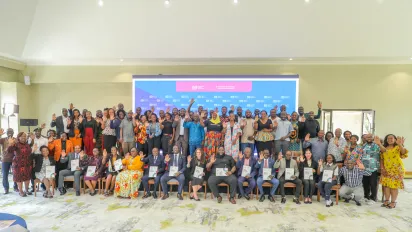
CAPSA Partners' regional knowledge sharing and closeout conference
CAPSA Project Celebrating Wins

A Bold Step to End Exploitation
Kenya Joins Alliance 8.7 as a Pathfinder Country
Relevant projects

CAPSA Project - Kenya, Uganda and the EAC Secretariat
CAPSA - Capacity Strengthening of Governments to Address Child Labour and Forced Labour and Violations of Acceptable Conditions of Work in...