


CAPSA Project's Legacy of Advocacy Through Murals
Using Art to End Child Labour
8 January 2025
Transforming Communities Through Art
Child labour remains a pressing issue in Kenya, with approximately 1.3 million children engaged in exploitative practices, particularly in agriculture. In response, the International Labour Organization (ILO), through the CAPSA Project, has taken innovative steps to combat this challenge. One such initiative, in collaboration with HAART Kenya, harnessed the transformative power of art to engage communities and raise awareness about child labour.
As part of the CAPSA project’s final milestones, art murals were commissioned across six counties in Kenya: Mombasa, Nairobi, Kwale, Bungoma, Kajiado, and Kisumu-Dunga Beach. These installations, completed in December 2024, are more than just artwork; they showcase a collective commitment to protecting children’s rights.
The Power of Art to Inspire Change
Art has always been a universal language, and the CAPSA project’s mural initiative demonstrates just how impactful it can be. Guided by professional artists, members of HAART Kenya’s Child Safeguarding Clubs worked together with local communities to design and create these murals. The artwork tells powerful stories—depicting children in schools, playing, and engaging in activities that symbolize freedom from exploitation.
In Nairobi County, a new mural was installed at New Kamukunji Primary School in the Kamukunji slums, the mural portrays two young girls carrying hawking trays and a child reading a book. This juxtaposition highlights the reality of urban child labour and the transformative power of education.

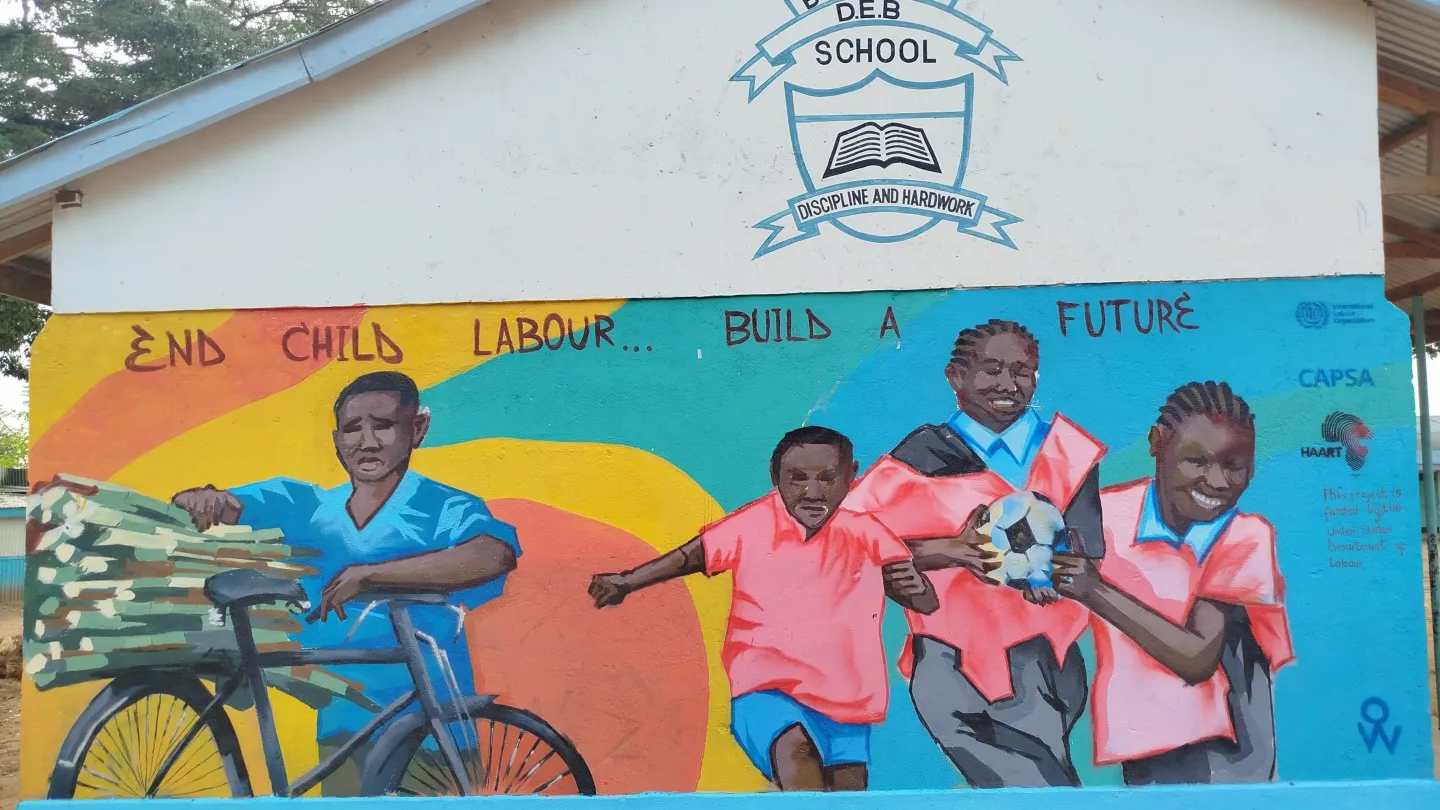
In Bungoma County, the Mural was installed at Bungoma DEB School, the mural features a boy transporting sugarcane on a bicycle and children joyfully playing with a football, symbolizing the importance of giving children the opportunity to access education, play, and a childhood free from labour.
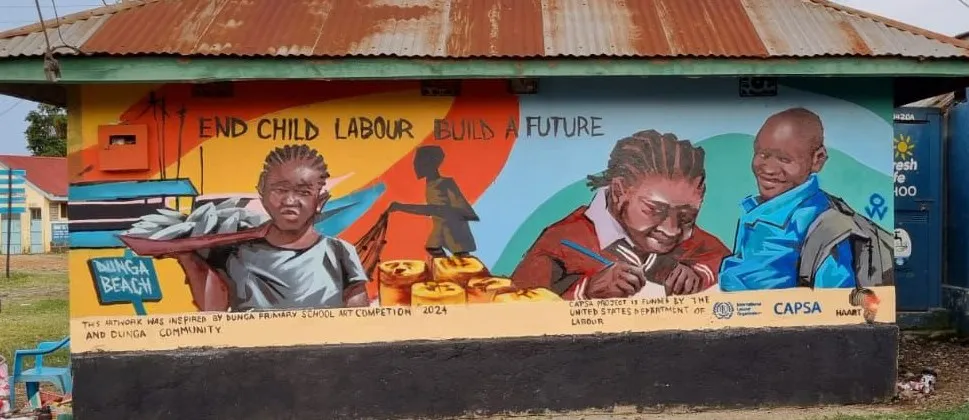
In Kisumu County, the mural was Installed at the Dunga Beach the mural captures children engaged in fishing-related tasks alongside children walking to school, emphasizing the choice between education and labour in fishing communities.
In Mombasa County the mural was installed at the Ziwa La Ngombe Social Hall in Nyali Sub County. The mural depicts children fetching water and collecting plastic bottles for resale, contrasted with a child in a graduation gown, symbolizing the dream of education and a brighter future.

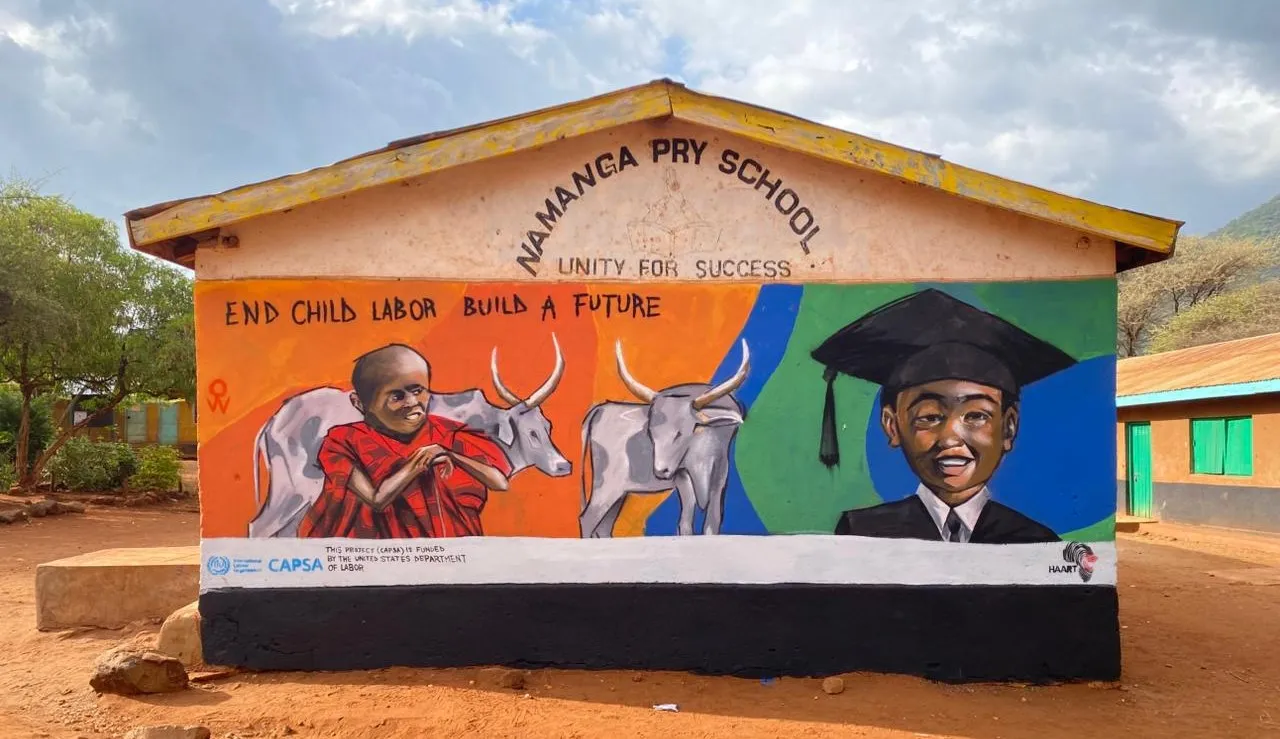
In Kajiado County, a mural has been installed at Namanga Primary School to promote educational engagement within the community. As a region predominantly involved in livestock keeping, many children find themselves occupied with herding duties during school hours, which hinders their access to education. The mural aims to inspire both students and the surrounding community to prioritize education and ensure that children remain in school, contributing to their overall growth and development.
Community Engagement at the Heart of the Initiative
The murals were not created in isolation. The CAPSA project, through HAART Kenya adopted a participatory approach, ensuring that the voices of children and community members were central to the design process. This involvement fostered a sense of ownership and made the messages resonate deeply within each locale.

“Through painting and performing, I realized that I have a voice,” shared a 14-year-old participant from Nairobi. “I can stand up for my friends and tell people that child labour is wrong.”
Parents and teachers also joined the effort, many expressing newfound understanding of the urgent need to combat child labour. One parent in Kwale remarked, “These murals remind us every day to keep our children in school and protect their future.”
Expanding Advocacy Across Borders
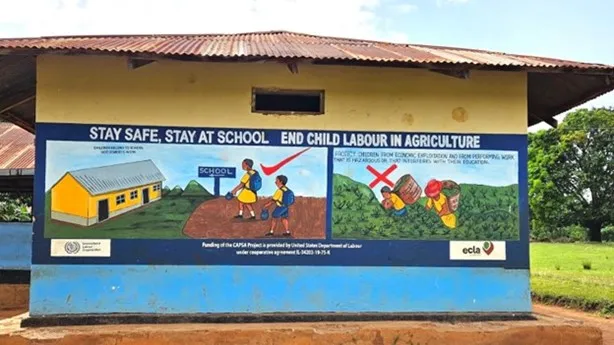
Kenya’s mural initiative echoes similar successes in Uganda, where CAPSA and ECLA Uganda installed six murals in Masindi, Hoima, and Kikuube districts. These murals, strategically placed in schools and public spaces, have become lasting symbols of the fight against child labour. A teacher in Hoima praised the initiative, noting how the murals communicated effectively to both literate and illiterate audiences.
Looking Ahead
As CAPSA concludes, its impact will continue to ripple across communities. The murals serve as permanent reminders of the importance of education and the dangers of child labour. The participatory model proved crucial, empowering communities to take ownership of the advocacy process.
A Commitment to Social Justice
The CAPSA project, funded by the U.S. Department of Labour, aligns with the Sustainable Development Goals (SDG 8) and the ILO’s mission to promote social justice and fundamental rights at work. By using art as a tool for change, CAPSA has not only raised awareness but also empowered young people to become champions for their own rights.
For more information, please contact:
Joyce Macharia
ILO Communications and Partnerships Assistant
[email protected]