

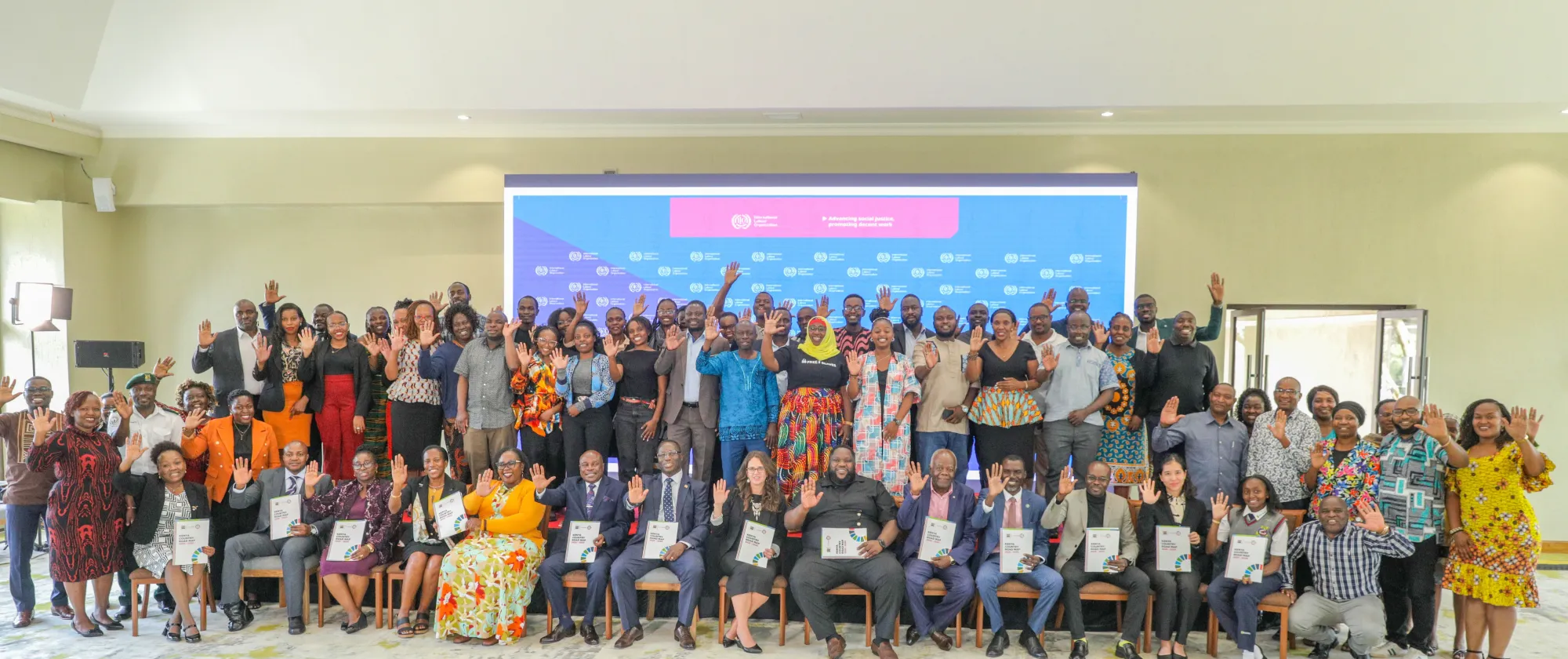
CAPSA Partners' regional knowledge sharing and closeout conference
CAPSA Project Celebrating Wins
Celebrating the wins in the fight against child labour, forced labour, trafficking in persons and violations of acceptable conditions of work.
4 December 2024
CAPSA Partners’ Regional Knowledge Sharing and Closeout Conference
NAIVASHA, Kenya (ILO News) - The International Labour Organization (ILO) hosted the CAPSA Partners’ Regional Knowledge Sharing and Closeout Conference in Naivasha, Kenya. This event, held between 12th - 14th November 2024 marked a significant milestone, as stakeholders from across East Africa gathered to discuss the strides made by the CAPSA project made in addressing child labour, forced labour, and human trafficking through the CAPSA project.
Since its launch in 2020, the CAPSA project implemented project activities in Kenya and Uganda, focusing on strengthening government and community capacities to combat exploitation and improve working conditions. The project implemented by the ILO, funded by the U.S. Department of Labor, has played a crucial role in enabling better enforcement of anti-child labour laws and empowering governments to respond effectively to child & forced labour exploitation.
The four-day conference provided a platform for knowledge sharing, featuring discussions on good practices, challenges, and future strategies. Delegates to the conference explored findings on trafficking patterns, including the trafficking of girls from the Karamoja region, and examined approaches to enhance support services for survivors of trafficking.
Ms. Hellen Apiyo, Commissioner for Labour, highlighted Kenya’s dedication to the global fight against exploitation, stating, “Kenya formally tendered its request to join Alliance 8.7 as a Pathfinder Country in January 2024. The roadmap that was launched reflected a unified approach that leverages national and international partnerships to secure a future free from exploitation for all its citizens.” She emphasized that the roadmap prioritizes interventions in child labour, forced labour, human trafficking, and modern slavery, while strengthening legal frameworks, improving data systems, and enhancing institutional capacity.
A key highlight of the conference was the unveiling of two major initiatives:
- Champions Against Child Labour Recognition: This honorary ceremony celebrated individuals and organizations dedicated to fighting child exploitation in Kenya and Uganda. The stories of these champions, documented in a new publication, aim to inspire collective action against child labour.
- Launch of the Kenya Alliance 8.7 Country Roadmap (2025-2030): This strategic document outlines Kenya’s pathway to eradicating forced labour, human trafficking, and modern slavery. Developed in line with the UN Sustainable Development Goal (SDG) Target 8.7, the roadmap emphasizes national and regional collaboration. The Permanent Secretary of the State Department of Labour and Skills Development, Mr. Shadrack Mwangolo Mwadime, officiated the launch, reiterating Kenya’s commitment to eliminating exploitation.
The ILO’s Country Director, Ms. Caroline Mugalla, reflected on the project’s legacy, noting that it had not just been about statistics and interventions but about people. She highlighted that the ILO CAPSA Project had provided a roadmap to change, demonstrating that with targeted interventions, trafficking could be prevented, survivors protected, and communities empowered to combat the scourge
This project has not just been about statistics and interventions; it has been about people. The ILO CAPSA Project has provided us with a roadmap to change, demonstrating that with targeted interventions, we can prevent trafficking, protect survivors, and empower communities to fight this scourge.
Ms. Caroline Mugalla, Director - ILO Country Office for the United Republic of Tanzania, Burundi, Kenya, Rwanda and Uganda
Bro. Benson Okwaro, Deputy Secretary General of COTU (K), echoed the importance of collaboration, noting, “CAPSA has reinforced ideals enshrined in our labour laws and ILO Conventions. By promoting legislative and policy frameworks, CAPSA has further strengthened our national resolve to ensure safe, fair, and dignified working conditions for all.” He reaffirmed COTU’s commitment to eradicating child labour, advocating for a holistic, multi-sectoral response to address root causes like poverty and lack of education.
The Commissioner for Labour, Industrial Relations, and Productivity, Uganda, emphasized the importance of cross-border collaboration, saying, “By exchanging good practices and strengthening regional efforts, we can protect children from exploitation and ensure their right to a safe, healthy, and fulfilling childhood.”
The Permanent Secretary of Uganda’s Ministry of Gender, Labour, and Social Development commended the CAPSA Project’s contributions, stating that the project had played a complementary role to government efforts by strengthening institutional capacity and aligning policies with international standards. Highlighting Uganda’s interventions, he added that wealth creation programs such as the Parish Development Model and targeted legal frameworks aimed to provide sustainable livelihoods and reduce reliance on child labour..
Kenya has demonstrated innovative approaches in tackling child labour, which provide valuable lessons for Uganda. By integrating these strategies with our own efforts, such as the Parish Development Model and legal frameworks, we can strengthen our fight against child labour and secure sustainable livelihoods for our communities.
Aggrey David Kibenge, Permanent Secretary of Uganda’s Ministry of Gender, Labour, and Social Development
Data shared during the event underlined the urgency of the CAPSA project’s mission. Recent statistics indicate that 8.5% of children in Kenya—approximately 1.3 million—are involved in child labour. Additionally, reports from the United Nations Office on Drugs and Crime (UNODC) estimate 35,000 to 40,000 victims of sex trafficking in the country. Key drivers of these issues include poverty, unemployment, limited access to education, and entrenched cultural practices.
The CAPSA project has been implemented in various counties in Kenya, including Bungoma, Kajiado, Mombasa, Kwale, and Nairobi, and in Uganda’s Jinja, Mbale, Iganga, Bugiri, Hoima, Masindi, and Kikuube regions. Partners such as the Central Organization of Trade Unions (COTU-K) have played a critical role in ensuring sustainability, particularly by educating members on labour rights and advocating for government and employer accountability.
As the CAPSA project concludes, its legacy is expected to drive continued efforts to eliminate child labour, forced labour, and human trafficking across East Africa. The conference served not only as a reflection on past achievements but also as a call to action for sustaining and amplifying these efforts in the years to come.
For more information, please contact:
Joyce Macharia
ILO Communications and Partnerships Assistant
[email protected]
Related content

CAPSA project
CAPSA Partners' regional knowledge sharing and closeout conference

CAPSA Project - Kenya, Uganda and the EAC Secretariat
CAPSA - Capacity Strengthening of Governments to Address Child Labour and Forced Labour and Violations of Acceptable Conditions of Work in...
Relevant projects
CAPSA Project - Kenya, Uganda and the EAC Secretariat
CAPSA - Capacity Strengthening of Governments to Address Child Labour and Forced Labour and Violations of Acceptable Conditions of Work in...