

Care economy
Trade unions play a vital role in advancing the care economy in Indonesia
The ILO underscores its initiatives to promote decent work within the care economy and emphasizes the vital role of trade unions in advancing this agenda.
11 July 2025
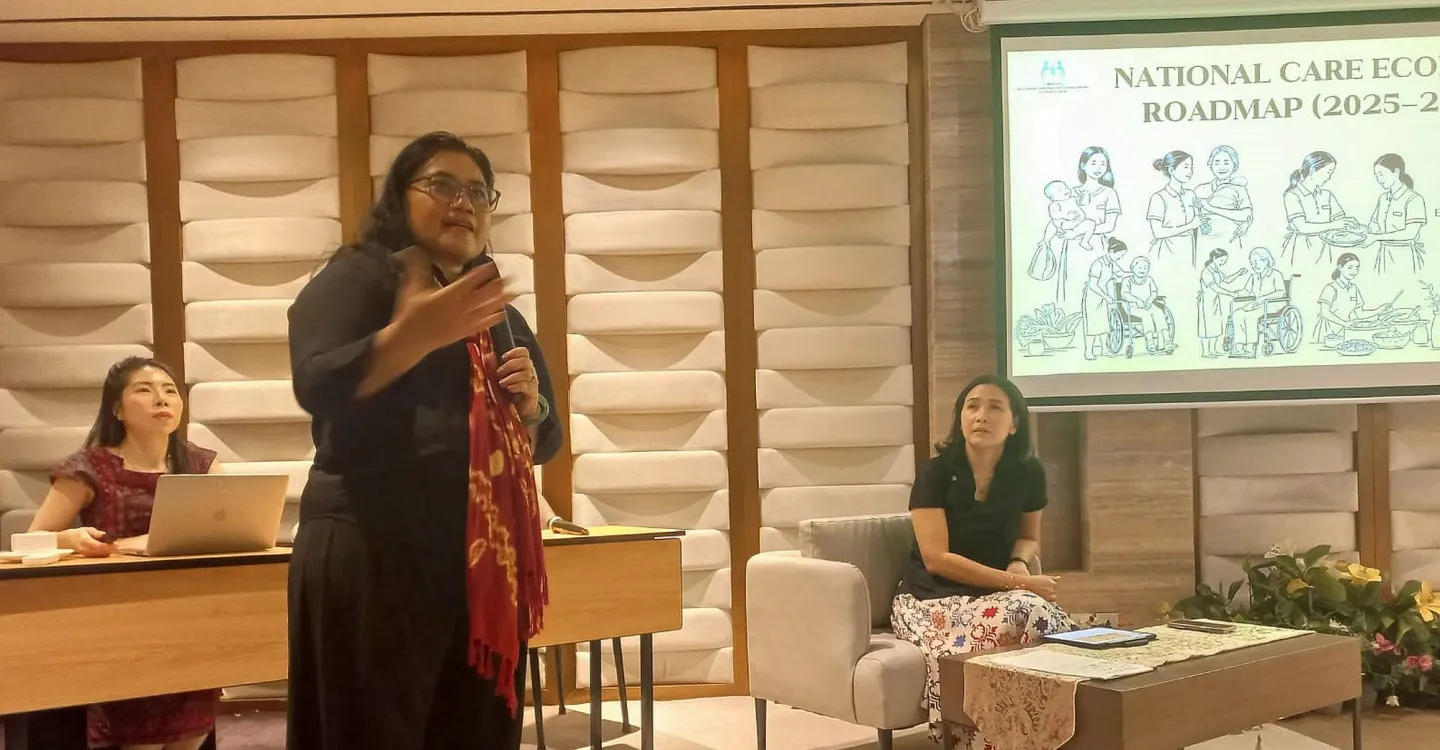
JAKARTA, Indonesia (ILO News) - On 4 July, Early Dewi Nuriana, the ILO’s Programme Coordinator for Care Economy, was invited by the International Trade Union Confederation (ITUC)–Asia Pacific to speak at a care economy workshop in Jakarta. The event aimed to strengthen trade unions’ understanding of the care economy in order to influence both national and regional policy, advocate for care workers' rights, promote gender-responsive policies, and support the development of a more resilient and inclusive care system.
Anna Lee Tuvera, Gender Equality Director of ITUC Asia Pacific, highlighted the significance of the collaboration between ITUC and the ILO in connecting trade union organizations with key stakeholders—enabling them to not only build the capacity of their members, but also take an active part in advocating for employment policies concerning care economy issues.
In her session, Early explored the intersections between the care economy, the world of work, labour rights and trade union priorities. She introduced the ILO’s 5R Framework, which promotes decent work in care by addressing both paid and unpaid responsibilities. The framework calls for: Recognizing, Reducing, Redistributing Rewarding and Representing.
Early also presented findings from the 2023 ILO–KataData Insight Centre survey, which examined Indonesian workers' perceptions of the economic value of care work across sectors. The results showed that 61.6 per cent of male respondents said their wives or sisters carry a “double burden,” while 79.3 per cent of female respondents reported experiencing this dual responsibility. Interestingly, 67.3 per cent of women surveyed said they do not perceive themselves as working longer care hours than men.
Furthermore, 68.3 per cent of male respondents expressed that it is natural for women to leave paid employment to fulfil caregiving responsibilities, viewing them as part of their role as mothers or daughters. “Interestingly, nearly 66.2 per cent of female respondents echoed this sentiment, believing caregiving should take precedence over their careers,” Early highlighted. “This perception aligns with the 80.5 per cent of participants who believe that women are inherently suited to care work.”
Trade unions play a pivotal role in advancing care-friendly policies, both within organizations and at broader policy levels. This includes promoting the implementation of maternity and paternity leave, and championing accessible, affordable care services such as daycare to uphold workers’ productivity and labour rights.
Early Dewi Nuriana, the ILO’s Programme Coordinator for Care Economy
When it comes to representing workers’ voices on care-related issues, only 47 per cent of respondents reported the presence of trade unions in their workplaces. Nonetheless, many felt that trade unions should take a more proactive stance in advocating for care-related concerns and engaging management to shape company policies that support caregiving and work-life balance—especially for employees with family responsibilities.
“Trade unions play a pivotal role in advancing care-friendly policies, both within organizations and at broader policy levels,” Early explained. “This includes promoting the implementation of maternity and paternity leave, and championing accessible, affordable care services such as daycare to uphold workers’ productivity and labour rights.”
She further stressed the critical support needed from trade unions to ensure care workers are formally recognized as part of the workforce, and to defend their rights to skill development, particularly through upskilling and reskilling opportunities, the right to unionize and inclusion in social protection programmes.
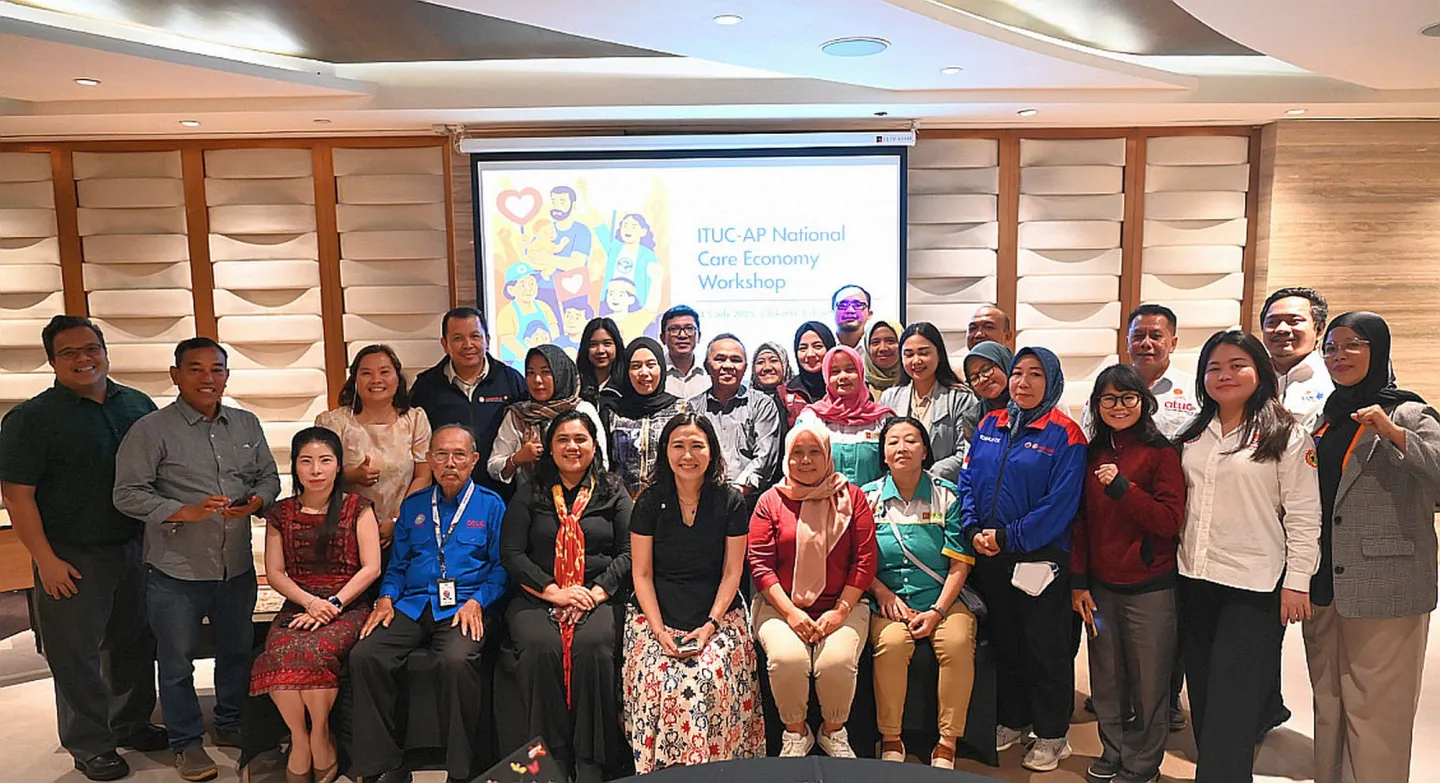
Veronica Tan, Vice Minister at the Ministry of Women’s Empowerment and Child Protection, provided an in-depth overview of the Indonesia Care Economy Roadmap, outlining its priorities and policy strategies—particularly those aimed at recognizing the economic value of unpaid care work. She also emphasized the critical role of trade unions in supporting the Roadmap’s implementation.
“I’m here to learn from trade union initiatives that strengthen the dialogue between union organizations and the government,” Vice Minister Veronica noted. “I also encourage trade unions to actively participate in the pilot upskilling program for domestic workers, an initiative between Indonesia and Singapore.”
Other speakers included Jumisih, from the Indonesian National Network for Domestic Worker Advocacy (JALA PRT) and Miguel Rafael V. Musngi, Assistant Director of the ASEAN Secretariat’s Poverty Eradication & Gender Division. Jumisih raised concerns over the long-standing delays in passing the Domestic Workers Protection Bill, which has faced challenges since 2024; while Miguel stressed the importance of trade unions in shaping employment policies and driving implementation and oversight of the Care Economy Roadmap.
Related content
Project
The Care Economy in Indonesia
Six Indonesian trade union confederations promote a greater investment in care economy
Relevant projects
Project
The Care Economy in Indonesia