

News
Sensitisation workshop held for sub national actors on JobAgri
19 February 2025
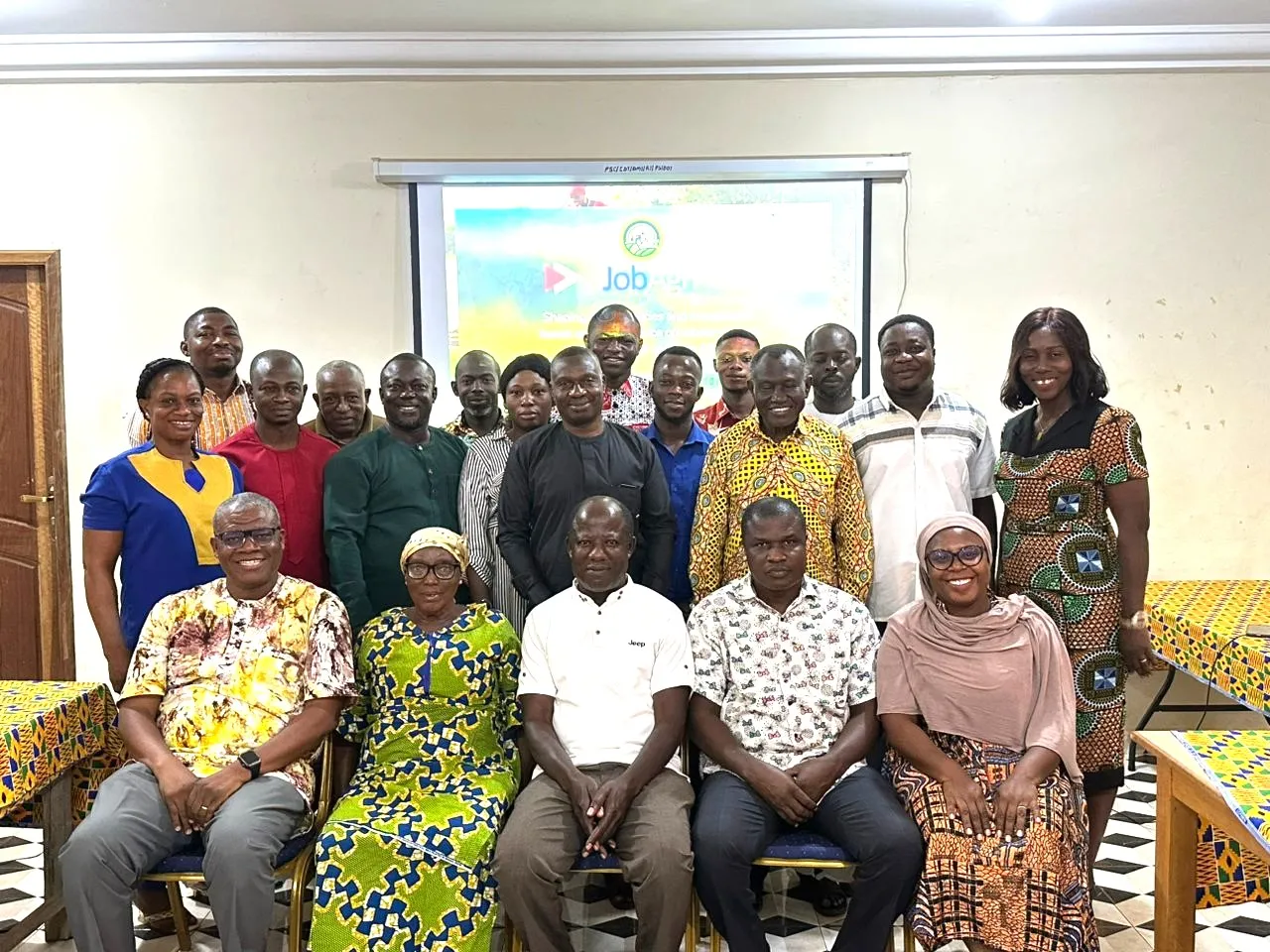
TECHIMAN, Ghana - The International Labour Organisation (ILO), The Food and Agriculture Organisation (FAO) and the Agricultural Research Centre for International Development (Cirad) organized a one-day workshop for its subnational stakeholders in Techiman in the Bono East Region.
The workshop was attended by 17 participants including the Regional Coordinating Director who delivered the official opening remarks, Municipal and District Directors of Agriculture drawn from the eleven Districts of the Region. Value chain actors were also present at the workshop and included Trader Associations, Input Dealers, Farmer Organisations and Transport Operators.
Developing the Agri-food sector and its ability to generate decent employment is the necessary steps to bring Africa’s trajectory towards a more sustainable, inclusive and prosperous direction.
Chief Director / RCD For Bono East Mr. Issaka Braimah Basintale
The workshop provided the avenue for in-depth sensitisation of the sub national actors on the JobAgri project. The workshop sessions took the participants through the policy aspects and the data component of the project. Additionally, updates were provided to the participants on the implementation of the JobAgri project.
Participants expressed their support for the project and called for constant engagement with them to enable the project achieve its laudable objectives which will also support agricultural development and the provision of decent work in the agri-business sector.
One of the key takeaways from the workshop was the immense potential of the agricultural sector to generate employment across various commodities like crops, livestock, fisheries, and forestry. Participants highlighted the importance of value chain jobs created through post-harvest activities, which not only boost employment but also enhance food security. However, realizing this potential requires better coordination in policy implementation. The current top-down approach was seen as limiting, with participants emphasizing the need for broader consultations and the inclusion of gender perspectives for effective service delivery.
Another important insight was the critical role of data in developing agriculture and creating decent employment. While programs like Planting for Food and Jobs (PFJ 1) were acknowledged for their potential to create jobs, participants noted the challenge of validating these claims due to data gaps in employment reporting. Improving data collection and reporting was identified as essential for tracking employment trends and measuring policy impact.
About JobAgri Ghana
JobAgri Ghana aims to institutionalize advanced data collection in agri-food value chains by working with national institutions to develop indicators and data collection processes investigating the labour content of different farming systems. Then, it supports the establishment of multi-stakeholder and ‘tripartite-plus’ policy dialogues so as to ensure coordinated and concerted solutions to maximize the impact of the agri-food sector on decent work, breaking down the silos between employment and agricultural policies in an integrated manner.
Relevant projects
Project
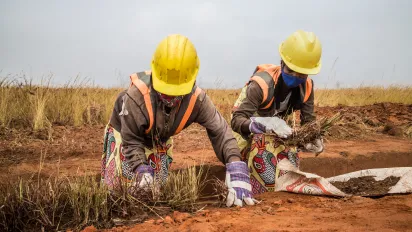
JobAgri Ghana: Shaping better policies based on innovative data in agri-food sector
Project
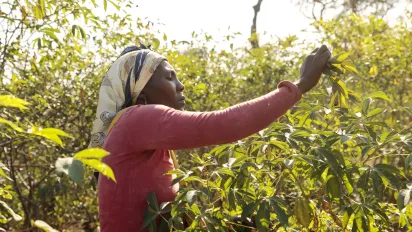
JobAgri: Better employment and agricultural policies in Africa