

Just energy transition
The next generation helps shape Indonesia's just energy transition
A joint workshop by the ILO and its university partner helps students explore the role of innovation, green jobs and social dialogue in advancing Indonesia's just energy transition.
17 July 2026
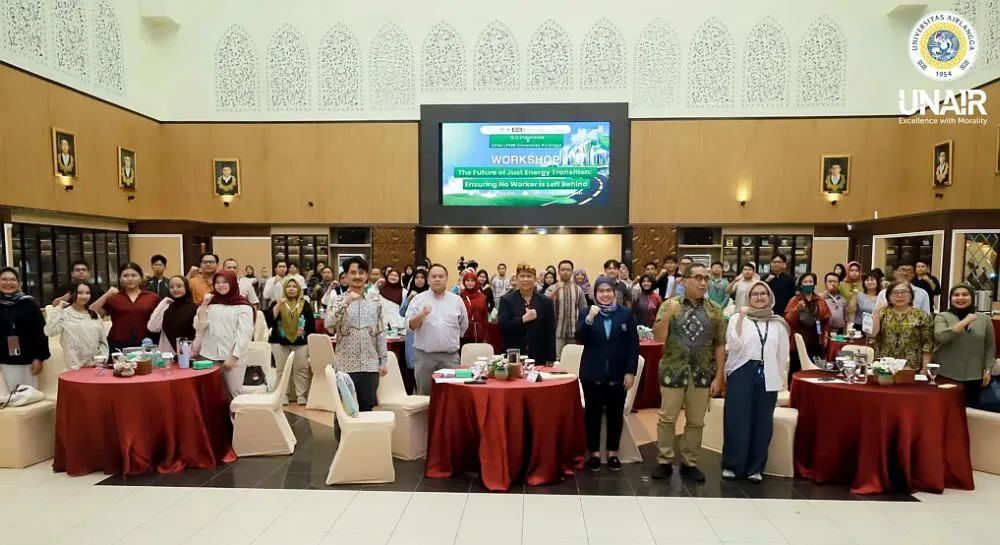
SURABAYA, East Java, Indonesia (ILO News) - Curiosity filled the Rectorate Hall at Universitas Airlangga (UNAIR) in Surabaya on 14 July 2026. More than 120 students joined representatives from government, small and medium-sized enterprises (SMEs), academia and development partners to explore one pressing question: how will Indonesia's transition to a greener economy reshape the world of work, and what role can young people play in ensuring that no worker is left behind?
Questions flowed throughout the workshop. Can renewable energy create enough decent jobs? How can governments, employers, and workers work together to ensure a just transition? What skills will young people need to thrive in the green economy? These questions shaped the lively discussions that unfolded throughout the event.
Indonesia has enormous potential to contribute to a sustainable future... The challenge is to accelerate the adoption of technology and innovation so that this potential can create real benefits for people, communities and future generations.
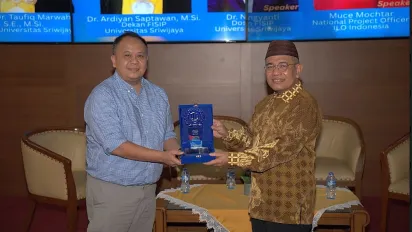
Tahta Amrillah, Ph.D., a lecturer and renewable energy expert from UNAIR's Faculty of Advanced Technology and Multidisciplinary
Organized by the ILO in collaboration with UNAIR under the Innovation Regions for a Just Energy Transition (IKI-JET) project, the workshop, The Future of Indonesia's Energy Transition: Ensuring No Worker Is Left Behind, encouraged participants to explore both the opportunities and challenges of the country's transition towards a low-carbon economy. The event also highlighted the vital role young people can play in driving innovative and inclusive solutions.
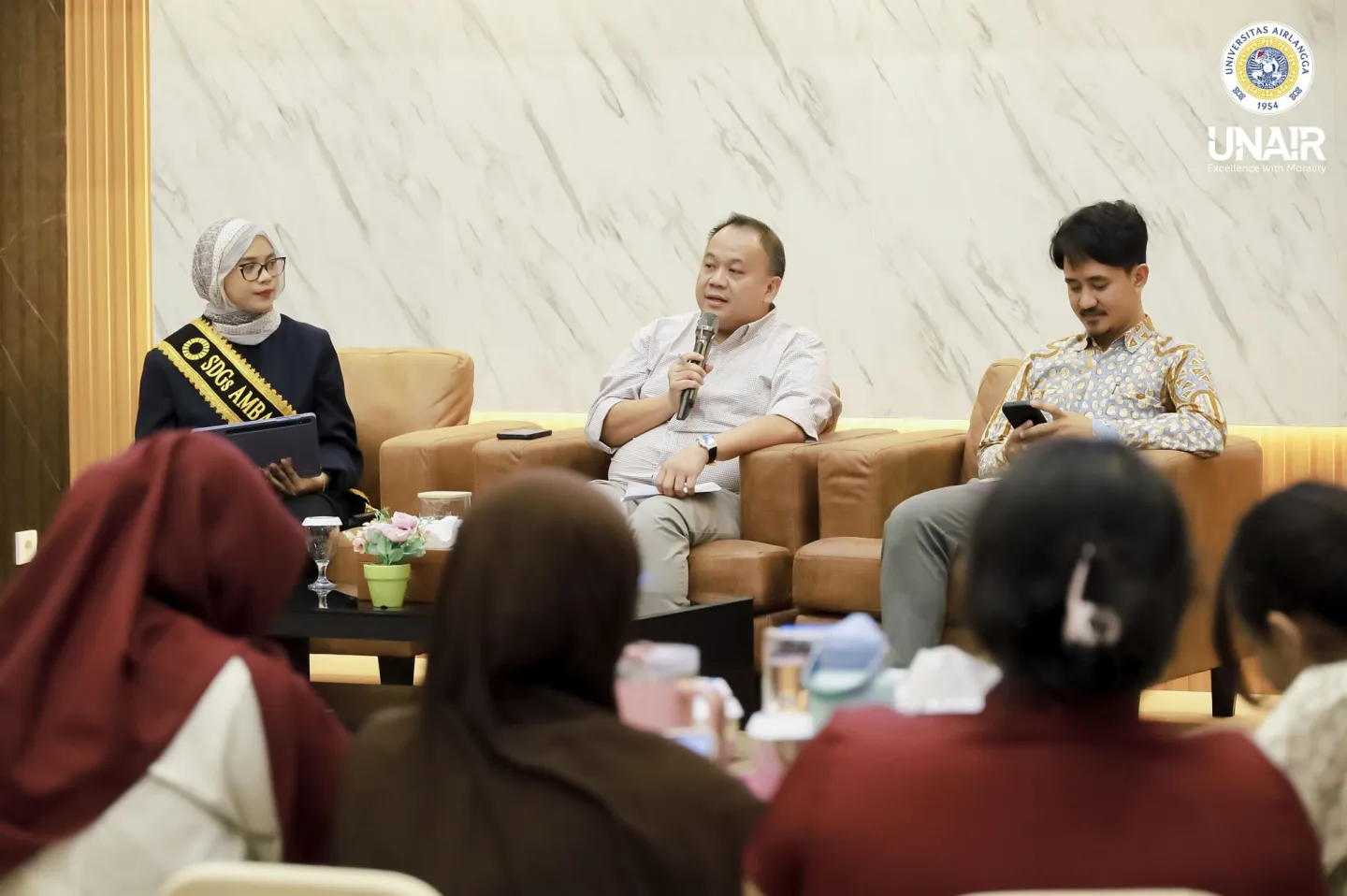
Taking participants on a journey through renewable energy innovations around the world, Tahta Amrillah, Ph.D., a lecturer and renewable energy expert from UNAIR's Faculty of Advanced Technology and Multidisciplinary, showcased technologies ranging from solar panels, geothermal and catalyst technologies to water-based fuels and electric vehicles. While these innovations are accelerating the global shift to cleaner energy, he emphasized that Indonesia still has significant room to expand the adoption of renewable technologies despite its abundant natural resources.
"Indonesia has enormous potential to contribute to a sustainable future because of its rich marine and forest resources. The challenge is to accelerate the adoption of technology and innovation so that this potential can create real benefits for people, communities and future generations," he said.
A just energy transition is not only about replacing one source of energy with another. It is also about preparing people for the jobs of the future.
Muce Mochtar, the ILO's IKI-JET Programme Coordinator in Indonesia
Complementing the technological perspective, Muce Mochtar, the ILO's IKI-JET Programme Coordinator in Indonesia, shifted the discussion to the people behind the transition. As coal-dependent regions diversify their economies, he challenged participants to think beyond technology and consider the workforce. Who will support workers moving from coal mining into new sectors? Who will provide the reskilling, upskilling and certification needed for the transition? If provinces develop new industries such as sustainable tourism, will there be enough skilled workers to meet the demand?
"A just energy transition is not only about replacing one source of energy with another. It is also about preparing people for the jobs of the future," Muce said. "The ILO is supporting local governments in South Sumatra and East Kalimantan to diversify their economies by identifying new growth sectors while bringing together governments, employers' and workers' organizations, academia and other stakeholders through regional consultation forums and social dialogue."
I took home more than just notes. I took home a new perspective: that being part of the solution for the future also means learning to be sensitive to those who are most vulnerable to being left behind in the process.
Lathifa Drupadi, a 19-year-old student
The discussions resonated with participants from different backgrounds. Among them was Elly Rismina, who represented small and medium-sized enterprises (SMEs). For her, the workshop showed that adopting more sustainable practices does not always require sophisticated or expensive technology.
“This workshop has raised my awareness of renewable energy and the important role SMEs can play in supporting the transition. In my own business, I have started recycling waste into accessories and other products using practical and affordable techniques. The workshop has encouraged me to continue exploring more sustainable practices,” she said.
For Lathifa Drupadi, a 19-year-old student, the workshop offered a different perspective. It helped her see the human side of a just transition and understand how changes in the energy sector can directly affect workers and their families.
“I had previously viewed the just transition mainly as a policy discussion or in terms of energy statistics. But there are real people behind every factory that closes and every mine that is retired. People whose lives and families depend on these jobs,” Lathifa said. “I took home more than just notes. I took home a new perspective: that being part of the solution for the future also means learning to be sensitive to those who are most vulnerable to being left behind in the process.”
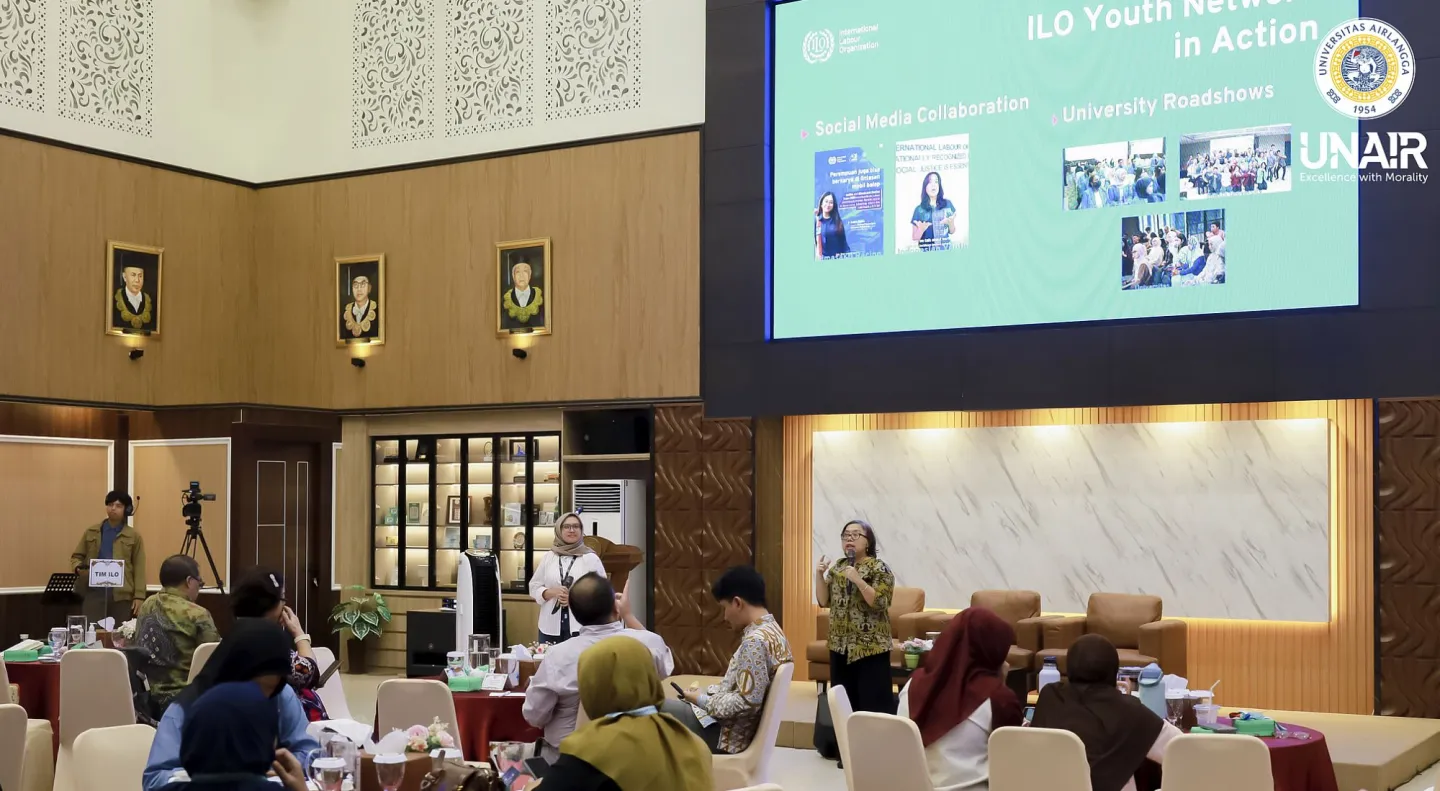
The event concluded with the launch of a partnership between the ILO and university students to lead a just energy transition social media campaign. Through the initiative, selected students will produce social media content and website articles to raise awareness among their peers, families and communities about the opportunities and challenges of a just energy transition.
The campaign forms part of the ILO Youth Network, an initiative that engages young people on employment issues and empowers them to become advocates on topics ranging from occupational safety and health and social protection to artificial intelligence, green jobs and the future of work. To date, the Network has established partnerships with several universities, including UNAIR, the Indonesian National University Network (NUNI), Esa Unggul University, Gadjah Mada University (UGM), Atma Jaya Catholic University and University of Diponegoro (Undip).
This workshop has raised my awareness about renewable energy and the important role SMEs can play in supporting the transition.
Elly Rismina, SME owner
Related content

IKI-JET in Indonesia
Innovation Regions for a Just Energy Transition (IKI-JET)
Press release
Young people key to advancing a Just Energy Transition in Indonesia
Press release
South Sumatra’s youth advance Indonesia’s Just Energy Transition through innovation and collaboration
Just energy transition
South Sumatra’s youth look beyond coal towards a greener Indonesia
Just energy transition
Learning from the ILO: Looking at skills development through the lens of a Just Energy Transition

Press release
ILO and BPVP Samarinda strengthen youth skills for a Just Energy Transition in Indonesia
Just energy transition
Preparing East Kalimantan, Indonesia’s future workforce for a just transition
Relevant projects
IKI-JET in Indonesia
Innovation Regions for a Just Energy Transition (IKI-JET)