

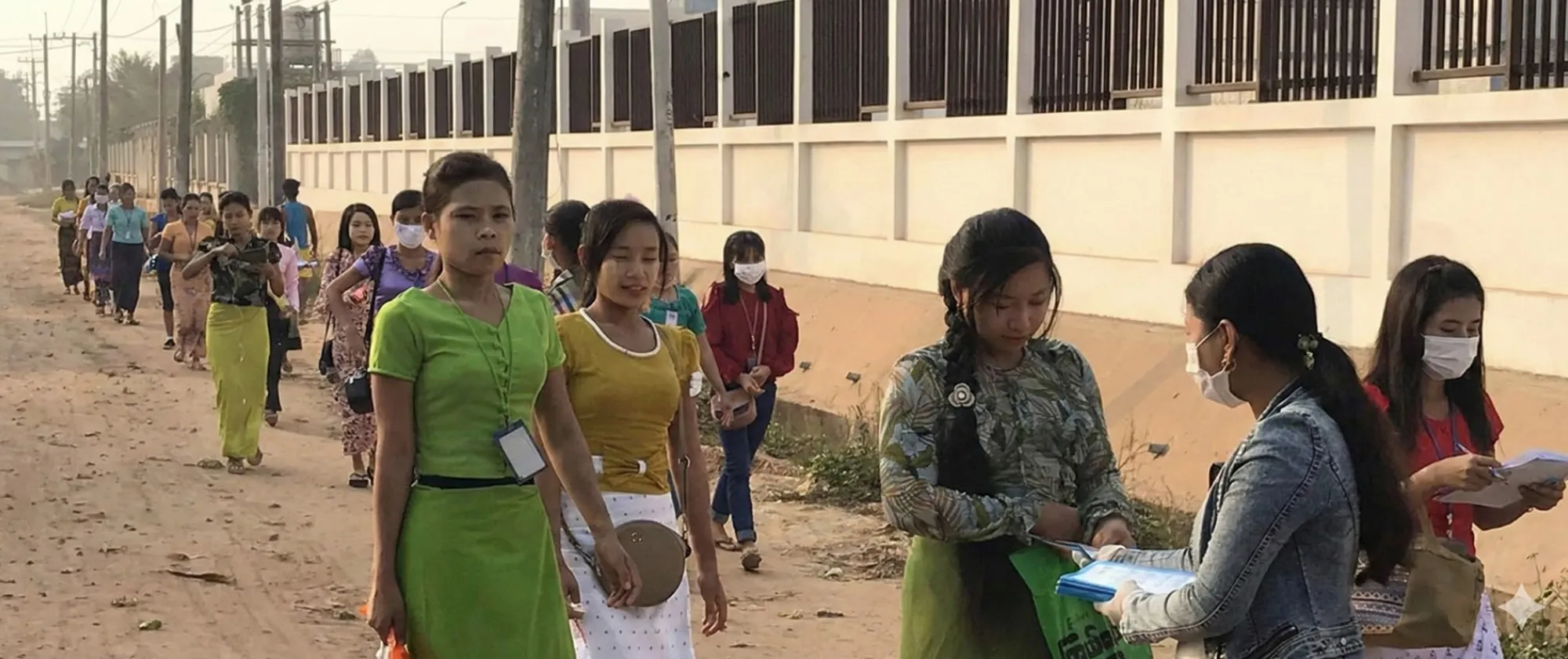
Labour migration
New ILO report shows how Migrant Worker Resource Centres empower and protect migrant workers
The report highlights effective approaches to improving migrant worker support across the South-East Asia region.
26 November 2025
BANGKOK (ILO News) - A new publication from the International Labour Organization (ILO) distils more than a decade of experience supporting Migrant Worker Resource Centres (MRCs) across the ASEAN region, offering key lessons for government, worker, employer, and civil society organizations striving to improve protection of the rights of migrant workers.
Developed with support from the Australian Department of Foreign Affairs and Trade (DFAT) and the European Union (EU) through the ILO’s regional labour migration programmes—TRIANGLE in ASEAN, PROTECT, and Ship to Shore Rights South-East Asia—the publication “Lessons Learned from ILO Migrant Worker Resource Centres in the ASEAN Region” outlines how MRCs have become trusted and accessible support hubs for migrant workers in countries of origin and destination.
Lessons learned and strengthening migrant-centred services
In the last decade, a total of 65 MRCs in nine ASEAN member states have provided services, including counselling and psychosocial support, information and outreach, legal aid, organizing, provision of pre-migration training, and support for return and reintegration to potential, current and returned migrant workers and their family members. Between 2011 and 2024, MRCs provided comprehensive services to close to 650,000 migrant workers (43 per cent women) and helped support 15,600 legal cases that brought more than US$13 million in compensation awarded to migrant workers who had suffered injustice, exploitation and abuse.
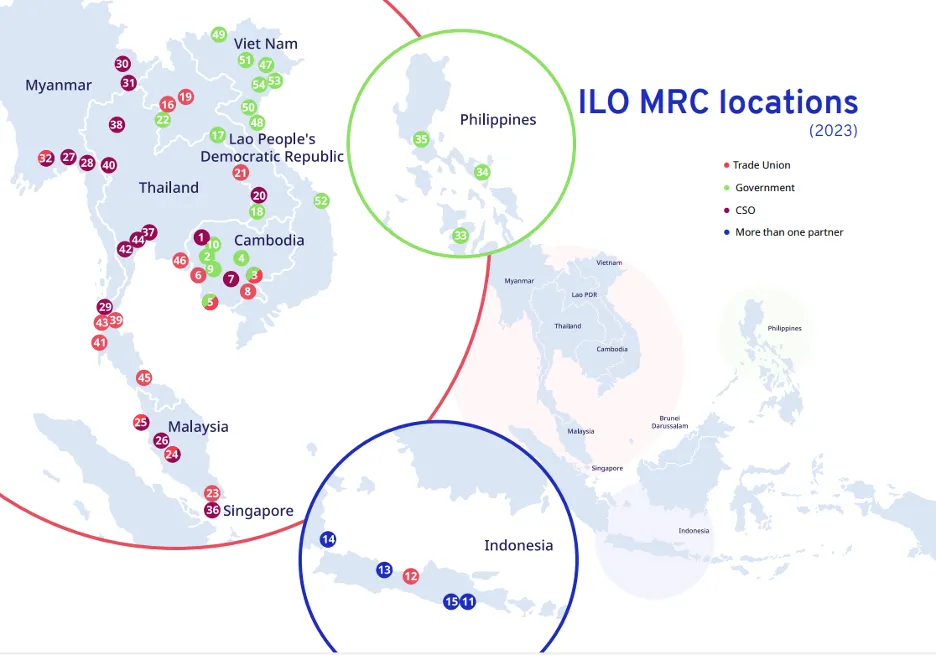
The publication found that MRCs are most effective when they combine strong partnerships with governments, communities, trade unions and civil society with careful selection and training of implementing partners. Their ability to focus on migrants’ needs, ensure respect for their rights, and make sure that their services work for everyone, regardless of gender are integral to the impact of their services.
“Migrant Worker Resource Centres have proven to be a lifeline for migrant workers facing exploitation, abuse or barriers in accessing services,” said Nilim Baruah, ILO Senior Labour Migration Specialist for Asia and the Pacific. “Their success lies in strong partnerships and a deep commitment to putting migrant workers at the heart of support services.”
Expanding reach and building trust
MRCs have significantly expanded their outreach efforts—combining interpersonal engagement with digital tools such as social media, radio programming and community networks. Over time, they have become trusted sources of reliable information, especially for workers in isolated sectors such as fishing, agriculture and domestic work.
H.E. Tiffany McDonald, Australian Ambassador to ASEAN, added: "Australia has been a long-standing partner of the ILO through the TRIANGLE in ASEAN program ($24 million, 2015-2025), with a further $15 million investment announced by Prime Minister Albanese at the ASEAN-Australia Summit in Malaysia in 2025. Through TRIANGLE, we have strengthened protections for migrant workers in Southeast Asia, particularly women and vulnerable groups, reinforcing Australia’s commitment to gender equality, disability and social inclusion. The Migrant Worker Resource Centres funded through TRIANGLE have demonstrated that community-based, migrant-centred services can transform lives and build stronger, fairer labour markets."
Tom Corrie, Head of Cooperation for the EU Delegation in Thailand, welcomed the findings, stating: "The European Union is proud to support initiatives that protect the rights and dignity of migrant workers in the ASEAN region. The lessons captured in this publication reaffirm the essential role of Migrant Worker Resource Centres in ensuring that migrants—especially women and those in vulnerable sectors of work—can access trustworthy information, timely support and avenues for justice."
Remaining challenges and opportunities for sustainability
Despite their successes, the publication notes challenges related to long-term financial sustainability, and ensuring accessibility of MRC services for ethnic minorities, migrants in isolated and remote sectors of work such as agriculture/plantations, fishing and domestic work, and migrant workers with disabilities. The report also underscores the need for greater use of monitoring and evaluation data to inform policy reform and improve service delivery.
“This publication provides a roadmap for strengthening migrant support systems at a time when mobility, labour demand and protection risks continue to evolve,” said Tuomo Poutiainen, Deputy Regional Director at the ILO Regional Office for Asia and the Pacific. “We hope these lessons will inspire greater investment in sustainable, accessible and gender-responsive services for all migrant workers.”
For the long-term sustainability of ILO MRCs, it is essential to secure continued funding, including from national governments, while advocating for migration and labour policy reforms that protect migrant workers from exploitation. With adequate support, MRCs can focus on specialized, inclusive services—such as sector-specific assistance for fishers and domestic workers, accessible services for people with disabilities, and gender-responsive and inclusive support.
For more information, please contact:
Pichit Phromkade
Senior Communications Officer
ILO Regional Office for Asia and the Pacific
[email protected]
Related content
Labour migration
Ensuring Decent Work and Reducing Vulnerabilities for Women and Children in the Context of Labour Migration in South-East Asia (PROTECT)

Migrant workers
TRIANGLE in ASEAN

Labour migration
Ship to Shore Rights South-East Asia: Safe migration for decent work in the blue economy
Migrant Worker Resource Centres
Empowering Migrant Workers: Lessons Learned from ILO Migrant Worker Resource Centres in the ASEAN region
Relevant projects
Migrant workers
TRIANGLE in ASEAN
Labour migration
Ensuring Decent Work and Reducing Vulnerabilities for Women and Children in the Context of Labour Migration in South-East Asia (PROTECT)
Labour migration
Ship to Shore Rights South-East Asia: Safe migration for decent work in the blue economy

Migration
TRIANGLE in ASEAN – Thailand