

Care economy
Media in action: Advancing reporting on care work in Indonesia
The ILO and the Alliance of Indonesian Journalists (AJI) Jakarta jointly conduct a series of media engagement activities to support the implementation of the Indonesia Care Economy Roadmap.
2 July 2025

JAKARTA, Indonesia (ILO News) - The recently published news coverage compilation by the ILO’s Care Economy Programme, in partnership with the Alliance of Indonesian Journalists (AJI) Jakarta, was part of a comprehensive initiative to promote and raise awareness of the seven priorities outlined in the Indonesia Care Economy Roadmap 2025–2045. Launched during the inauguration of the Care Economy Working Group in Jakarta at the end of June, the publication resulted from a five-month series of media engagement activities held from December 2024 to May 2025.
The series began with an editorial meeting attended by 12 senior editors from national and regional media outlets. The meeting opened with a screening of the ILO’s experimental video on care work, which illustrated how women often leave their jobs to care for children or elderly parents, spending hundreds of hours each week on unpaid care duties and juggling between their work and care work.
The media involvement takes a significant role to support the government in implementing the Indonesia Care Economy Roadmap 2025-2045.
Early Dewi Nuriana, ILO’s Programme Coordinator for Care Economy
During the meeting, editors acknowledged that the care economy, despite its societal and economic significance, is often overlooked in mainstream media. They resonated with the caregiving burdens, mostly borne by women, and the struggle to balance paid employment with unpaid care work. They agreed that media must deepen its understanding of care-related issues to support policy efforts, challenge gender norms, promote greater participation of women in the workforce and amplify personal stories that bring visibility and empathy to care work.
The editorial meeting was followed by a media training, gathered together 31 journalists from regional and national online, print and electronic media outlets. For two days they learned about the role of government in prioritizing care economy in the national development plans, the role of private sector in supporting care economy through supportive company regulations and facilities such as daycare and the role of care workers to be recognized as workers.
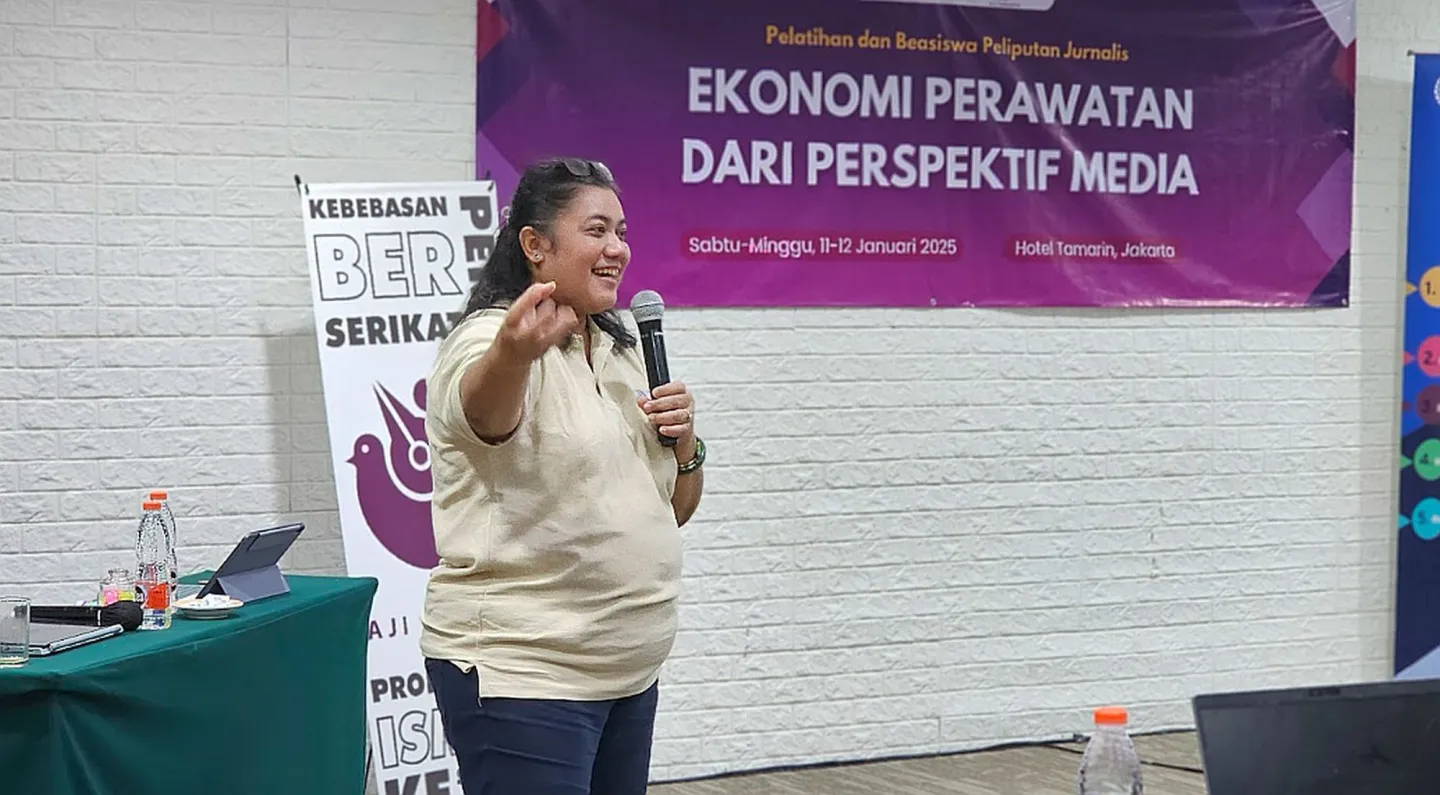
The training also provided an opportunity for the journalists to have a “real experience” using the ILO Care Policy Investment Simulator, an online tool to help analyze the impact of different care policies on job creation, gender equality and the economy. The simulator helps the journalists explore the impact of different care policies, such as maternity, paternity and parental leave, as well as investments in childcare and long-term care service. It also calculates the investment required for different policy options and analyzes the potential effects on employment, gender equality (including reducing gender wage gaps), and the overall economy.
Early Dewi Nuriana, ILO’s Programme Coordinator for Care Economy, stated that the media are instrumental in shaping public perceptions about care economy related issues, which can in turn influence policy and practice. “By realizing the economic value of care work, it is important for our society to gradually change the perceptions and mindsets regarding the importance of care work for the well-being of all individuals in the family and work productivity for both male and female workers. The media involvement takes a significant role to support the government in implementing the Indonesia Care Economy Roadmap 2025-2045,” stated Early.
Enhancing reporting on care economy
The training programme was concluded with the submission and selection of care economy reporting ideas as part of the journalism fellowship programme. The fellowship programme aims to engage and support journalists and media professional in delivering quality reporting on care economy in Indonesia. Out of 31 submitted proposals, 10 proposals were selected. The participants were provided with editorial support from senior media professionals as mentors to produce and publish a series of in-depth stories on care economy within the duration of two months.
By equipping them with knowledge, tools, and editorial insights, we aim to empower the media to deliver more nuanced, accurate and consistent coverage of care economy–related issues.
Gita Lingga, ILO’s Senior Communications Officer
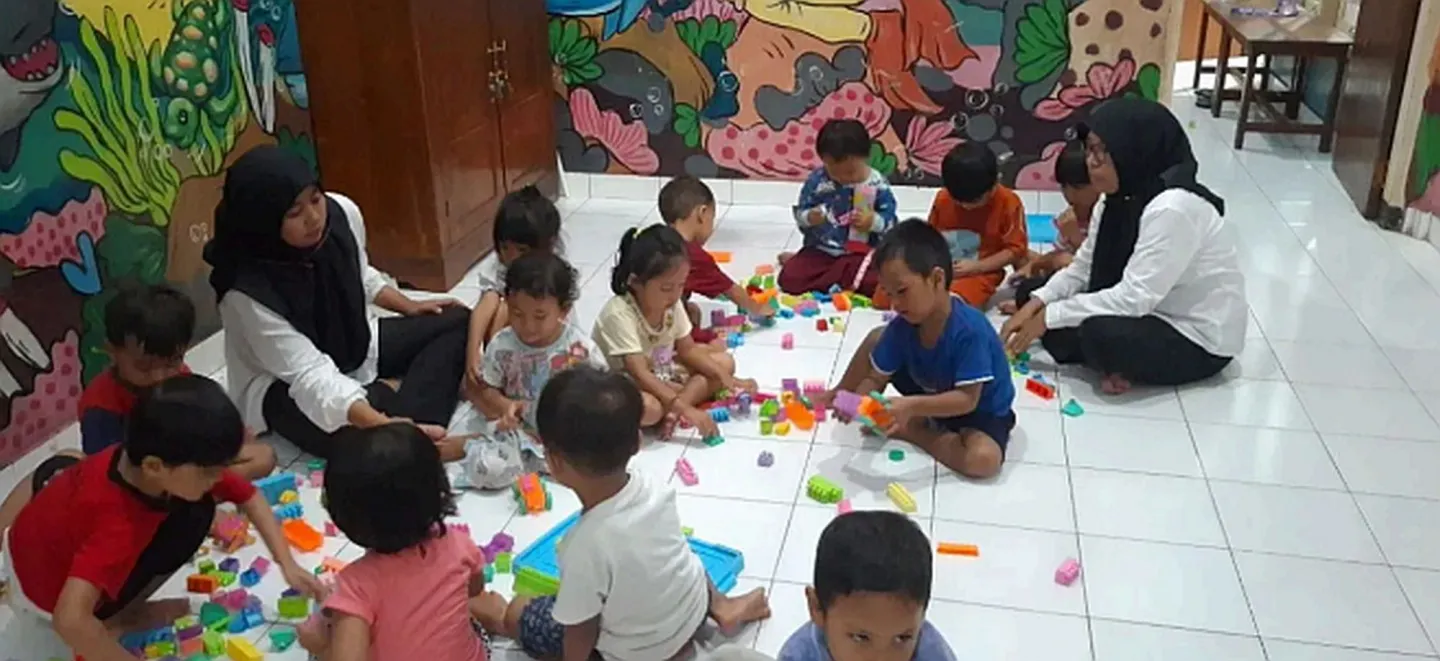
Titis Anis Fauziyah, a journalist from Kompas.com in Semarang, Central Java, wrote about an initiative by the Movement of Men Who Care for Women and Children (Garpu Perak), an organization that aims to engage men in preventing violence against women and children by promoting a greater role for fathers in childcare, particularly through Friday sermons. Meanwhile, Indriani, a journalist from Antaranews.com, reported on a successful initiative providing quality, affordable, and accessible daycare services in Yogyakarta. Her article featured two examples: a public daycare serving traders at the Beringharjo Market, and the private Seri Derma daycare located in Umbulharjo.
“Through these media engagement programmes, our objective is to foster both commitment and capacity among media organizations and professionals, ranging from editorial leadership to field reporters,” said Gita Lingga, ILO’s Senior Communications Officer. “By equipping them with knowledge, tools, and editorial insights, we aim to empower the media to deliver more nuanced, accurate and consistent coverage of care economy–related issues, amplifying the voices of caregivers, highlighting policy developments and shedding light on systemic challenges.”
Additional details
References
- DN/23/01/RBS
Related content
Project
The Care Economy in Indonesia
Press release
Ministry of Women’s Empowerment and Child Protection and ILO launch Care Economy Working Group to advance Indonesia’s care system

Care economy
Pressing for progress: Indonesia’s media drive the care economy forward
Relevant projects
Project
The Care Economy in Indonesia